

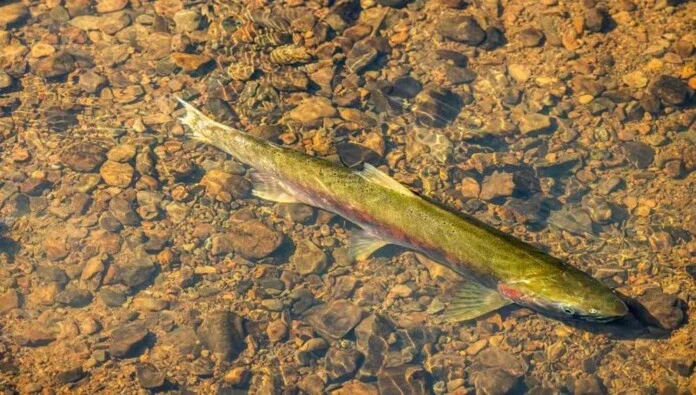
A remarkable 30,000 coho salmon returned to rivers along California’s Mendocino coast last season.
That is around ten times the average seen over the previous decade.
It is also roughly double the number recorded the season before.
For conservation teams who have spent years trying to restore these waterways, the recovery is an encouraging sign.
A Huge Comeback for an Endangered Salmon
Central California coast coho salmon are among the most threatened groups of coho salmon.
In some rivers, they had become so rare that sightings almost disappeared entirely.
The latest return shows how quickly populations can respond when the right conditions come together.
Healthy rivers, improved habitat and favourable ocean conditions can all play a role.
Years of Restoration Are Paying Off
The recovery follows decades of work across rivers and streams on the Mendocino coast.
More than 100 habitat improvement projects have been carried out in the region.
The goal has been simple: make it easier for salmon to move, breed and survive.
Rivers Have Been Made Friendlier for Fish
Many restoration projects focused on fixing obstacles created by roads and human development.
Work has included:
- Widening small road culverts
- Removing barriers that block fish
- Improving stream crossings
- Restoring damaged riverbanks
- Reconnecting salmon with old habitat
- Returning straightened waterways to a more natural shape
These changes can create calmer pools, shaded areas and safer routes for young salmon.
Salmon Are Returning Quickly
One of the most surprising results is how fast salmon can move into restored habitat.
In some areas, fish have appeared only days after construction work ended.
That suggests salmon are ready to use suitable habitat as soon as it becomes available.
Rivers Without Salmon Are Seeing Them Again
The recovery is also spreading across a wider area.
Some waterways that had not recorded live coho for many years are now seeing them return.
Usal Creek had gone around a decade without a live coho sighting.
Other parts of the region had gone even longer.
Now adult salmon are once again moving upstream while young fish make their way toward the ocean.
Major Watersheds Are Showing Improvement
Restoration work has taken place across several important watersheds, including:
- North Fork Navarro River
- Noyo River
- Garcia River
- Big River
- Ten Mile River
Large habitat projects have also created more space for salmon to feed, rest and grow.
Early Counts Remain Encouraging
Initial observations from the latest migration suggest strong numbers may continue.
Hundreds of coho have already been counted in parts of the North Fork Navarro River.
That is well above what would normally be expected.
A Positive Sign for Salmon Recovery
Recovering salmon populations is not easy.
These fish depend on healthy freshwater rivers as well as suitable ocean conditions during different stages of their lives.
That makes their recovery especially challenging.
But the return of tens of thousands of coho salmon shows that damaged ecosystems can improve.
With continued habitat restoration and long-term protection, rivers that once lost their salmon may be able to welcome them back.