

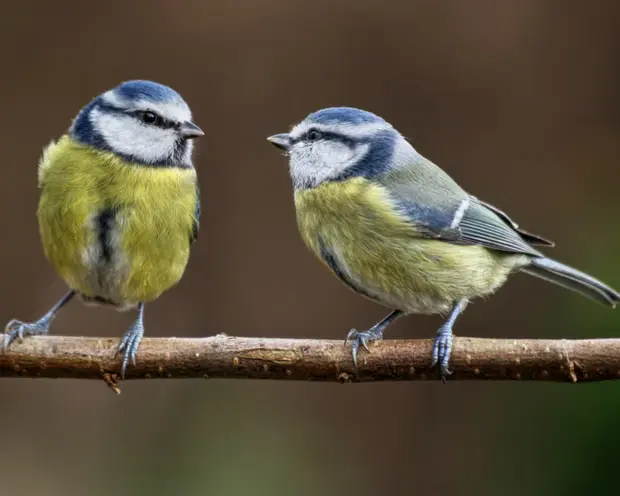
If there were an award for Britain’s most underrated garden bird, the Blue tit might easily win it.
Bright, bold and surprisingly feisty, this tiny bird is so common across the UK that many people hardly notice it anymore. Yet its colorful plumage and energetic personality make it one of the most fascinating birds to visit British gardens.
A Familiar Sight Across the UK
The blue tit’s popularity is reflected in two major citizen-science surveys:
- the Royal Society for the Protection of Birds Big Garden Birdwatch
- the British Trust for Ornithology Garden BirdWatch
In both surveys, blue tits consistently rank among the top five most commonly recorded garden birds.
With around 3 million breeding pairs in the UK, they thrive in:
- city gardens
- suburban neighborhoods
- rural woodlands
They are especially frequent visitors to bird feeders, where they often compete with their slightly larger relative, the Great tit.
Small Bird, Big Personality
Despite their bold behavior, blue tits are incredibly small.
They weigh only about 11 grams — roughly the same as:
- a handful of paperclips
- a UK two-pound coin
Yet their size doesn’t stop them from defending feeding spots or exploring every corner of a garden in search of food.
The Start of the Breeding Season
As winter fades into spring, blue tits begin singing their simple but distinctive song — a series of repeated notes ending in a short trill.
Soon afterward, they start searching for nesting sites.
Blue tits typically nest in:
- tree holes
- garden nest boxes
Once a suitable spot is found, the female lays eight to ten tiny eggs.
Raising Hungry Chicks
Although blue tits raise only one brood each year, caring for their chicks is an enormous task.
After the eggs hatch, both parents work tirelessly to feed their young.
Together they deliver around 1,000 food items every day, mostly:
- caterpillars
- insects
- other small invertebrates
This intense feeding effort continues until the chicks are ready to leave the nest.
A Bird Worth Appreciating
Because blue tits are so widespread and familiar, they’re often overlooked compared with rarer species.
But their bright colors, lively behavior and vital role in garden ecosystems make them one of Britain’s most charming birds.
Next time you see one hopping around a feeder or singing from a branch, it’s worth pausing for a moment — this tiny bird is doing far more than meets the eye. 🐦🌿