

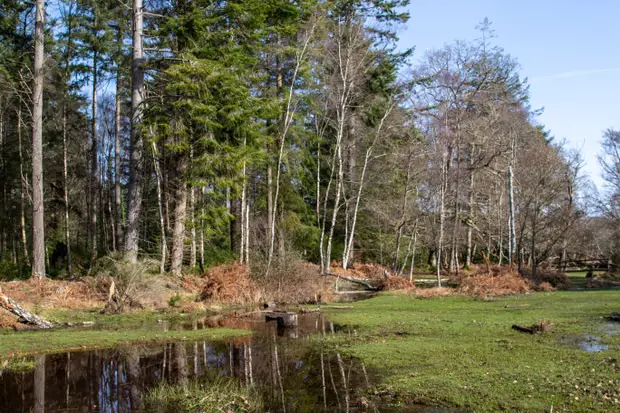
In the gentle light of early spring, the woodland of Knightwood Inclosure begins to stir.
Butterflies drift through the trees, ravens call overhead, and the earthy scent of warming soil rises into the air. Nearby stands the famous Knightwood Oak, the largest tree in the forest.
Yet amid all this grandeur, the most captivating sight may be something almost invisible.
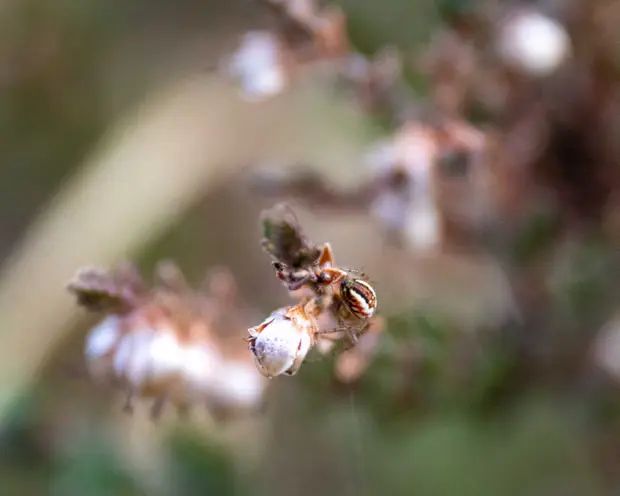
Suspended on a delicate thread in the undergrowth is a spider so small it’s difficult to see with the naked eye.
A Moment of Micro-Discovery
The spider’s web sparkles with droplets of water that resemble tiny disco balls in the morning light.
But the spider itself is barely larger than a speck. At first, the camera lens struggles to focus, flickering between the tiny creature and the surrounding heather flowers.
Eventually, the markings on its abdomen become visible: dark black lines framing two small spots.
Despite the close encounter, identifying the species proves difficult.
A Forest Full of Life
The discovery prompts a moment of reflection.
Even in a place visited countless times, there are always new details waiting to be noticed. On the walk back through the woodland, the observer pays closer attention:
- Brimstone butterfly patrols its territory through the trees
- A pair of Common raven rattles across the sky
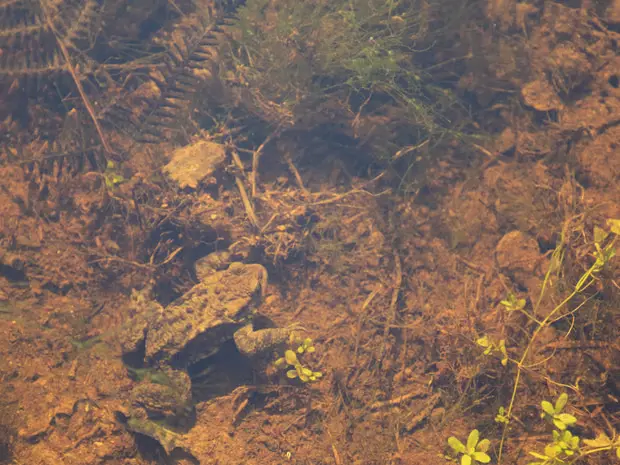
- In a quiet woodland pool, leaves shift and reveal the hunched forms of Common toad
The forest feels newly alive with details that might easily be overlooked.
Solving the Spider Mystery
Later that evening, help arrives through online nature enthusiasts.
The tiny spider finally gets a name: Mangora acalypha.
This small orb-weaving spider is sometimes called the “cricket bat spider” because the markings on its abdomen resemble the shape of a cricket bat.
Like many woodland spiders, individuals vary widely in color and pattern, making them easy to overlook or misidentify.
A Reminder to Look Closer
The discovery of such a tiny creature offers a simple but powerful lesson.
Even in landscapes we know well, our understanding may be only as large as that tiny spider hanging in its web.
The natural world still holds countless secrets — and sometimes all it takes to discover them is slowing down and looking a little closer. 🌿🕷️