

As Bonfire Night approaches, the London Fire Brigade (LFB) and the RSPCA are asking residents to think twice before setting off fireworks in their gardens. Both organizations are warning that private displays are contributing to a growing number of emergency incidents while also causing serious distress to animals.
Their appeal follows new figures showing that firework-related calls and incidents attended by the London Fire Brigade have more than doubled since 2018. Instead of organizing celebrations at home, the public is being encouraged to visit professionally managed displays.
Fire investigation officer Peter Guppey said reducing the number of private fireworks events would make celebrations safer and more considerate for local communities.
Organized displays, he explained, are often less expensive, safer and more spectacular than setting off fireworks at home. They can also help create a quieter environment for pets and wildlife.
Firework-related emergencies continue to rise
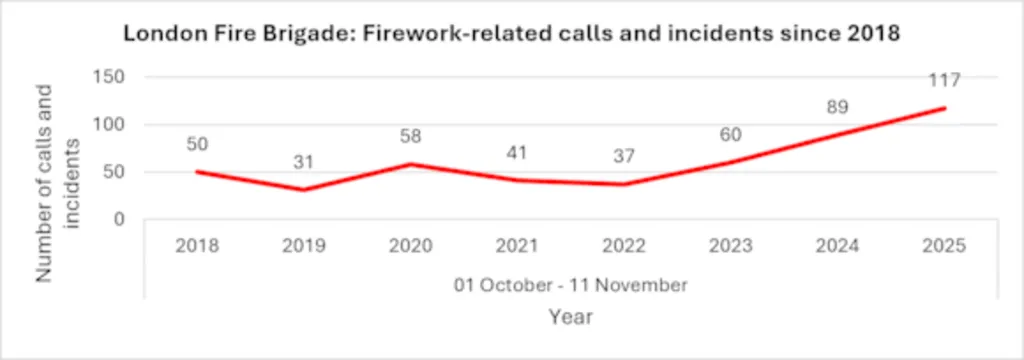
The latest LFB figures highlight the increasing pressure that fireworks are placing on emergency services.
On Bonfire Night in 2025, firefighters responded to 117 firework-related calls and incidents across London, representing a 30% increase compared with the previous year.
Across the whole of 2025, emergency control officers handled 809 calls connected to fireworks, a rise of 20% from 2024.
The figures have prompted renewed concerns about the risks associated with residential displays, particularly when fireworks are used in crowded neighborhoods or without adequate safety precautions.
Guppey urged people to consider how their celebrations affect those living nearby, including people who may be frightened by unexpected explosions and animals that struggle with the noise.
Loud explosions can have serious consequences for animals
While fireworks are a familiar part of Bonfire Night celebrations, their impact on animals can be far from festive.
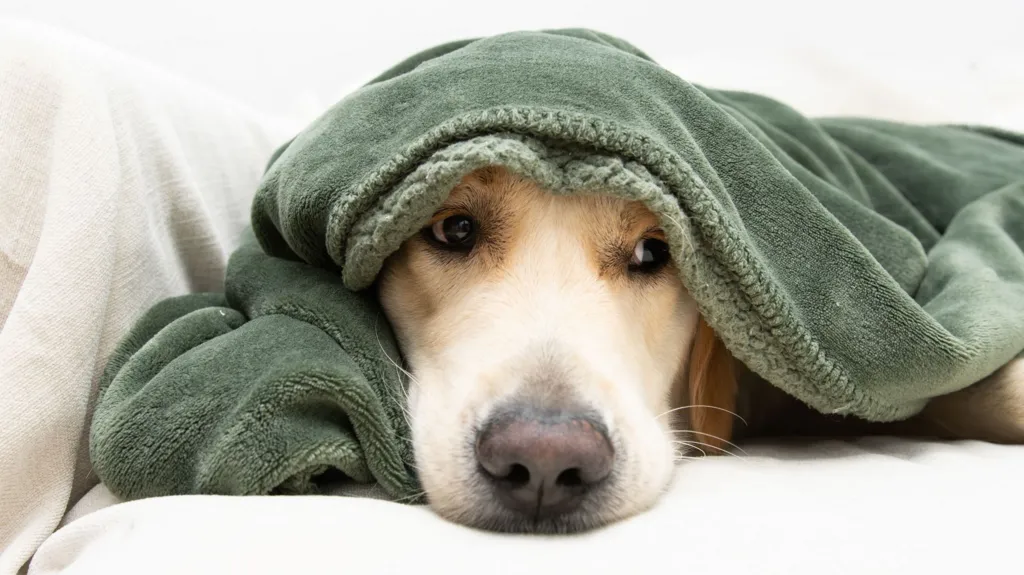
The RSPCA warns that sudden, powerful explosions can cause significant distress to pets and wildlife. Animals may panic, attempt to escape or experience severe physical reactions to the noise and stress. In some cases, the charity warns, the effects can contribute to serious medical emergencies, including heart attacks.
The organization has long campaigned for tighter restrictions on fireworks sold to the public, particularly those producing the loudest explosions.
A government consultation examining the sale and regulation of fireworks in the UK has recently closed, with ministers now considering the responses and possible changes to existing rules.
Lorena Cacioni, an RSPCA veterinary nurse and dog owner, said many people were already worried about how their animals would cope with the approaching celebrations.
She believes choosing organized displays and preparing homes in advance can make a meaningful difference to animal welfare.
How to help pets feel safer during Bonfire Night
The RSPCA is encouraging owners to prepare a quiet, secure space for their animals before fireworks begin.
Its advice includes:
- Turn on the television or play music: Familiar background sounds can help disguise some of the explosions outside.
- Close windows and curtains: This can reduce both the noise and sudden flashes of light.
- Create a safe hiding place: Make sure pets have somewhere comfortable where they can retreat if they become frightened.
- Keep doors and windows secure: A startled animal may try to escape, so take precautions to prevent them from getting outside.
- Let dogs respond in their own way: If a dog wants to hide, pace around, bark or whine, allow it to do so rather than forcing it to behave differently.
- Offer gentle distractions: Try playing with a favorite toy if your pet seems interested, but never pressure an anxious animal to participate.
- Remain calm: Animals can pick up on their owners’ reactions, so behaving normally and reassuringly can help them feel more secure.
A safer way to celebrate
The London Fire Brigade is encouraging anyone planning to use fireworks at home to take precautions, including informing neighbors in advance, keeping pets indoors whenever possible and finishing celebrations by 23:00.
Guppey also stressed that every firework contains powerful explosives and must be handled according to the manufacturer’s instructions, with sufficient space available for safe use.
However, both the LFB and the RSPCA believe that choosing an organized display is a better option for many communities.
Bonfire Night should be an opportunity for people to enjoy themselves, but celebrations do not need to come at the expense of frightened animals, worried neighbors or preventable emergencies. A little consideration before lighting the first firework could make the evening safer for everyone.