

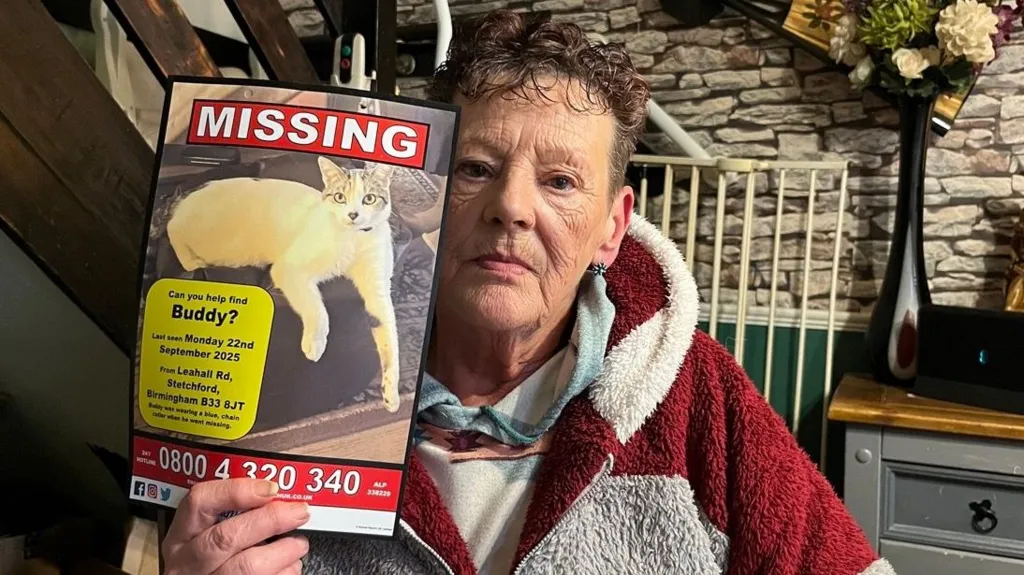
For people searching desperately for a missing pet, receiving a message claiming that someone has found their beloved animal can feel like a miracle. But for a growing number of owners, that moment of hope is turning into a terrifying experience involving fake photographs, demands for money and threats of violence.
Stephanie Young, whose cat Buddy disappeared from her garden in September last year, knows exactly how devastating these scams can be.
After Buddy went missing, the Birmingham foster carer shared his details across social media groups and pet-recovery websites, hoping someone would recognize him. Her hopes were raised when a woman calling herself Melissa contacted her with a photograph of a cat that appeared to be Buddy.
Melissa claimed she had been feeding the animal and said she wanted a reward to help her autistic grandchildren.
Young was convinced the photograph showed her missing cat. She even remembered thinking that Buddy had found a lovely garden to relax in. Believing she was about to bring him home, she withdrew money from the bank and arranged to meet the woman nearby.
But Melissa never appeared.
Instead of accepting cash, the supposed finder insisted on receiving 100 Apple gift cards. When Young began questioning the woman’s identity and discovered that the photographs had been generated using artificial intelligence, the messages became increasingly disturbing.
The scammer threatened to “sell or murder” Buddy if she did not pay.
Young was left devastated and furious that someone could exploit the fear and desperation of a person trying to find a missing animal.
“I’m not going to deny that every inch of your body wants that cat back,” she said.
“They can hook you, the more they ask the more you think ‘I better do it’.”
More than a year after Buddy disappeared, he has still not been found.
Fake photographs turn hope into heartbreak
Young is not alone. Other pet owners across the UK have received similar messages from people pretending to have found their missing animals.
Cam Chauhan, a supermarket worker from Wednesbury, experienced the same kind of deception after her cat Creed disappeared in July last year.
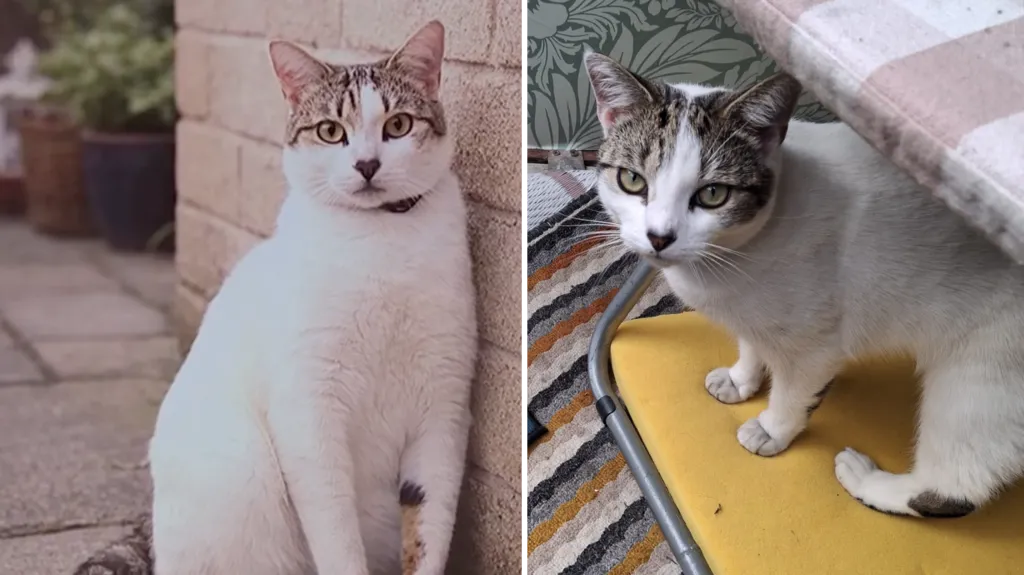
Nine months later, someone contacted her with what appeared to be an exact photograph of Creed sitting in a garden. Chauhan immediately believed her cat had finally been found.
She described the moment as an emotional rollercoaster, recalling how she began crying, grabbed her cat carrier and prepared to collect him.
“I started crying, grabbed my cat bag from the garage and said, ‘let’s go get my cat back,'” she explained.
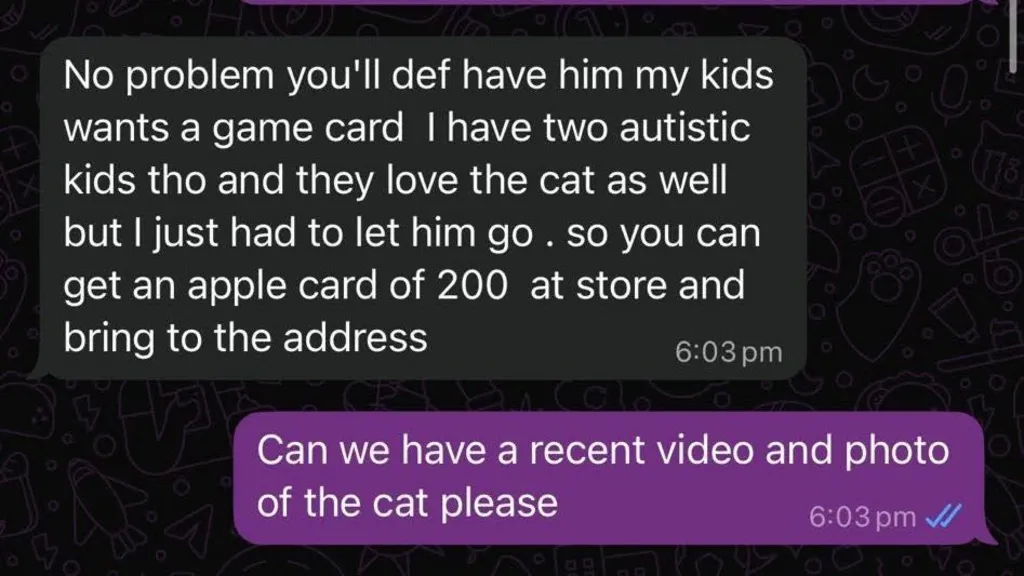
The person contacting her eventually demanded a £200 Apple gift card, claiming the money was for their autistic children.
Chauhan’s daughters became suspicious and questioned why the supposed finder wanted payment before returning the cat. Although the two sides arranged a meeting, the individual refused to show up unless the gift card was purchased and sent by text.
Chauhan refused to pay, and the meeting never happened.
“We just went back home. It was very upsetting,” she said. “I’ve been waiting ever since.”
The 55-year-old believes scammers deliberately target people who are emotionally vulnerable because anyone who has lost a pet would do almost anything to bring it home.
A shocking demand of £40,000

Sarah Robinson, from Northampton, also thought she might finally be reunited with her missing cat, Cookie.
Just two weeks after Cookie disappeared, a man identifying himself as Kherson H contacted her and claimed to have the animal. He sent her a photograph that appeared to show Cookie outside a window.
Although Robinson noticed that the man was vague about his location and sometimes struggled to answer questions, she initially believed the picture.
After speaking with him for some time, she was asked to pay an astonishing £40,000 to get her cat back. The man also sent her a money-transfer link.
When Robinson refused, he threatened to kill Cookie.
The threat left her frightened for her pet’s safety, even though she suspected the entire story was fabricated.
“It’s a very cruel thing to do,” she said. “It’s horrible, because you know it’s not real but you’re terrified it might be.”
All three women reported their experiences to Report Fraud, the UK’s national reporting service for fraud and cybercrime, which is run by City of London Police.
How artificial intelligence is making pet scams easier
The growing number of cases reflects a wider problem: criminals are increasingly using artificial intelligence to make online fraud more convincing.
Dr Rasha Kassem, a senior academic at Aston University, said AI had become a major tool for scammers because tasks that once required technical expertise can now be completed easily, cheaply and sometimes for free.
Fraudsters can create convincing images of missing pets, invent elaborate stories about where they were found and use those pictures as supposed proof that they have the animal.
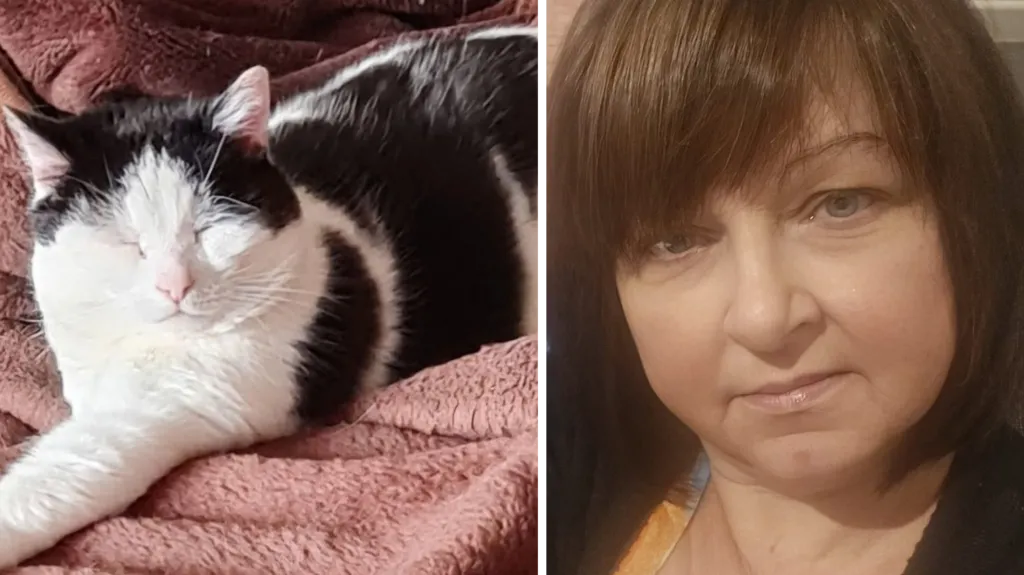
But an image that looks authentic does not necessarily show a real event.
Kassem is concerned that many people remain unaware of how easily AI-generated material can be manipulated. She advises anyone contacted by a supposed pet finder to avoid making rushed decisions, particularly when money or threats are involved.
She also warns against continuing conversations with criminals who demand payment while threatening to harm an animal. Instead, people should preserve as much information as possible and report the incident to the authorities.
The scammers’ strategy relies heavily on urgency. By making owners believe their pets are in immediate danger, they hope to prevent them from thinking clearly or checking whether the claims are genuine.
How to protect yourself when searching for a missing pet
PawBoost, a free online platform that helps reunite lost pets with their owners, advises people to remain cautious whenever a stranger claims to have found their animal.
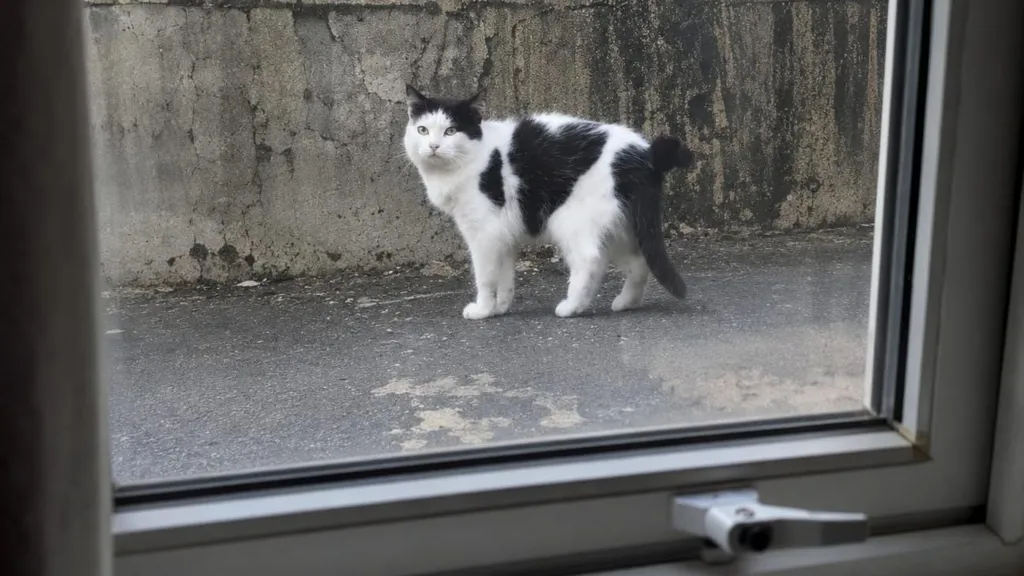
Its recommendations include:
- Request convincing proof. Ask for a recent video of the pet or arrange a video call. Request that the person show a distinctive marking or feature that was not included in your original missing-pet announcement.
- Meet in person before paying. Arrange to see the animal in a safe, public location and confirm that the person actually has your pet.
- Ask questions that only a genuine finder could answer. For example, ask about the animal’s behavior, the collar it was wearing or other details that were not shared publicly.
- Never rush into sending money. Be especially suspicious of anyone demanding gift cards, transfers or payment before allowing you to see the animal.
Losing a pet is already an incredibly painful experience. Exploiting that distress through fabricated photographs and threats makes these scams particularly cruel.
For owners like Young, Chauhan and Robinson, the worst part is not simply losing money. It is having their hopes of bringing a beloved companion home deliberately manipulated by someone who knows exactly how much that reunion would mean.