

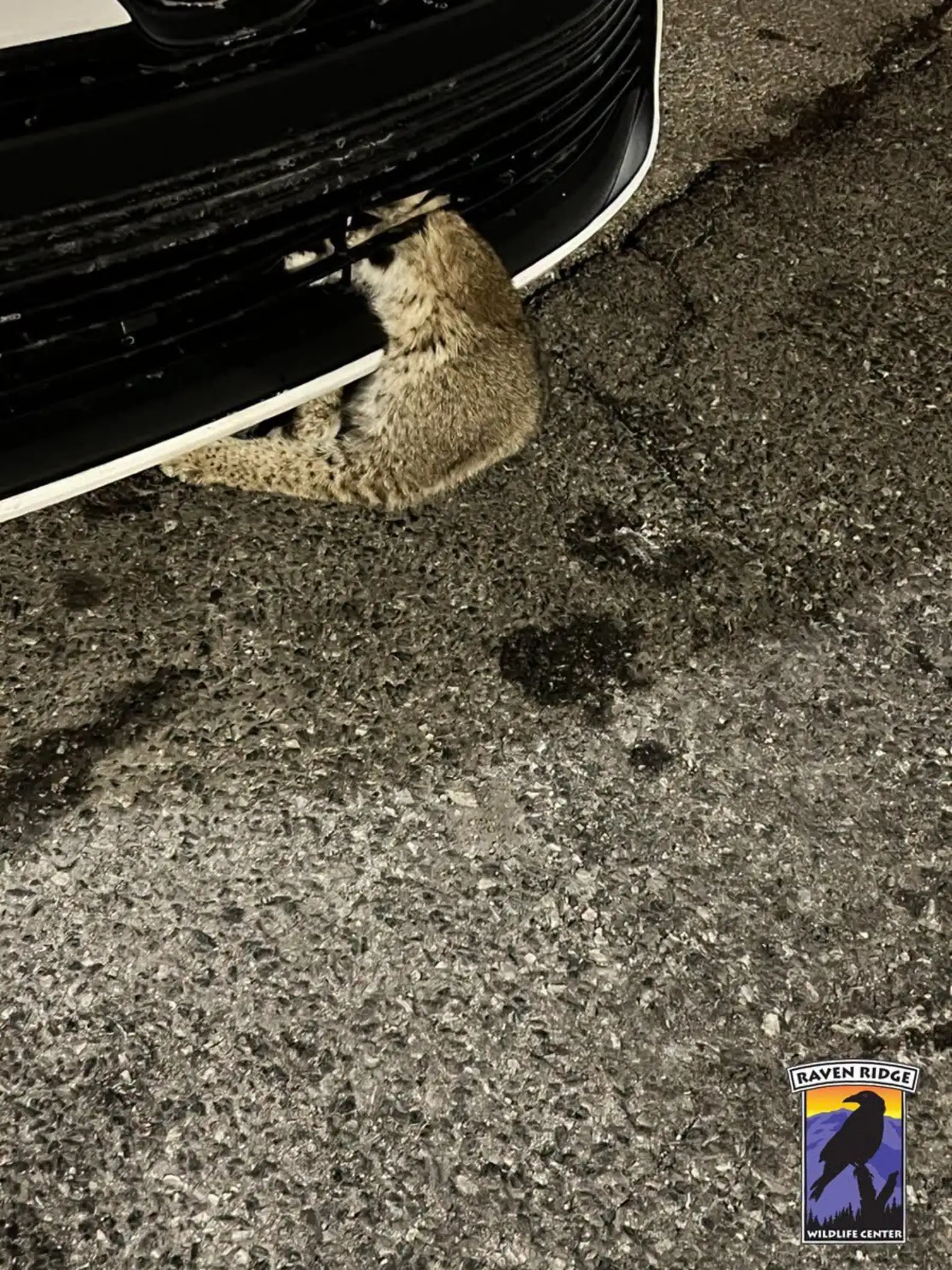
Her head was fully trapped 😰
A wildlife rehabilitation center faced one of its most challenging rescues after receiving an injured bobcat that had survived a violent collision with a vehicle.
The team at Raven Ridge Wildlife Center learned about the animal after a game warden from a nearby county reached out for help. The bobcat had been struck by a car, and because the center had never treated one before, staff members were both concerned and eager to help.
When she arrived, rescuers discovered just how serious the accident had been. The bobcat’s head had become trapped in the vehicle’s grille while the rest of her body had been dragged behind. Although she was still alive, she was barely responsive and appeared to be in severe shock and pain.
During the first examination, the team suspected that both her front and back right legs were fractured. Since she arrived on a Sunday and the center did not have immediate access to its usual X-ray equipment, staff contacted a local equine veterinarian, Dr. Motta, who brought a portable machine to the facility.
The scans confirmed fractures in both legs. Fortunately, the rest of the bobcat’s body appeared relatively healthy, but repairing the broken limbs quickly was essential if she was going to regain normal movement.
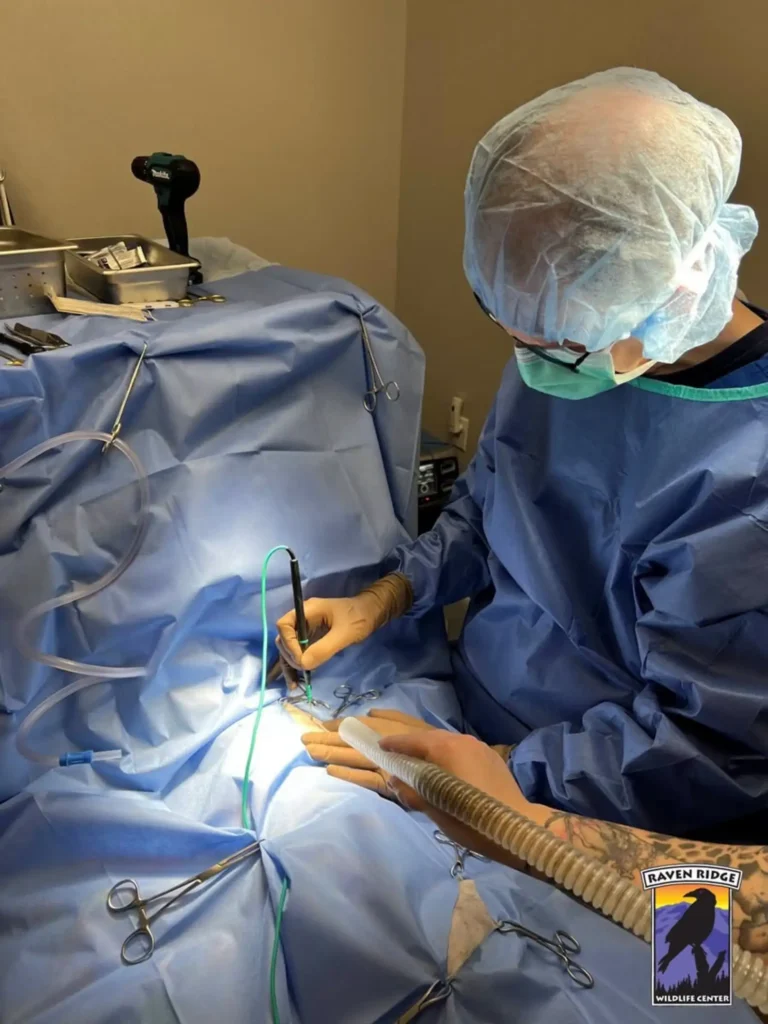
By early Monday morning, a veterinary team that included Dr. Parson, Dr. Baia and Dr. Zeltzman began surgery. The complicated procedure lasted approximately four and a half hours, but both damaged legs were successfully repaired.
Surgery was only the beginning of the bobcat’s recovery. For the next two months, she had to remain in a carefully controlled space where she could not run, jump or pounce. Limiting her movement gave the repaired bones enough time to heal properly.
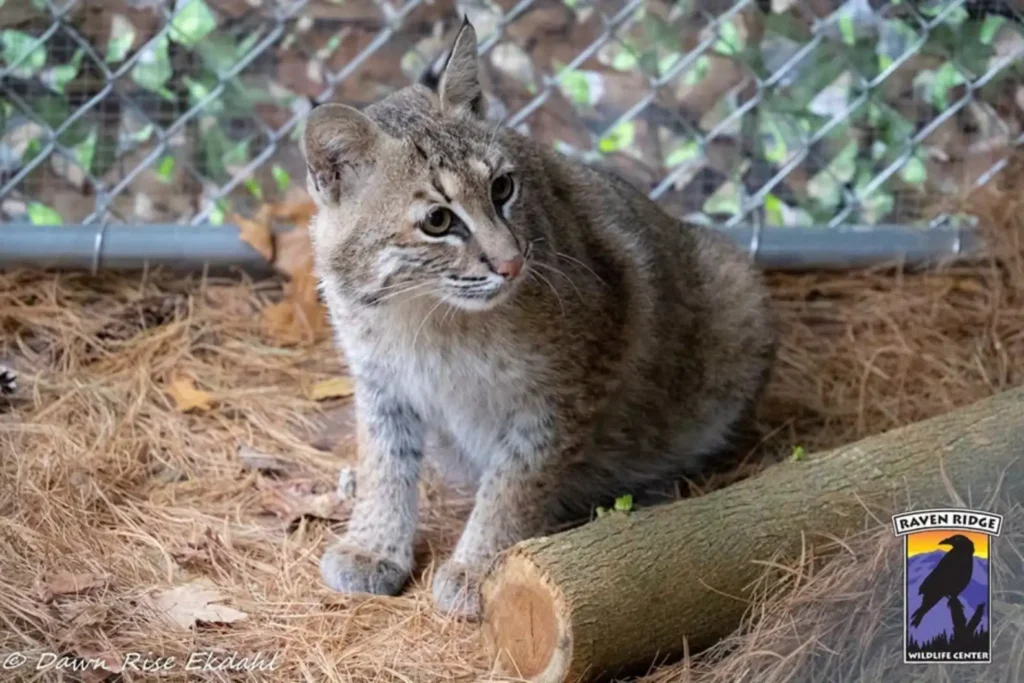
After those weeks of strict rest, rescuers transported her to Companion Animal Hospital for another examination. New X-rays showed encouraging progress, and both legs appeared to be healing as expected.
The bobcat was then moved into an outdoor rehabilitation enclosure, where she could gradually begin walking more, strengthening her muscles and preparing for life in the wild.
A supporter of the rescue organization donated funds that allowed the team to build a specially designed enclosure for her recovery. She spent several more weeks there regaining strength and becoming increasingly active.
Eventually, the staff determined that she was ready to return to her natural habitat.
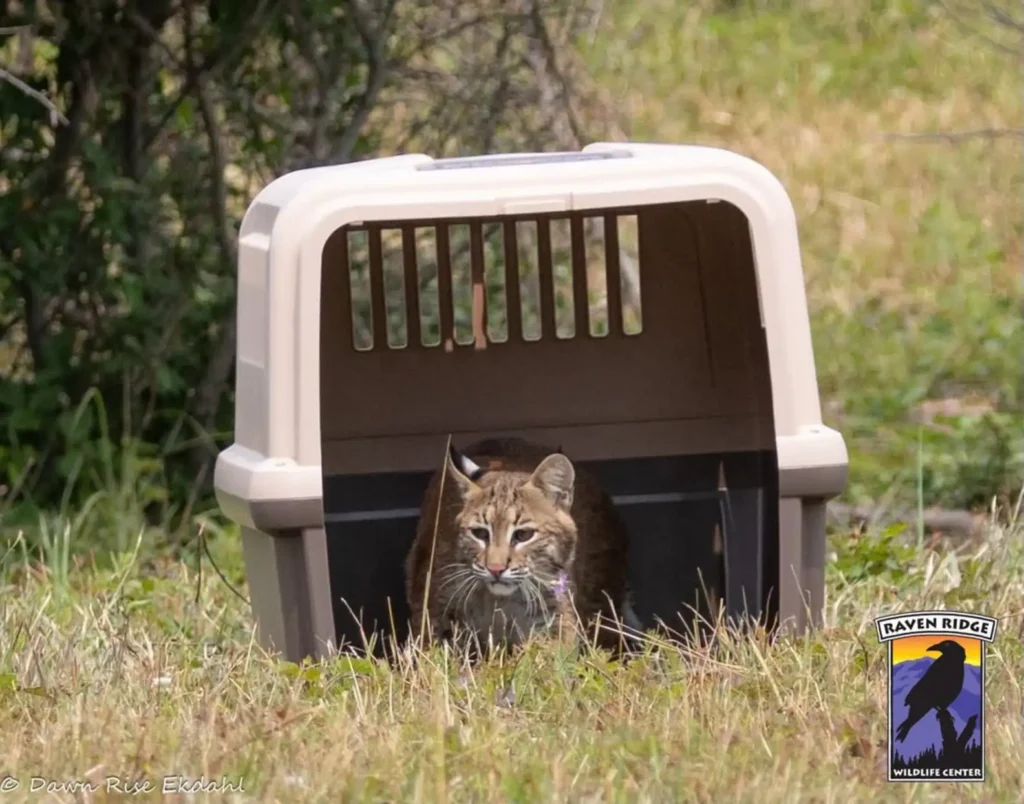
On release day, rescuers carried the bobcat in a transport crate to a quiet, secluded location. Once the door opened, they watched as the animal rushed away and disappeared back into the wilderness.
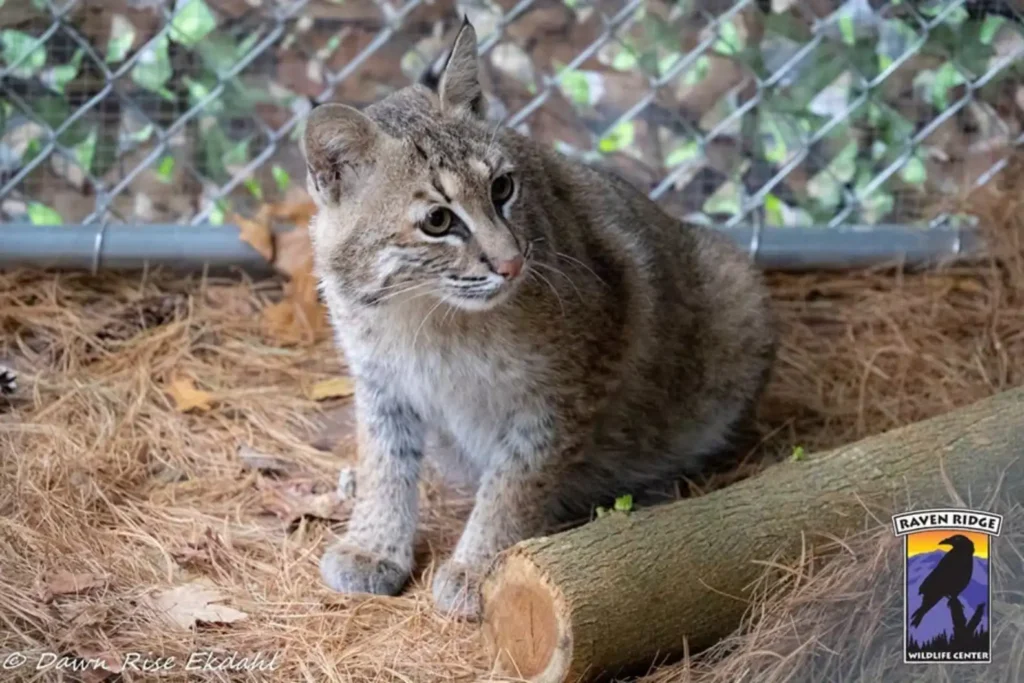
For the rehabilitation team, seeing her run freely again was an emotional conclusion to months of intensive care.
Her survival was also the result of many people working together. From the person who initially reported the injured animal and the game warden who responded, to the veterinarians who provided urgent treatment and the supporters who helped fund her rehabilitation, each person played an important role.
What began as the center’s first bobcat rehabilitation became a powerful example of how cooperation, quick medical attention and patience can give even a severely injured wild animal another chance at freedom.