

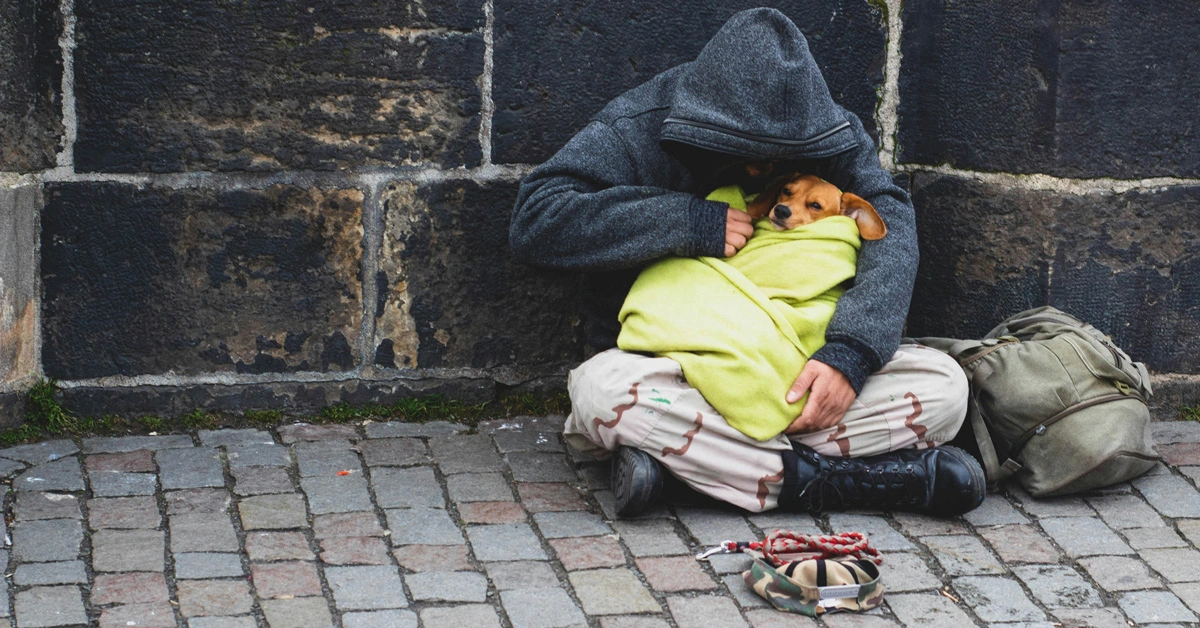
Allowing people experiencing homelessness to stay in shelters with their pets makes a meaningful difference — it encourages more people to seek shelter rather than remain on the streets.
That’s what our team at the University of Southern California’s Homelessness Policy Research Institute found while evaluating California’s Pet Assistance and Support Program.
Launched in 2019 by the state’s Department of Housing and Community Development, the program aimed to make shelters more accommodating to people with pets — most often dogs — so individuals wouldn’t have to choose between housing and keeping their animals.
Between 2020 and 2024, the program distributed $15.75 million to 37 organizations across California. The funding helped shelters build kennels and pet-friendly spaces, provide food and supplies, offer basic veterinary care, and cover staffing and insurance costs.
Evaluating the impact
We conducted this evaluation alongside the nonprofit My Dog Is My Home and the American Society for the Prevention of Cruelty to Animals.
Overall, the program proved highly effective.
It helped 4,407 people experiencing homelessness stay with their pets while accessing services. Many were able to enter shelters, and their animals received needed care. Notably, 886 participants eventually secured permanent housing with their pets — a higher success rate than the statewide average.
A surprising trend
Despite this success, the number of unhoused people with pets has continued to rise.
Since 2017, I’ve led a USC research team that helps produce the annual homeless count in Los Angeles. One of the questions we ask is whether individuals have pets.

Before the pandemic, about 1 in 8 people reported having one. Nearly half of those pet owners had previously been turned away from shelters that couldn’t accommodate animals.
By 2025, that share had increased to roughly 1 in 5.
Why is this happening?
The reasons aren’t entirely clear.
Rising housing costs — the primary driver of homelessness — may be pushing more pet owners into unstable living situations. At the same time, some individuals may be turning to pets for companionship to cope with loneliness and isolation.
Whatever the cause, reductions in federal funding for affordable housing and homeless services could worsen the problem.
The need for expansion
Although homelessness in Los Angeles has decreased slightly since 2023, totaling just over 72,000 people in 2025, long-term progress remains uncertain.
Without increased access to affordable housing — and more widespread programs like the Pet Assistance and Support Program — the number of people living on the streets, with and without pets, is likely to grow.
Expanding pet-friendly shelter options could be a key part of addressing this challenge.