

If you scan a world map for places where endangered species could thrive with minimal human disturbance, the Arabian Peninsula quickly stands out.
Because most people live along the coasts or near oases, enormous stretches of desert remain largely untouched. As a result, conservation leaders have begun using this open landscape to restore wildlife once lost to the region.
The Return of the “Camel Bird”
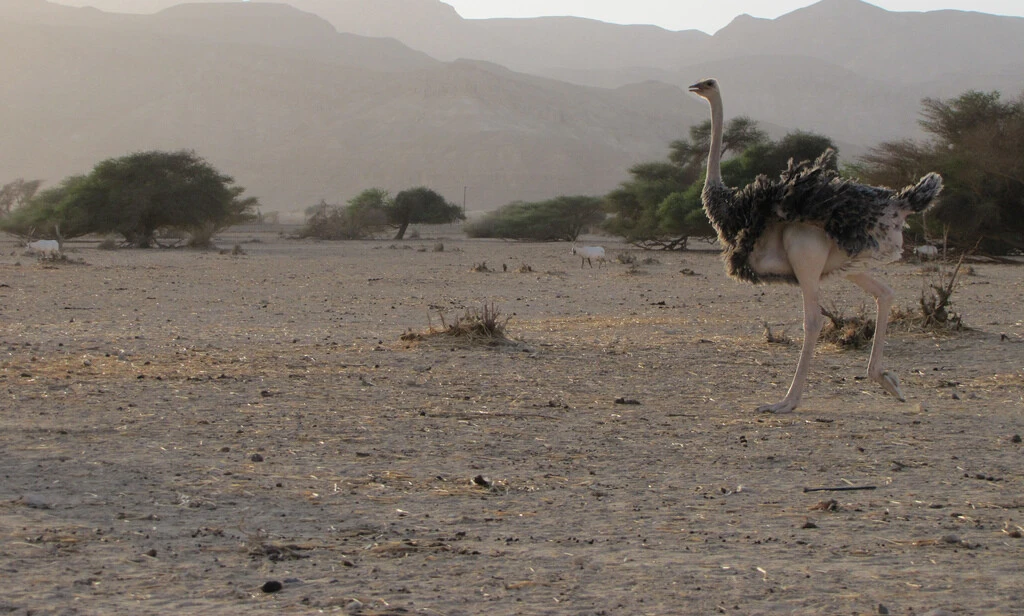
Among the most recent success stories is the reintroduction of the red-necked ostrich, historically known as the “camel bird.”
Ecologists released the species into Saudi Arabia’s third-largest protected area, marking the bird’s return after a century-long absence. Although Arab poets and Roman scholars once celebrated the ostrich, it had vanished from the peninsula’s wild landscapes more than 100 years ago.
Choosing the Right Species
Through a long-term conservation effort called ReWild Arabia, scientists identified the red-necked ostrich as the closest living relative of the extinct Arabian ostrich.
Just as importantly, the species can survive extreme desert conditions, making it well suited for the harsh environment.
As part of the effort, conservationists released five birds into the six-million-acre Prince Mohammed Bin Salman Royal Reserve, where one of the region’s most ambitious rewilding programs is underway.
Part of a Bigger Vision
The ostrich marks the 12th species reintroduced under a broader plan to restore 23 native animals.
Together, these species represent the region’s historic megafauna and include iconic animals such as leopards, cheetahs, and the Arabian oryx.
Each reintroduction brings the ecosystem closer to full recovery.
Cultural and Ecological Meaning
Restoring the ostrich carries significance far beyond biology.
For generations, the bird symbolized strength, endurance, and speed in regional storytelling and oral traditions. Its return reconnects the land with an important part of its cultural heritage.
At the same time, the ostrich plays a critical ecological role.
As a keystone species, it helps stabilize ecosystems and supports long-term environmental balance.
A Safe Haven for a Rare Species
Globally, only about 1,000 red-necked ostriches remain, mostly across Africa’s Sahel region.
Because of this, conservationists see Arabia as a vital refuge. The remote desert landscape, combined with low poaching risk, offers the species a safe place to grow until conditions improve elsewhere in its native range.
Nature’s Seed Dispersers
In return, the ostriches contribute valuable ecological services.
Their wide-ranging movements make them highly effective seed dispersers, spreading plants across long distances and increasing vegetation connectivity in arid landscapes.
In addition, their foraging behavior helps cycle nutrients, aerate soil, and flush insects — actions that support many other species.
Echoes of the Past, Hope for the Future
The Arabian desert also preserves thousands of ancient rock drawings depicting ostriches and other wildlife.
Today, those same animals are returning to the landscape.
By restoring species that once shaped the region, conservationists are not only protecting biodiversity — they are reconnecting the present with a deep and enduring natural history.