

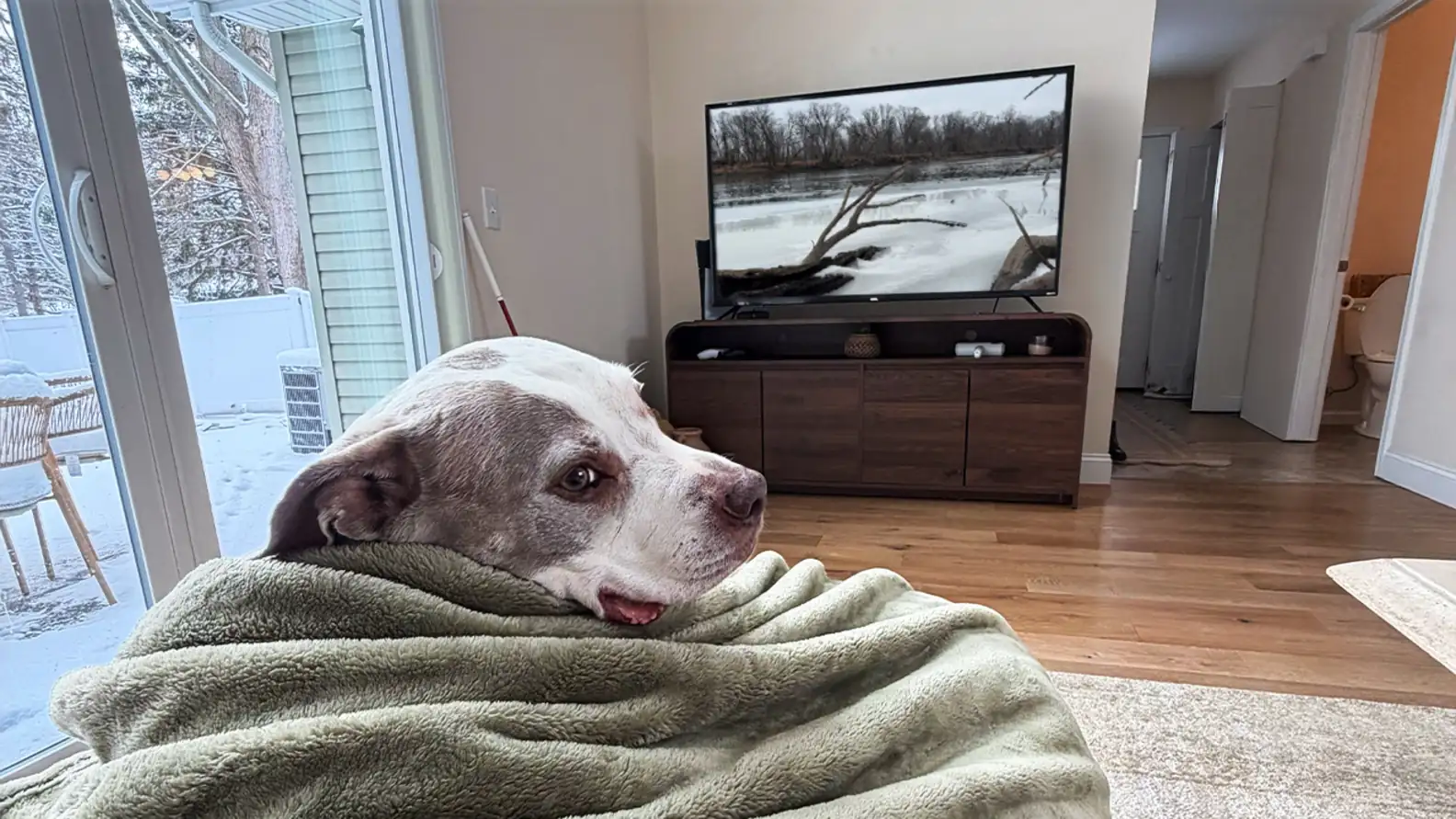
In a perfect world, we’d spend every minute of every day with our dogs. However, real life doesn’t always allow that. Whether you’re running to the grocery store or heading into the office, there comes a time when you have to leave your pup home alone.
For some dogs, that moment can be difficult. As soon as the door closes behind their favorite person, stress and anxiety can quickly set in.
Helping Dogs Feel Calm While You’re Away
Fortunately, there are simple ways to help dogs feel more relaxed during alone time.
One helpful option involves providing gentle background sound. Calm audio or visuals can help dogs feel less isolated and reduce sudden noises that might otherwise trigger anxiety.
Why Sound Matters
According to certified applied animal behaviorist Dr. Mindy Waite, calming sounds can create a more soothing environment when you leave.
In many cases, background noise helps mask everyday sounds like people walking by, delivery trucks, or construction. Without that buffer, these noises can startle dogs and lead to barking or pacing.
As a result, soft, steady sound often helps dogs settle more easily.
Choosing the Right Kind of Audio
That said, not all sound is helpful.
High-energy music, loud voices, or barking sounds can actually increase stress. Some dogs react strongly to seeing or hearing other dogs on screens and may bark, whine, or become overstimulated.
Because of this, it’s important to choose low-key content designed to calm rather than excite.
Calming Visuals Make a Difference
Gentle visuals paired with soft, ambient sound tend to work best. Peaceful scenes like ocean waves, quiet backyards, or snowy landscapes can provide comfort without overwhelming your dog.
These slow-moving, real-world scenes offer a sense of presence while keeping stimulation to a minimum.
Introduce It Before You Leave
As with anything new, it’s best to introduce calming audio or visuals while you’re still at home.
Pay attention to how your dog responds. If they relax, lie down, or ignore the screen entirely, that’s usually a good sign. On the other hand, if they seem restless or reactive, you may need to adjust the setup.
If you use a pet or security camera, checking in while you’re away can also help you understand whether the background sound is truly helping.
Set Your Dog Up for Success
Although calming sound can help, it works best as part of a larger routine.
Before leaving, make sure your dog’s basic needs are met. Dr. Waite recommends that dogs are fed, pottied, exercised, and given some playtime — tired, but not exhausted.
In addition, most dogs feel more comfortable when they have space to move around, though a small number may feel safer in a kennel.
Reduce Common Triggers
It also helps to limit things that might spark anxiety.
For example, if your dog reacts to people walking past the house, reducing visual stimulation near windows can make a noticeable difference. Simple changes like this often lower stress levels significantly.
When Anxiety Is More Severe
For dogs with stronger separation anxiety, background sound alone may not be enough.
In those cases, talking with a veterinarian can help. Behavioral training plans or, in some situations, medication may provide additional support and relief.
Helping Dogs Feel Secure
Ultimately, the goal is to help dogs feel safe and comfortable when they’re alone.
With patience, thoughtful routines, and the right environment, many dogs can learn to enjoy peaceful downtime — even when their favorite person isn’t home.