

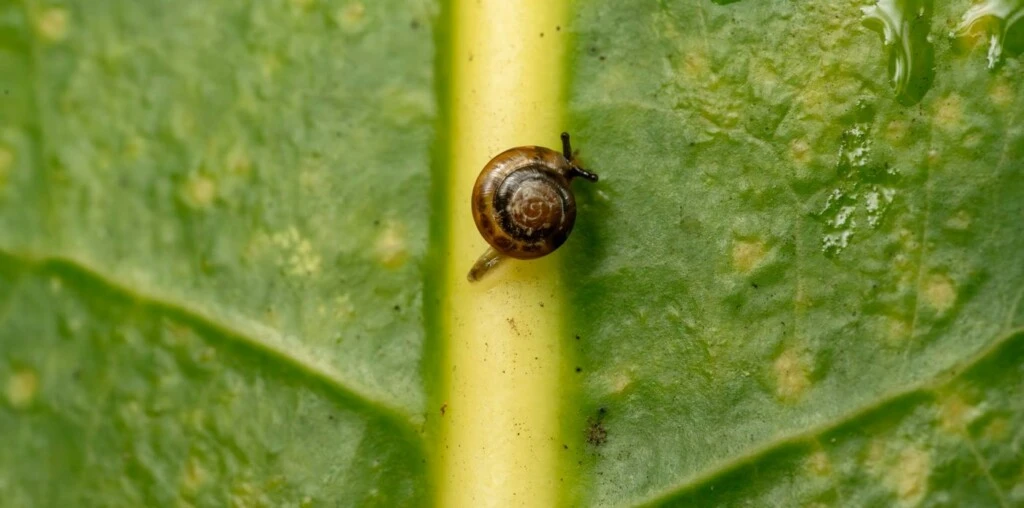
A team of Australian scientists has made an astonishing discovery: a giant snail species long believed to be extinct is, in fact, still alive.
The find has led to one of the most ambitious snail conservation projects ever attempted, involving large-scale captive breeding and the careful return of the species to the wild.
The Campbell’s keeled glass snail was officially declared extinct by the International Union for Conservation of Nature (IUCN) in 1996. Repeated surveys across its only known habitat — Norfolk Island, an Australian territory located between Australia and New Zealand — had failed to turn up a single individual or any trace of the species.
That changed in 2020, when snail expert Dr. Isabel Hyman received an unexpected photograph from a Norfolk Island resident named Mark. The image showed a snail that looked unusually large for the island. Dr. Hyman immediately recognized it as something extraordinary.
Although “giant” is a relative term, the Campbell’s keeled glass snail reaches about 2 centimeters in length — enormous compared to many of Norfolk Island’s native snails, some of which are more than ten times smaller.
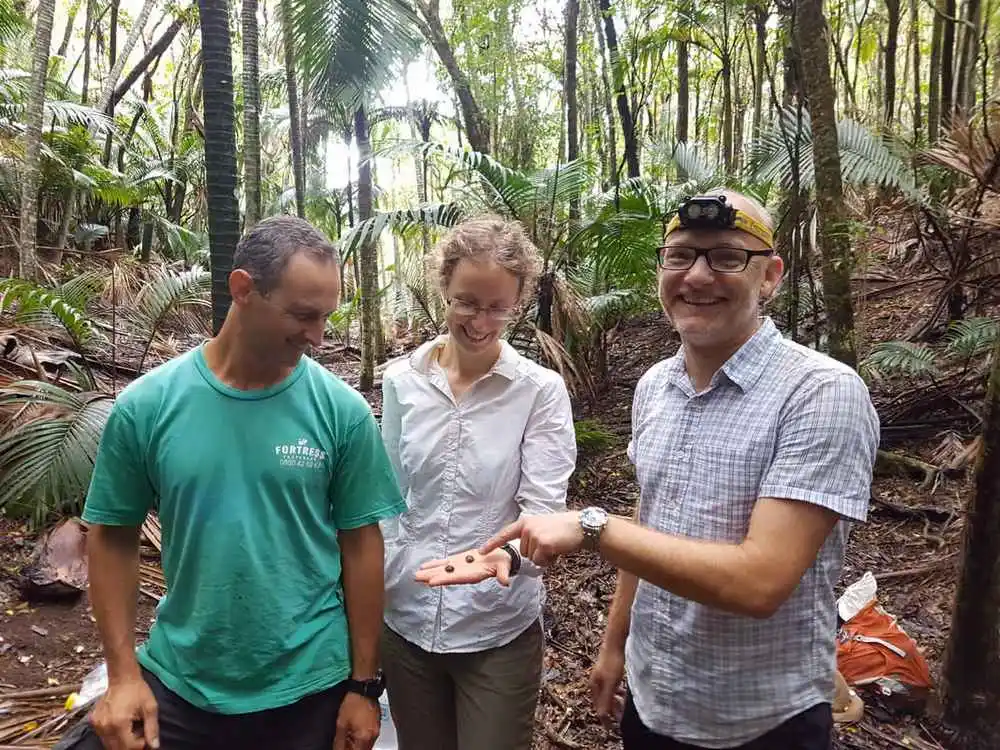
Despite strict COVID-19 travel restrictions in place at the time, Dr. Hyman was granted special permission to travel to Norfolk Island to investigate. In a secluded valley, she and her team made the discovery official: a small but living population of Campbell’s snails still survived.
The snails were carefully collected and transported to Taronga Zoo in Sydney, where conservationists launched a captive breeding program. The effort wasn’t easy, involving losses as well as successes, but over time the population grew dramatically.
Eventually, nearly 800 snails were bred in captivity. Earlier this year, they were returned to Norfolk Island in a carefully planned reintroduction effort.
Local conservation staff played a key role in preparing the release sites. Rangers monitored the habitat closely and worked to control invasive species such as rats and chickens, which pose a serious threat to the snails.
“Invertebrates are often overlooked in conservation work,” said Melinda Wilson, natural resources program manager at Norfolk Island National Park. “This project has helped shine a light on how important they really are.”
The snails were released into a different protected valley filled with native palms and hardwood trees. Each individual was tagged so researchers could track movement and survival. A basic irrigation system was also installed to help maintain moisture during unusually dry periods — a crucial factor for snail survival.
In the months following the release, the snails became increasingly difficult to locate. While this might seem worrying, experts believe it’s actually a positive sign. Similar conservation efforts with invertebrates have shown that as populations spread out and settle into their environment, they naturally become harder to spot. With adequate rainfall, researchers expect sightings to increase again.
Seeing a species return from extinction has been deeply meaningful for those involved.
“Having these snails become a central focus of our conservation work has been incredibly rewarding,” Wilson said.