

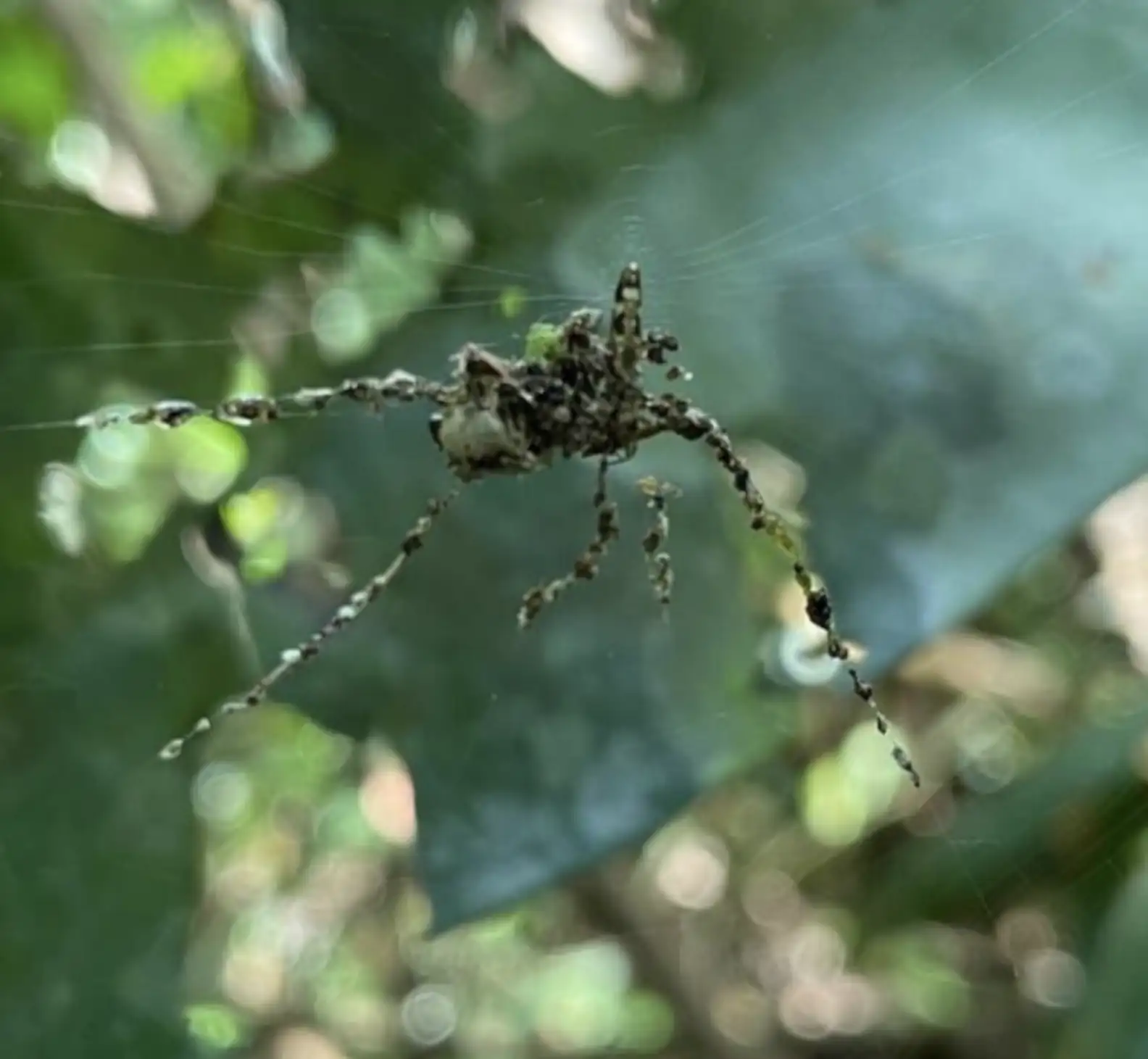
Did it fool you?
If you glanced at the image below for just a moment, you’d probably assume it showed an ordinary spider resting quietly on its web.
But take a closer look and you’ll notice something surprising — the “spider” isn’t real at all. It’s an expertly designed decoy.
Scientists have recently published a remarkable study revealing a behavior never before recorded in spiders. They documented two Cyclosa species crafting life-like fake spiders and incorporating them into their webs.
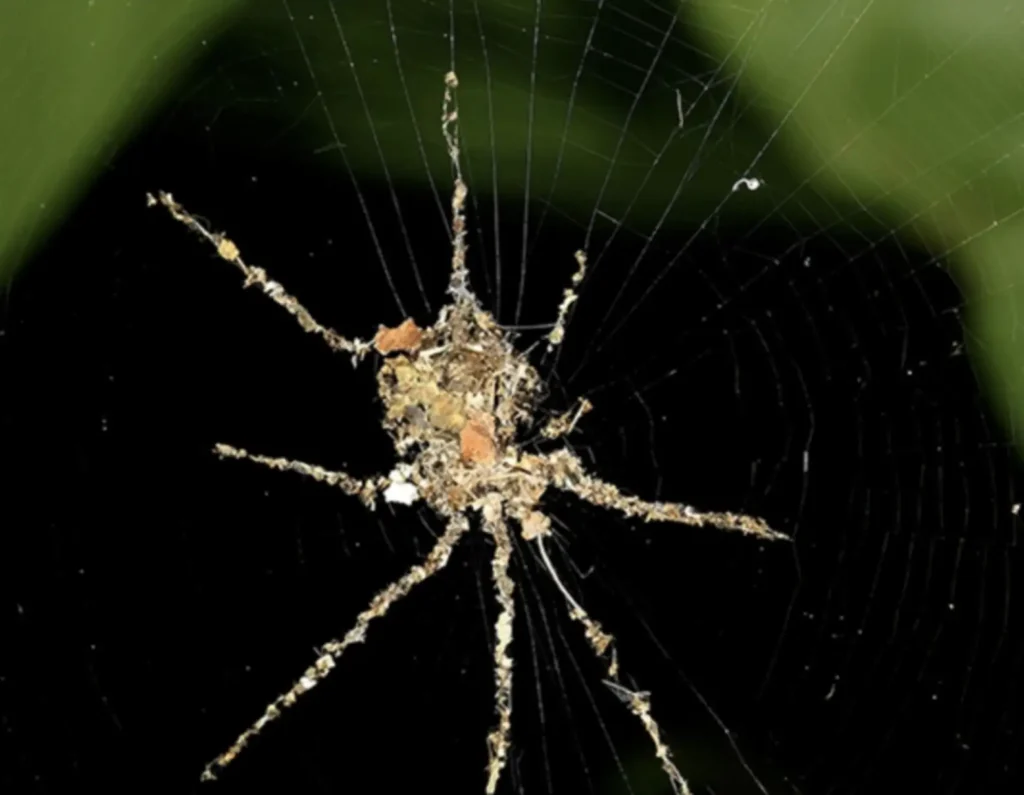
Many orb-weavers are already known for creating stabilimenta — decorative structures in their webs that usually appear as simple zigzags or spirals. But these two Cyclosa species, found in Peru and the Philippines, take the concept much further. Using silk, fragments of plants and even bits of insect remains, they build astonishingly realistic spider replicas in as little as an hour and a half.
“These spiders create stabilimenta made of debris and silk, arranging the materials into a form that visually mimics the outline of a larger spider,” the researchers wrote.
Why go to such lengths? The team believes the decoys are meant to scare off predators like birds or lizards.
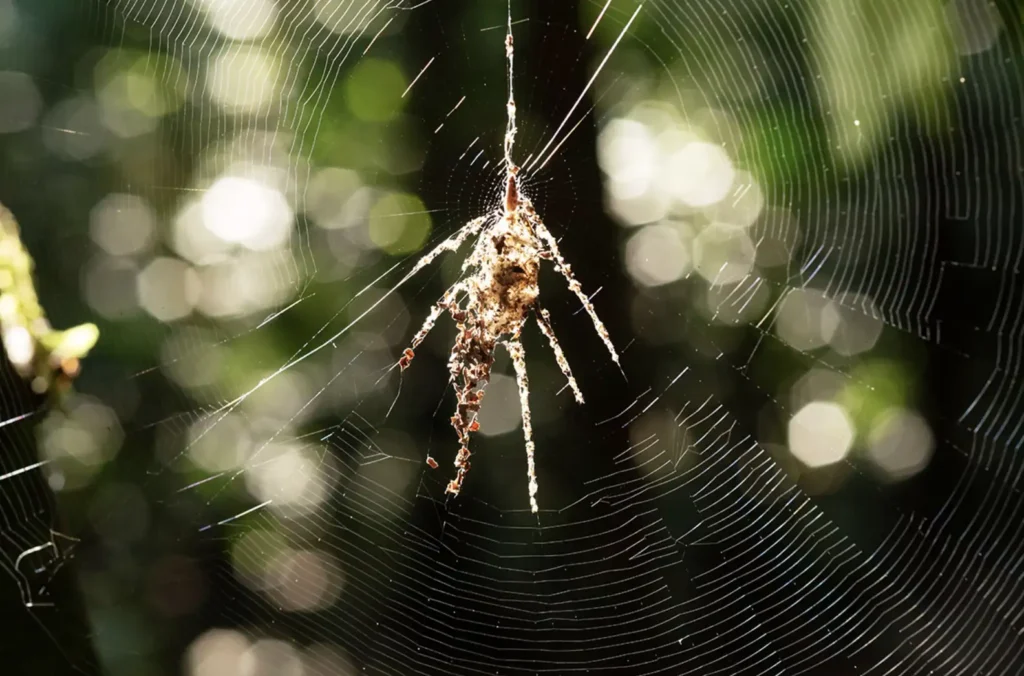
“This structure may serve as a decoy, redirecting or preventing attacks from certain predators,” the researchers explained.
Although the Cyclosa spiders themselves measure less than a centimeter long, their fabricated counterparts are much larger. These oversized “spiders” make it appear as though a far more intimidating creature is occupying the web. The fakes are so convincing that even researchers were fooled when they first encountered one in the field.
“On average, the stabilimenta were 3.3 times the length of the spider’s actual body,” the paper noted.
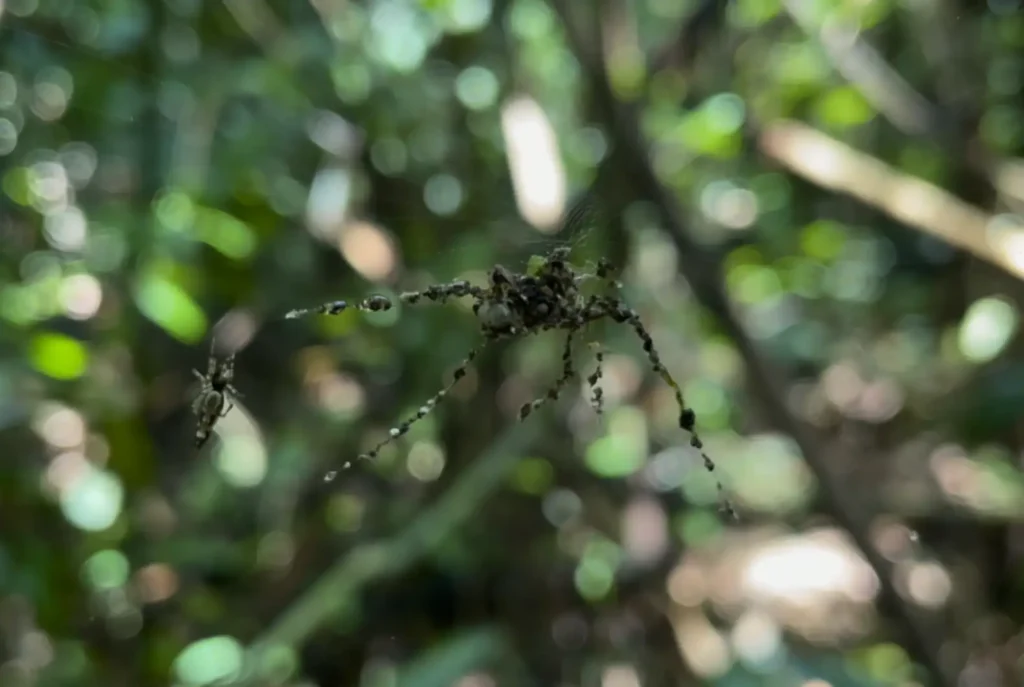
The image below highlights just how dramatic the size difference is — the real spider on the left, and the decoy on the right:
Further study is needed to uncover all of the potential uses for these detailed constructions. The scientists even observed female Cyclosa hiding their egg sacs inside the decoy’s “body,” using it as a protective shelter.
Spiders are often misunderstood or feared, but this newly discovered behavior reveals just how intricate — and surprisingly clever — these tiny creatures can be.