

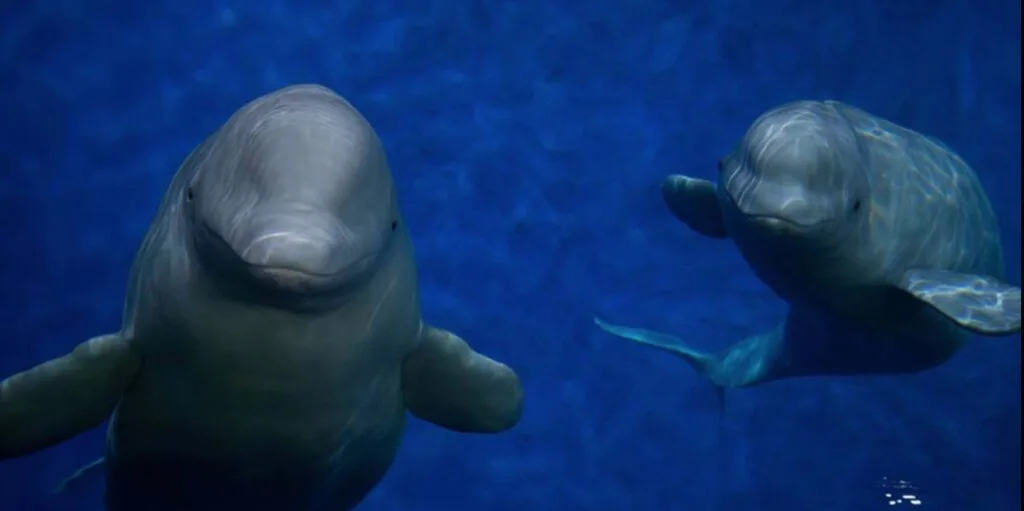
This story highlights an important rescue effort to relocate dozens of captive beluga whales from a closed marine park to facilities better equipped to care for them.
Captive belugas finally getting new homes
The governments of the United States and Canada have approved the transfer of 30 captive beluga whales that have remained at Marineland in Ontario, Canada, for years after the theme park shut down.
Marineland, located near Niagara Falls, closed amid growing criticism over the captivity of highly intelligent marine mammals. After the closure, the park struggled financially and could no longer properly care for its beluga population. According to reports, the facility even warned that it might have to euthanize the whales if permission to relocate them was not granted. An earlier proposal to send the whales to China had already been rejected.
International approval required
Because beluga whales are protected under Appendix II of the Convention on International Trade in Endangered Species (CITES), moving them across international borders requires permits from the countries involved.
The necessary approvals have now been granted:
- 28 belugas will be relocated to four accredited aquariums in the United States.
- The remaining 2 whales are expected to move to Oceanogràfic València in Spain once Spanish authorities issue the final permits.
Their new homes
The American aquariums preparing to receive the whales are:
- Georgia Aquarium
- Shedd Aquarium in Chicago
- SeaWorld San Diego
- SeaWorld San Antonio
Before any transfers begin, Canadian veterinarians must certify that each whale is healthy enough to travel. Specialized transport teams will accompany the animals throughout the journey to ensure their safety and minimize stress.
The participating aquariums stated that the whales will receive:
- Diets tailored to their nutritional needs, including a variety of seafood.
- Carefully maintained pools with high water-quality standards.
- Continuous veterinary care and monitoring.
- Experienced marine mammal specialists available around the clock.
Because transporting such large marine mammals is a complex operation, the relocation is expected to take several weeks.
Why belugas are special
Beluga whales (Delphinapterus leucas), often called “white whales,” are close relatives of narwhals and are one of the few whale species that naturally develop completely white skin as adults.
They are famous for:
- Their highly social and gentle nature.
- Remarkable vocal abilities, earning them the nickname “canaries of the sea.”
- Flexible necks that allow them to turn their heads.
- Their characteristic “smiling” appearance, created by the shape of their mouths.
Belugas are also among the most intelligent marine mammals. One famous captive male named No-see surprised researchers by producing sounds that closely resembled human speech. He even reportedly imitated a diver’s command to “get out” of the water by lowering the pitch of his normal whale vocalizations.
A step toward better welfare
Although these whales will remain under human care rather than being released into the wild, conservationists view the relocation as a major improvement in their welfare. The receiving institutions have greater resources, specialized veterinary teams, and modern facilities designed to meet the complex physical and behavioral needs of belugas.
For animals that spent years in an uncertain situation after Marineland’s closure, the move represents a chance to live the rest of their lives in environments with higher standards of care, enrichment, and medical support.