

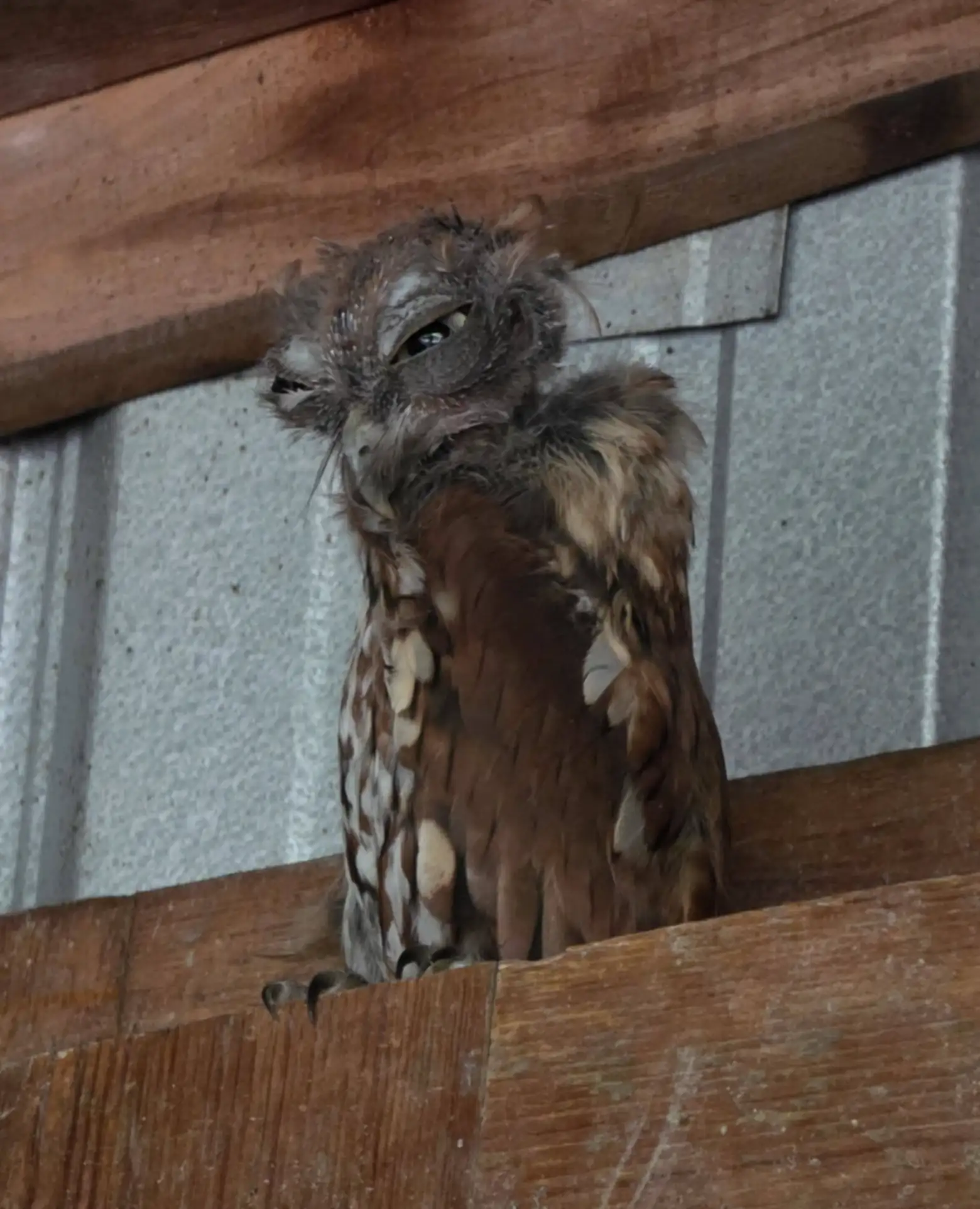
Kelly Poole had already crossed paths with the little owl once before.
Back in 2024, the Virginia resident discovered an owl inside her shed. She did not have a camera nearby, so all she could do was take in the unusual encounter before the bird eventually flew away.
As time passed, the memory became less vivid.
Then, during the summer, Poole looked inside the shed and was stunned to see what appeared to be the very same owl.
This time, however, he did not look well.
The bird seemed weak and unusually tired, and Poole worried that something serious might be wrong. She photographed him and shared the image in a local wildlife group online, hoping someone with experience could offer advice.
That is how she connected with Larry Oakes of Ringgold VA Wildlife Rescue.
Following guidance from the rescuers, Poole carefully used a fishing net to lift the owl from the shed. She affectionately began calling him Larry Bird before taking him to the wildlife rescue for help.
The following day, Larry Bird was transferred to the Southwest Virginia Wildlife Center of Roanoke for a more thorough examination.
There, wildlife specialists discovered that his alarming appearance was not the result of a serious illness.
Instead, Larry Bird was experiencing what is known as a catastrophic molt.
Most birds lose and replace their feathers gradually, allowing them to maintain a relatively normal appearance throughout the process. During a catastrophic molt, however, many feathers are shed within a much shorter period of time.
The dramatic feather loss can leave a bird looking disheveled, weak or even sick.
Fortunately, examinations showed that Larry Bird was healthy despite his unusual appearance.
Photos of the temporarily scruffy owl quickly attracted attention online, with people finding his messy look both strange and endearing.
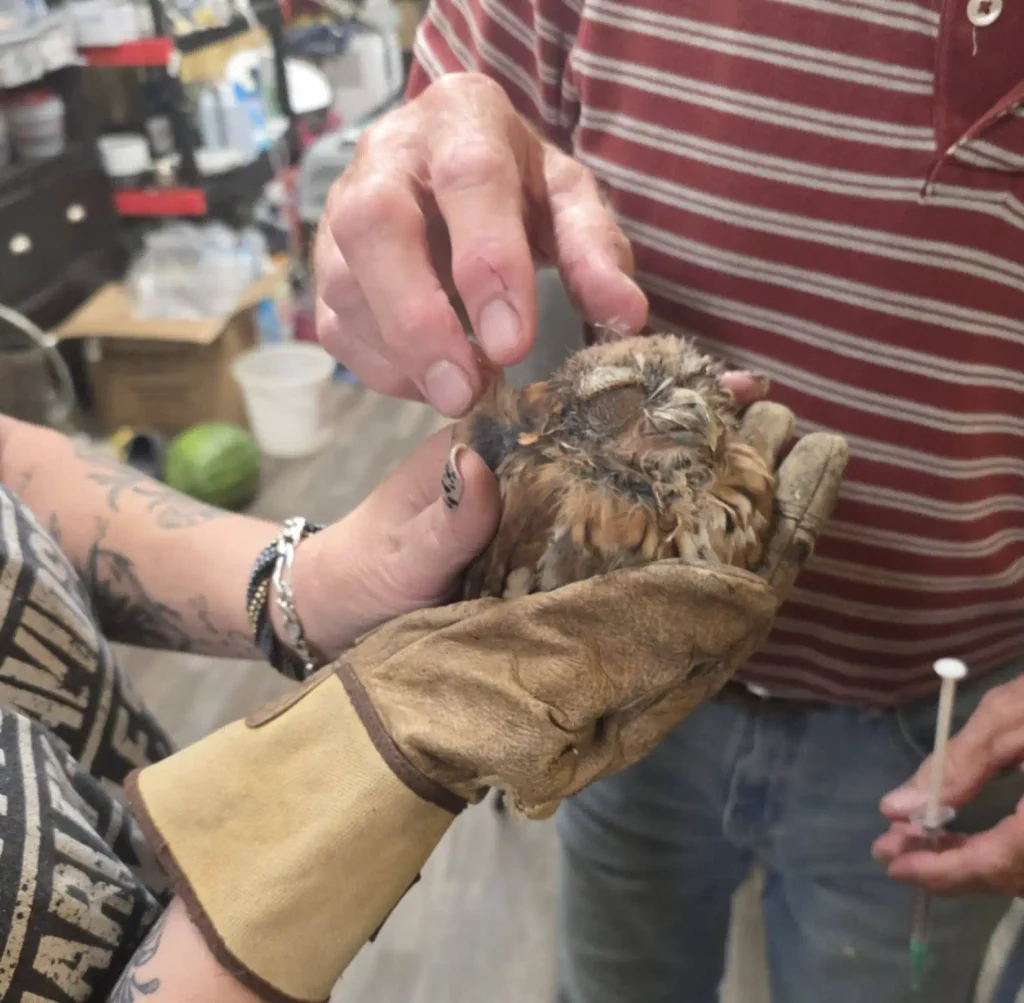
After spending several days under professional observation, Larry Bird was cleared to return home.
Wildlife rehabilitators brought him back to the area where he had been found and released him into the wild.
Poole then began watching for him.
For weeks, she scanned the trees and surrounding property, hoping the familiar owl would make another appearance.
Eventually, he did.
This time, Larry Bird looked completely different. His feathers had grown back, and the awkward, ragged appearance that had caused so much concern was gone.
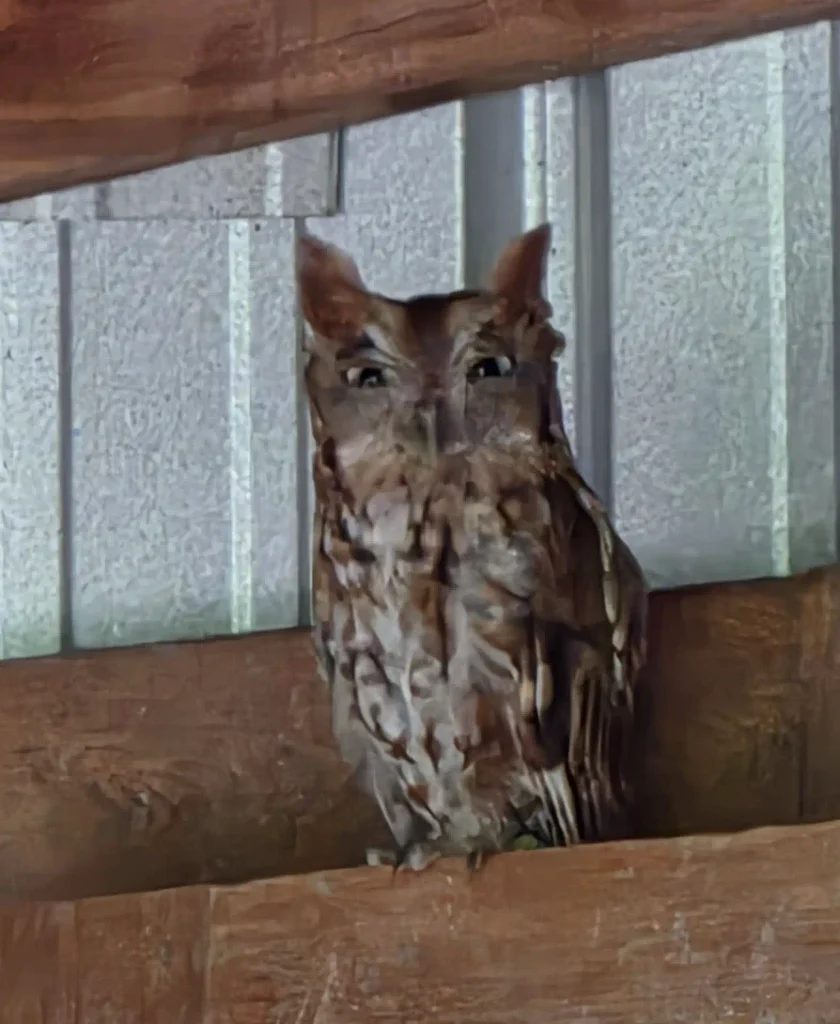
Poole was thrilled to see him looking healthy again and moving comfortably through his natural environment.
What initially appeared to be a frightening wildlife emergency ultimately turned out to be a temporary transformation.
And after helping make sure her familiar visitor was safe, Poole now hopes Larry Bird continues to call the area around her home his territory for years to come.