

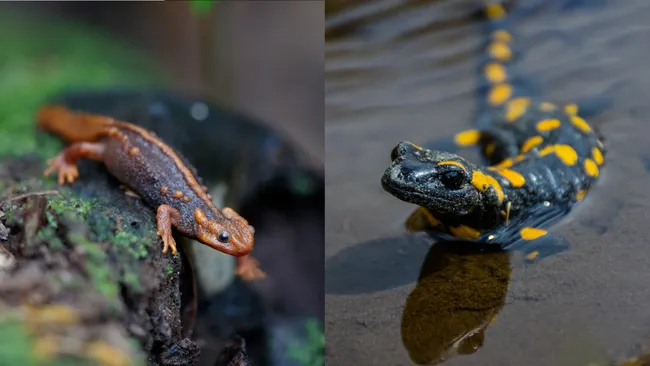
Salamanders and newts are both long-tailed amphibians, but what’s the difference between them?
If you ever find a small amphibian with a tail wandering near a pond or stream, it might be a salamander — or possibly a newt. The two look similar, so what sets them apart?
Biologists explain that every newt is technically a salamander, but not all salamanders count as newts. Salamanders make up a large group of tailed amphibians belonging to the order Caudata. Within that group is a smaller subfamily, called Pleurodelinae, which includes the animals we commonly label as newts.
There aren’t any single features that perfectly separate newts from other salamanders, but there are some trends. Many newts have rougher, bumpier skin, while most other salamanders tend to be smooth and moist. This textured skin often contains strong toxins meant to protect newts from predators. A well-known example is the rough-skinned newt of western North America, whose skin contains an extremely dangerous poison also found in pufferfish.
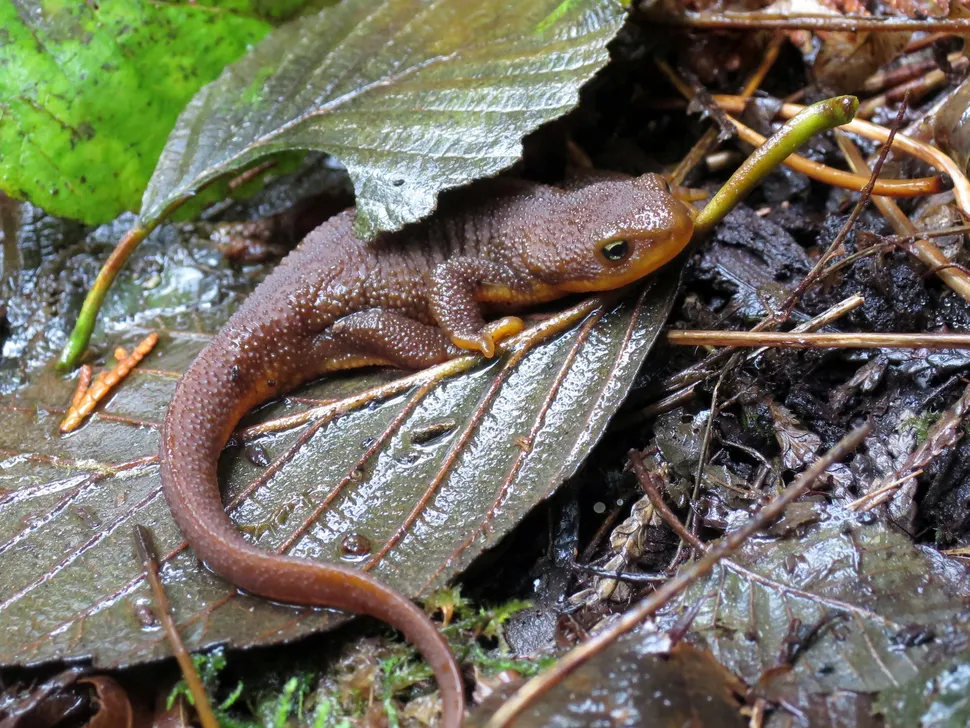
Life cycles can differ too. Most salamanders begin life in water and later move onto land. Certain newts add a third stage: after starting underwater, their bright juvenile form — called an eft — lives on land for years before they return to the water as adults. The eastern newt in the U.S. is famous for this, although some populations skip the land stage altogether and remain aquatic.
Naming can be confusing, partly because scientists originally used the word “newt” loosely for certain warty salamanders before modern classification was established. Now, species grouped as newts don’t always look or behave alike — some even have smooth skin instead of bumpy.
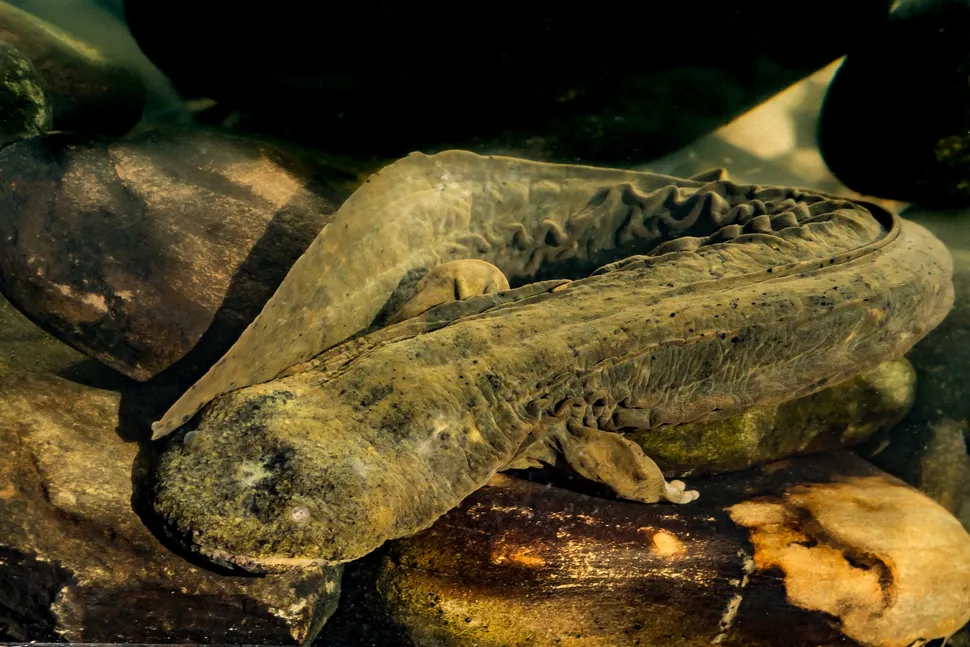
Salamanders overall are incredibly diverse. Some breathe without lungs, others never leave the larval phase, and sizes range from tiny inch-long species to massive giants over 6 feet (1.8 meters) long. These animals play important roles in ecosystems by keeping insect populations in check and helping indicate the health of freshwater environments.
In short, newts form just one interesting branch of the much larger salamander family, and both are fascinating creatures worth noticing in the wild.