

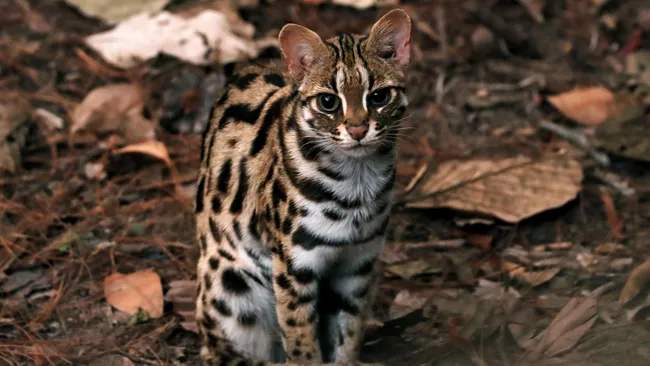
Leopard cats were living alongside people in ancient China for more than 3,500 years before domestic cats arrived from Europe via the Silk Road.
Unique Rewritten Version
Long before house cats found their way into China, another species — the leopard cat — lived surprisingly close to humans. New scientific findings show that people and leopard cats shared villages and farmlands in ancient China for more than 3,500 years.
Today, leopard cats tend to avoid humans. But researchers say that wasn’t always the case. Shu-Jin Luo, a scientist at Peking University, explained that these wild cats once interacted with people far more directly.
Modern pet cats (Felis catus) originated from African wildcats and spread around the globe. Their exact domestication timeline is still debated, with early evidence pointing to the Middle East and Egypt. One popular theory suggested that domestic cats reached China through the Silk Road roughly 1,400 years ago.
However, archaeological discoveries from 2013 complicated that story — bones from cat-like animals found in western China dated back to 3300 B.C. Yet when DNA tests were performed in 2022, scientists learned those remains were not from domestic cats but from leopard cats (Prionailurus bengalensis), a wild Asian species.
To better understand these ancient relationships, researchers analyzed bones from 22 cats found at sites across China, dating between 3500 B.C. and A.D. 1800. Most of the more recent samples — from A.D. 730 onward — belonged to true domestic cats. The earliest of those appeared in a key Silk Road trading city, suggesting that pet cats arrived with merchants from the West.
Historical art and writings from around A.D. 820–830 also show cats kept as luxury pets, especially among the wealthy. At that time, white cats were admired and sometimes given as special gifts.

All earlier remains examined in the study turned out to be leopard cats. This revealed that people had long relied on these wild felines to hunt rodents and protect grain stores, much like domestic cats do today. Families may have raised young leopard cats to help control pests — even if they never became fully tame.
Written records from China’s Warring States period (5th–3rd century B.C.) also describe farmers encouraging wild cats to live on their land, reinforcing the idea of a long-lasting partnership.
But that relationship eventually faded. After the Han dynasty collapsed around A.D. 220, wars, climate challenges, and population decline reduced farming and food stores. With fewer rodents around, leopard cats lost their usefulness — and sometimes became threats. As chicken farming grew, leopard cats were blamed for killing poultry, earning them the nickname “chicken-killing tigers” in some regions.
Meanwhile, domestic cats — more social and typically interested in smaller prey — gradually replaced them as preferred animal companions.
Scientists think a key shift occurred even earlier in Egypt, where large numbers of cats were raised together. This unusual environment likely encouraged genetic and behavior changes that made modern domestic cats calmer, friendlier, and more accepting of life with humans.