

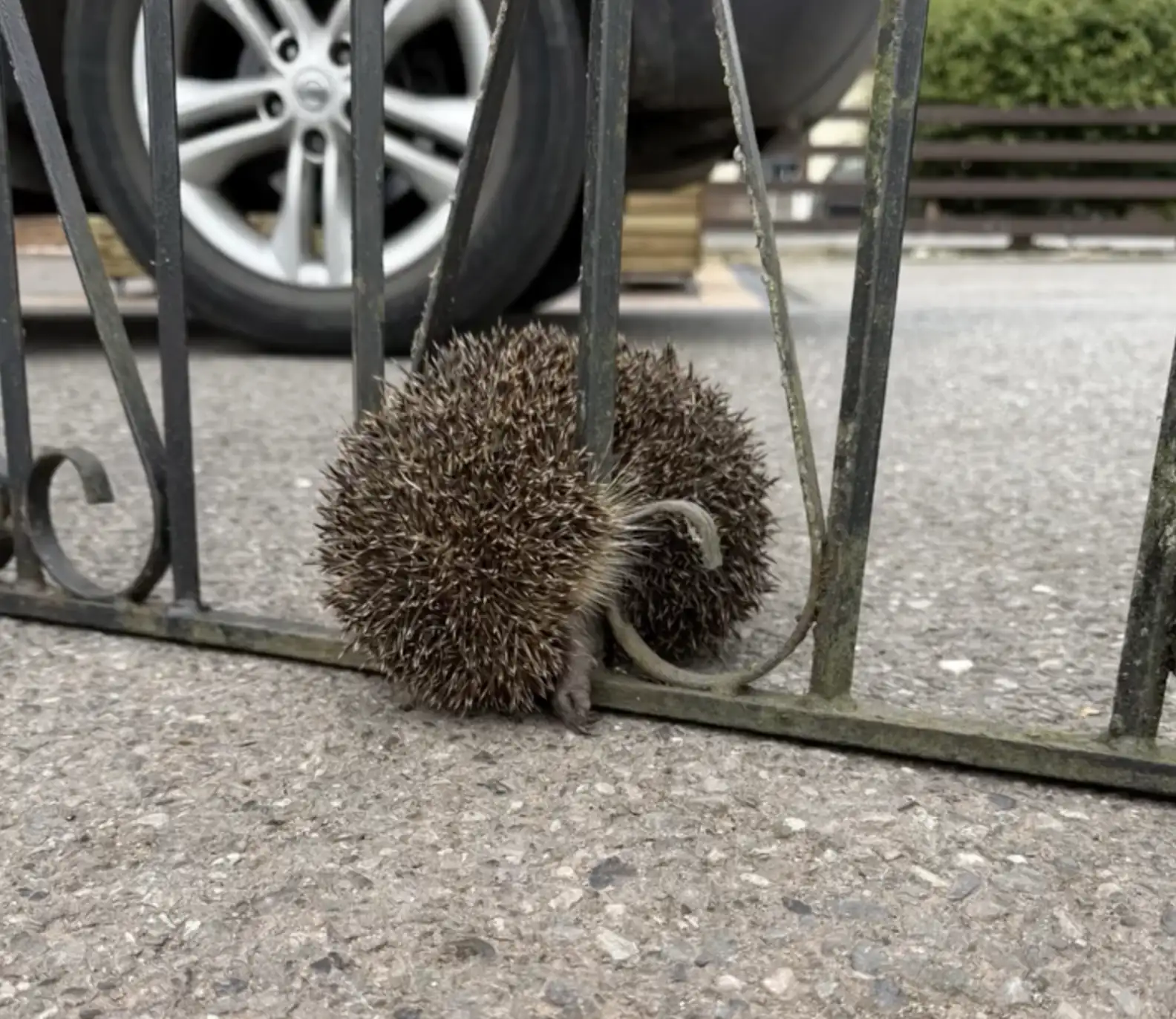
A homeowner in Oxfordshire, England, stepped into her garden one morning and immediately realized something was wrong.
Caught between the decorative metal bars of her gate was a small, spiky animal.
When she looked closer, she discovered that a hedgehog had somehow become firmly wedged inside.
The woman initially tried to free the animal herself, but the hedgehog was too tightly trapped. Rather than risk hurting her, she decided on a much more dramatic solution.
She removed an entire section of the gate.
With the hedgehog still safely lodged inside, she placed the section in the back of her car and drove to Tiggywinkles Wildlife Hospital, a wildlife rescue and rehabilitation center in Haddenham, England.
Even for staff accustomed to unusual wildlife emergencies, the sight was memorable.
Jo Maunder, a casualty receptionist at the hospital, was surprised to see someone arrive carrying part of a garden gate with a hedgehog attached to it.
“I was gobsmacked,” Maunder said. “My first thoughts were, ‘Poor hedgehog,’ and, ‘What a lovely lady to go out of her way to get it to us.’”
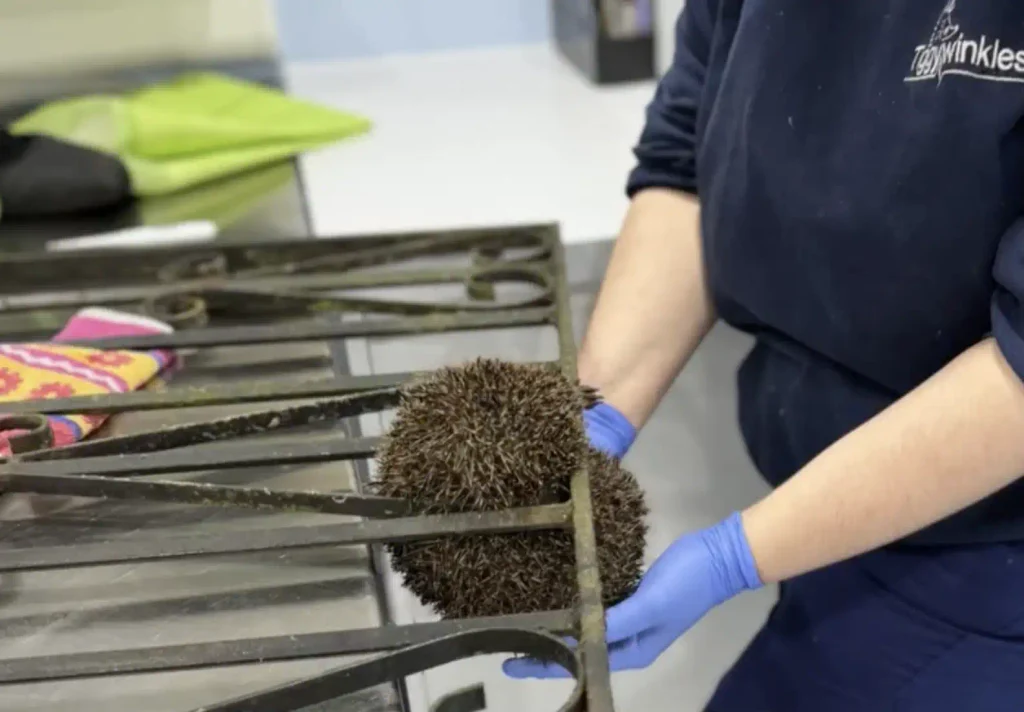
The veterinary team carefully worked to release the hedgehog from the metal bars without causing further injury.
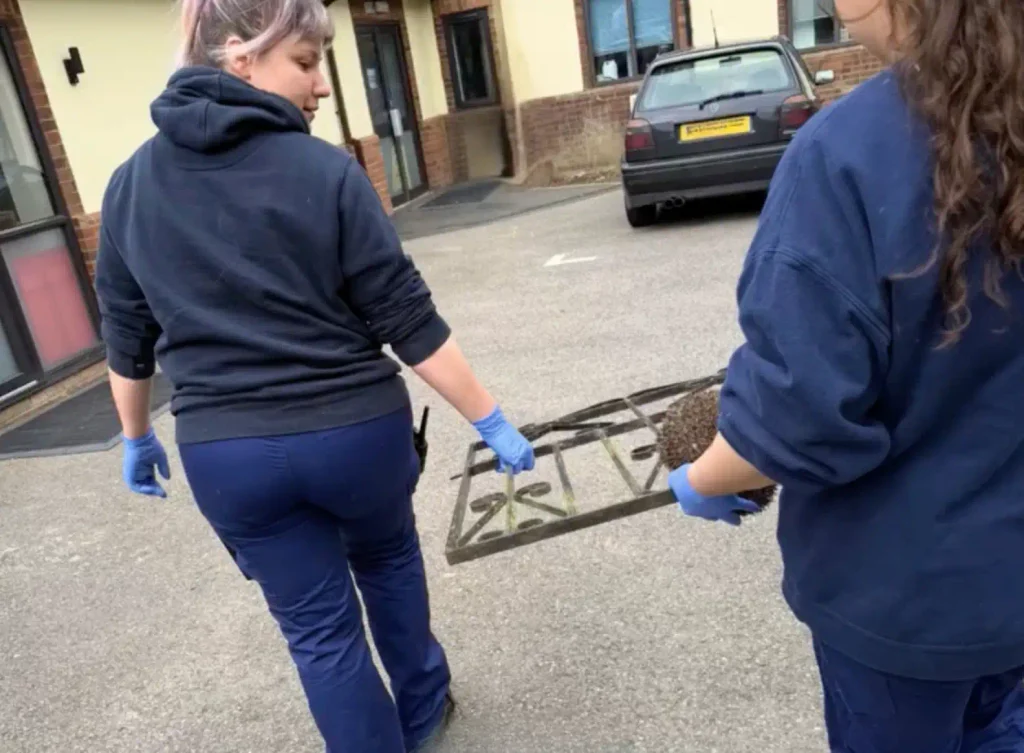
Once she was free, staff returned the gate section to its owner and turned their attention to their new patient, whom they named Ivy.
Because hedgehogs are nocturnal, rescuers suspected Ivy may have become trapped sometime during the night and remained there for several hours.
By the time she reached the hospital, she was exhausted and dehydrated.
“As hedgehogs are nocturnal, coming out to forage at night, it was quite possibly stuck for a number of hours through the night as it was very weak, tired and dehydrated by the time it was admitted to the hospital,” Suzi Kemp, communications manager at Tiggywinkles Wildlife Hospital, explained.
Cases involving trapped wildlife are not particularly unusual for the hospital.
According to Kemp, staff regularly treat animals that have become caught in netting, fencing, posts, wire and even bird feeders.
These situations can cause injuries ranging from bruising and cuts to dangerous stricture wounds if the animal remains trapped for too long.
Fortunately, Ivy had avoided serious harm.
After receiving treatment and spending about a week recovering at the hospital, she regained her strength and was eventually cleared for release.
She was then returned to the wild, bringing an unusual rescue story to a happy ending.
“Our team was all delighted to hear that Ivy made a full recovery, and so was the lady who brought her in to us when we gave her the news,” Kemp said. “It’s always a lovely part of the job to give someone the good news that the animal they helped to save has been returned to the wild.”