
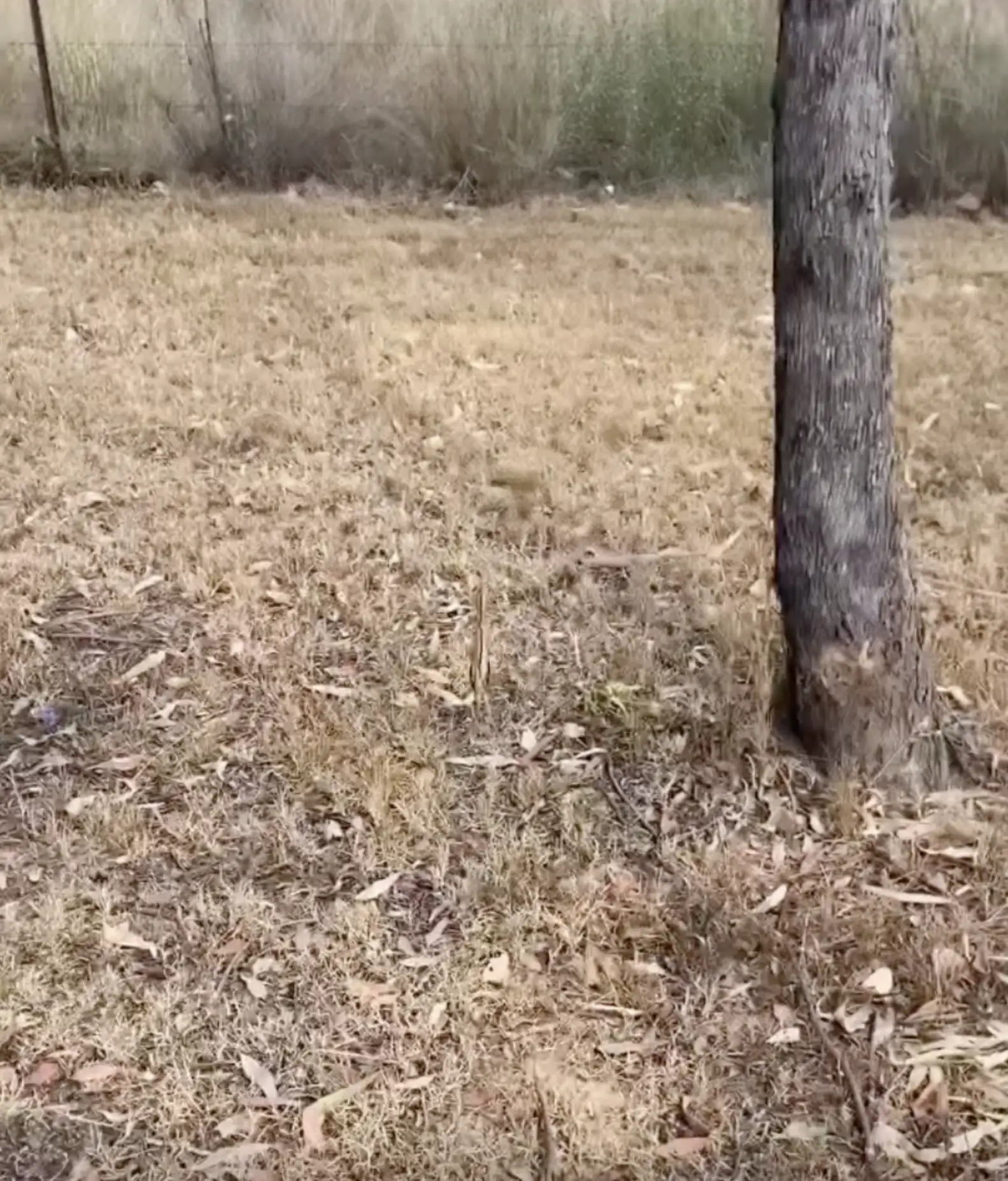
“At first glance, it almost looked like part of the surroundings.”
After heavy rains in rural Queensland, the weather finally cleared and the ground began to dry. That’s when a homeowner noticed something unusual in their child’s outdoor play area.
Standing motionless nearby was what looked like a strange vertical shape.
At first glance, it almost blended perfectly with the surrounding environment.
A Master of Camouflage
When the homeowner moved closer, they realized the “shape” was actually a bittern, a large heron species native to Australian wetlands.
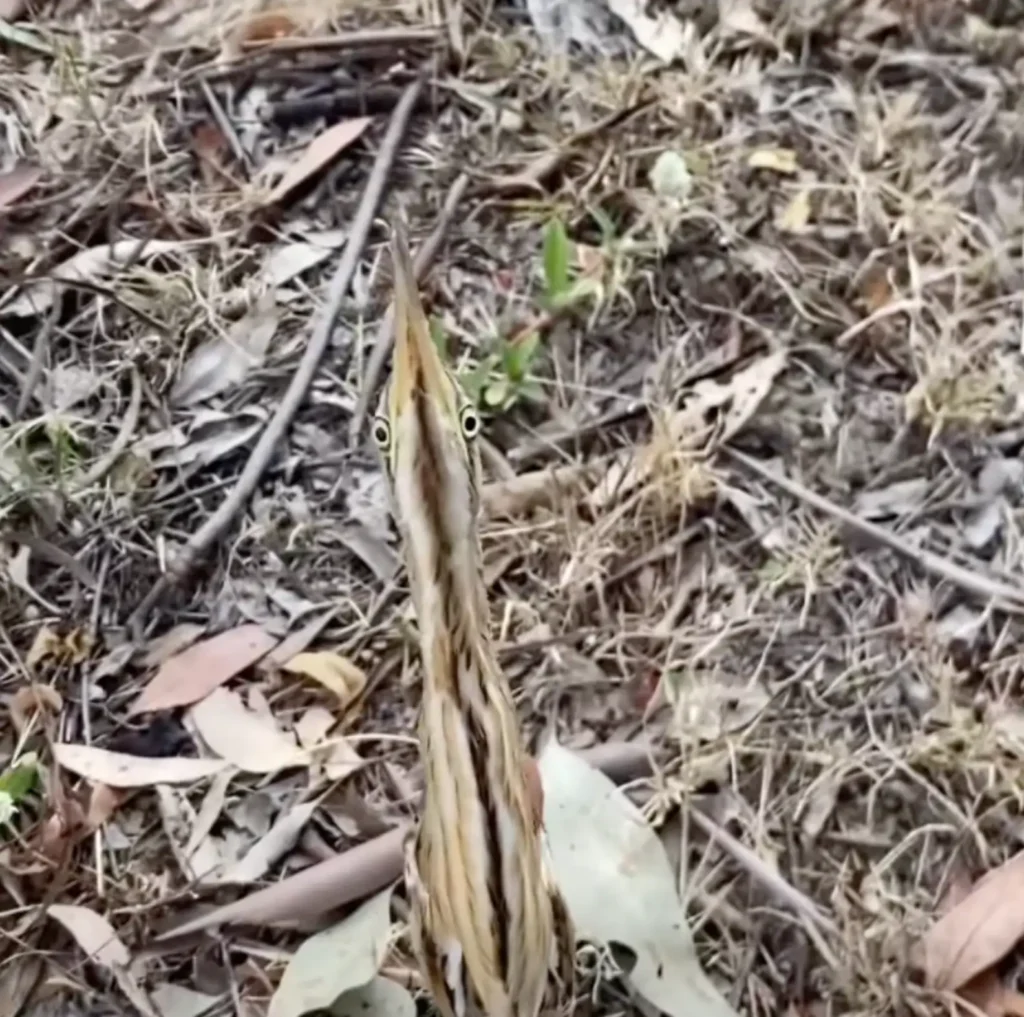
These birds are famous for their remarkable camouflage.
When threatened, they stretch their neck upward and remain completely still — a behavior sometimes called “stick mode.” Their striped feathers help them blend into reeds, branches or anything vertical nearby.
Because the bird seemed unusually tired and barely moving, the homeowner contacted Wildlife Empire Rescue and Rehabilitation for help.
A Rescue Expert Arrives
Wildlife rescuer Tennille Bankes soon arrived to check on the mysterious visitor.
Even with her experience, it took a moment for her eyes to adjust and locate the bird.
Once she did, she could see that the bittern wasn’t acting defensive — he was simply exhausted.
The bird’s posture remained upright, but his energy levels were extremely low.
Rest, Hydration and Recovery
Bankes carefully transported the bird to a quiet recovery area where he could rest safely.
She provided hydration and monitored him closely until he regained enough strength to eat. Over the next few days, the bittern steadily improved.
Gradually, his posture became stronger and his alertness returned. Soon he was showing normal behavior again — including powerful wing movements.
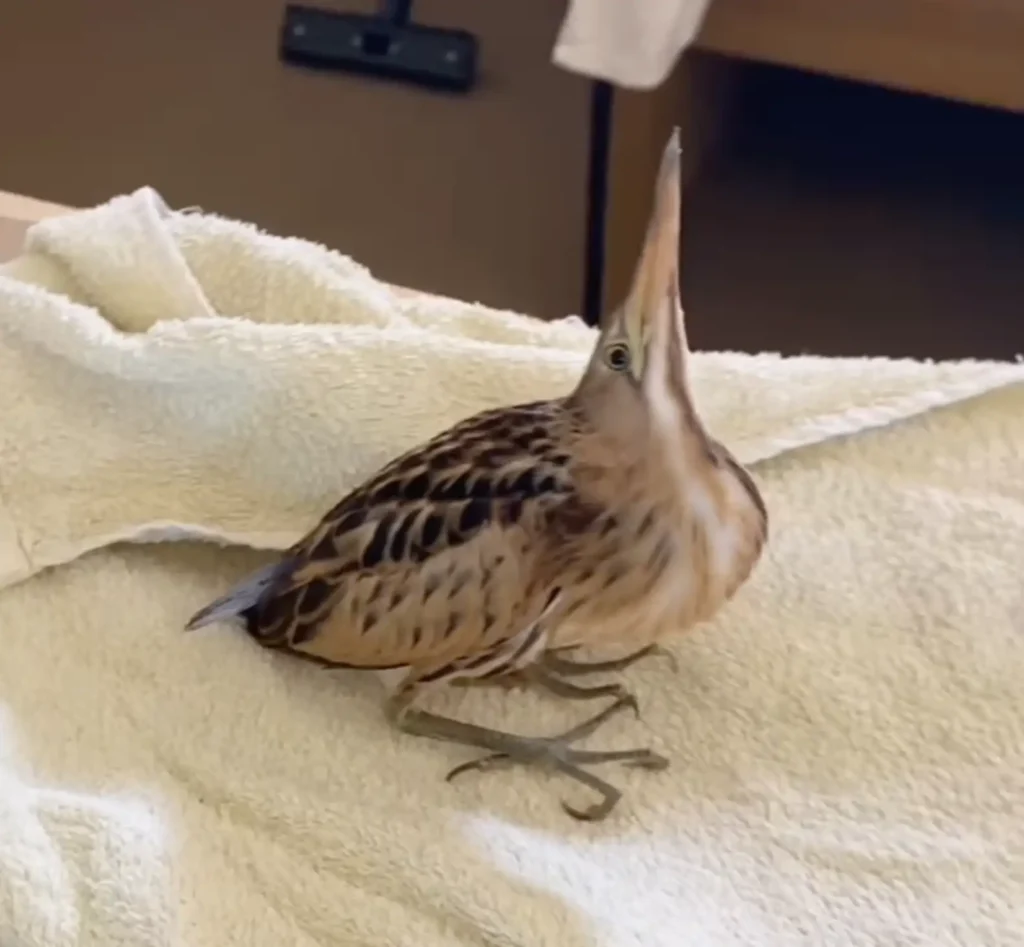
Once the bird demonstrated strong, coordinated flight, Bankes knew he was ready.
Back to the Wetlands
When the time came, the bittern was released back into a suitable natural habitat.
As soon as he was free, he took off with confidence, flying strongly toward the wetlands.
For the rescuer who helped him recover, it was the perfect ending.
Watching the once-exhausted bird return to the wild healthy and strong was a reminder that sometimes all wildlife needs is a little help — and a safe place to recover. 🐦