

Deep in the tropical forests of Malaysian Borneo, scientists have discovered an unexpected change taking place inside the stems of a remarkable group of plants.
Researchers studying Macaranga pearsonii found that predatory wasps are moving into hollow chambers that evolved to house protective ant colonies.
The discovery suggests that a partnership between plants and ants that has existed for millions of years may be changing as human activity alters the surrounding environment.
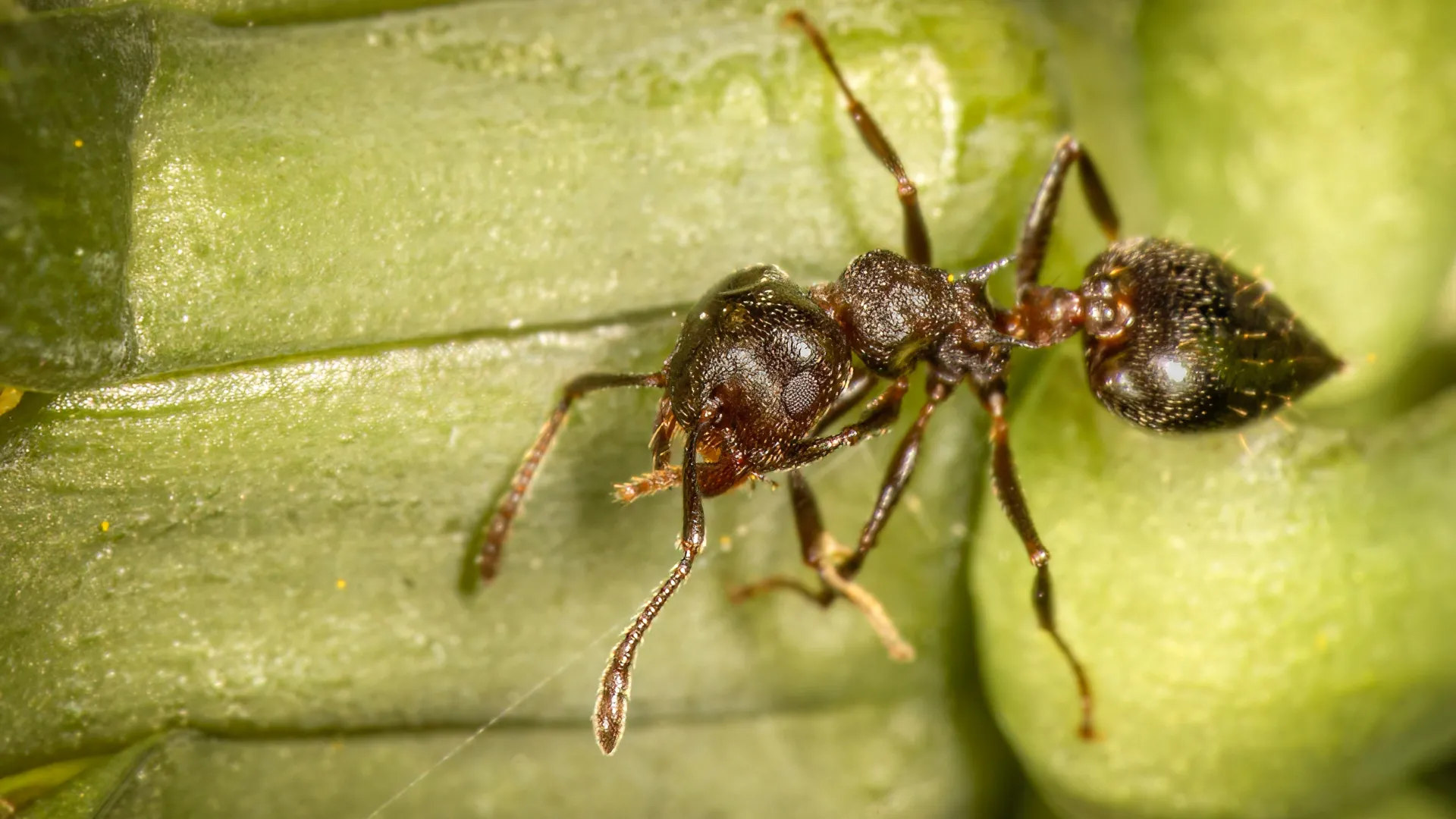
For at least 10 million years, Macaranga plants and ants have benefited from one another. The plants produce hollow spaces inside their stems where ants can build colonies, while also providing them with nutritious food.
In return, the ants act as the plants’ bodyguards.
They aggressively defend their hosts against insects that feed on their leaves, including caterpillars.
But researchers have now found that some of these carefully evolved shelters are being used for a completely different purpose.
Wasps Turn Ant Homes Into Nurseries
An international research team examined young Macaranga pearsonii trees growing in both logged forests and oil palm plantations.
When they opened the plants’ hollow stems, they discovered predatory wasps occupying some of the chambers.
Inside were flies that had been captured and paralyzed by adult wasps. The insects had been stored inside the plant as food for developing wasp larvae.
“While surveying these ant-plants, I noticed that many stems had been hollowed out in an unusual way,” lead author Mr. Lestina explained. “When we opened them, they were full of flies being eaten alive by wasp larvae.”
Instead of providing shelter for an ant colony, the plant’s chambers had effectively become nurseries and food-storage areas for wasps.
The researchers noticed another striking pattern: wasps were much more common in plants growing in oil palm plantations than in logged forest.
The plants occupied by wasps also tended to have significantly smaller ant colonies.
This raises the possibility that the wasps may be pushing the ants out altogether, although the scientists stress that further experiments are needed to determine whether the wasps are actually responsible for the decline in ant numbers.
Human Disturbance May Be Changing The Relationship
The connection between wasps and disturbed habitats could be an important clue.
“Human activities are transforming habitats worldwide, and this kind of shift in species interactions is exactly what we expect to see,” co-author Dr. Kalsum M. Yusah explained. “We don’t yet know whether this wasp is native or introduced, but its spread is clearly linked to disturbed landscapes.”
The consequences could extend far beyond the insects themselves.
Macaranga species are often among the first plants to grow in areas where forests have been cleared or damaged. Their relationship with protective ants can therefore play an important role in their survival during forest recovery.
If wasps displace the ants, the plants could lose some of their natural protection from herbivores.
“If the plants lose their ant defenders and become less healthy, it could hinder forest recovery following disturbance,” Yusah said.
A Partnership Millions Of Years Old Could Be Changing
The discovery also raises a much bigger evolutionary question.
According to senior author Dr. Fayle of Queen Mary University of London, changes like this could eventually influence the plants themselves.
“When mutualistic benefits break down, it can drive long-term evolutionary change,” Fayle said. “If these structures become less valuable to the plants because wasps exploit them, the plants may stop investing in them.”
That possibility highlights a less obvious consequence of human-driven environmental change.
Scientists often focus on habitat destruction and species loss, but ecosystems can also change when existing species suddenly interact with one another in different ways.
The relationship between Macaranga plants and their protective ants is just one example of the countless partnerships that hold tropical ecosystems together.
If disturbed environments make it easier for other species to enter these relationships and alter them, similar changes could be occurring elsewhere — even when no species has disappeared.
For now, the mystery is unfolding inside the hollow stems of Borneo’s tropical plants.
A partnership that has survived for millions of years may be beginning to change, and scientists are only starting to understand what that could mean for the future of the forest.