

“This is very exciting and great news.”
The Kimberley region of Western Australia is a vast landscape of rocky gorges, open savannas and rugged mountain ranges.
Its remote terrain provides a home for countless native species, but one small animal has been unusually difficult to find.
For decades, scientists had seen little evidence of nabarleks in parts of the mainland Kimberley.
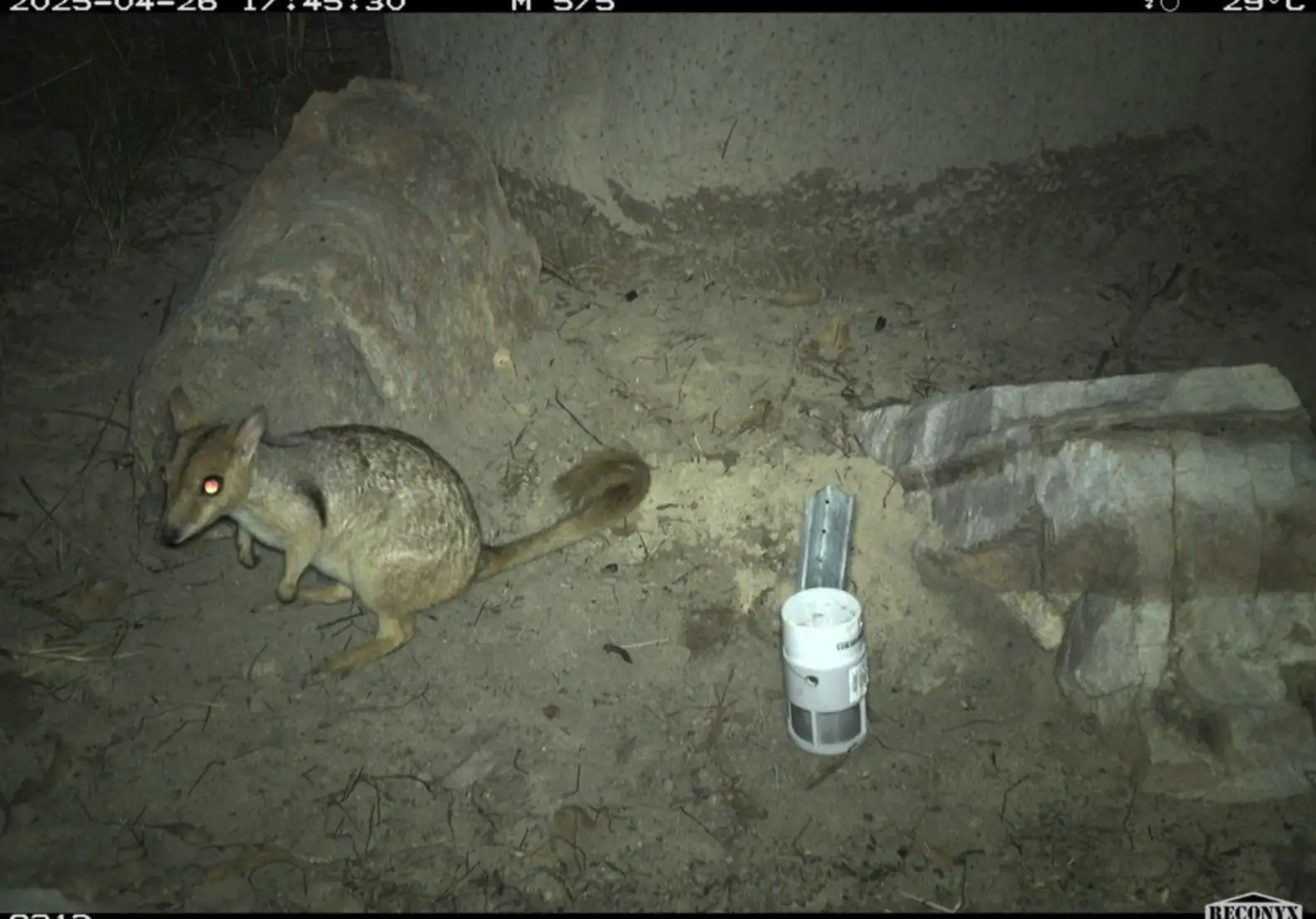
Then recently, hidden cameras captured something researchers had been hoping to see.
A tiny nabarlek appeared in front of the lens.
A Rare Animal Appeared On Camera
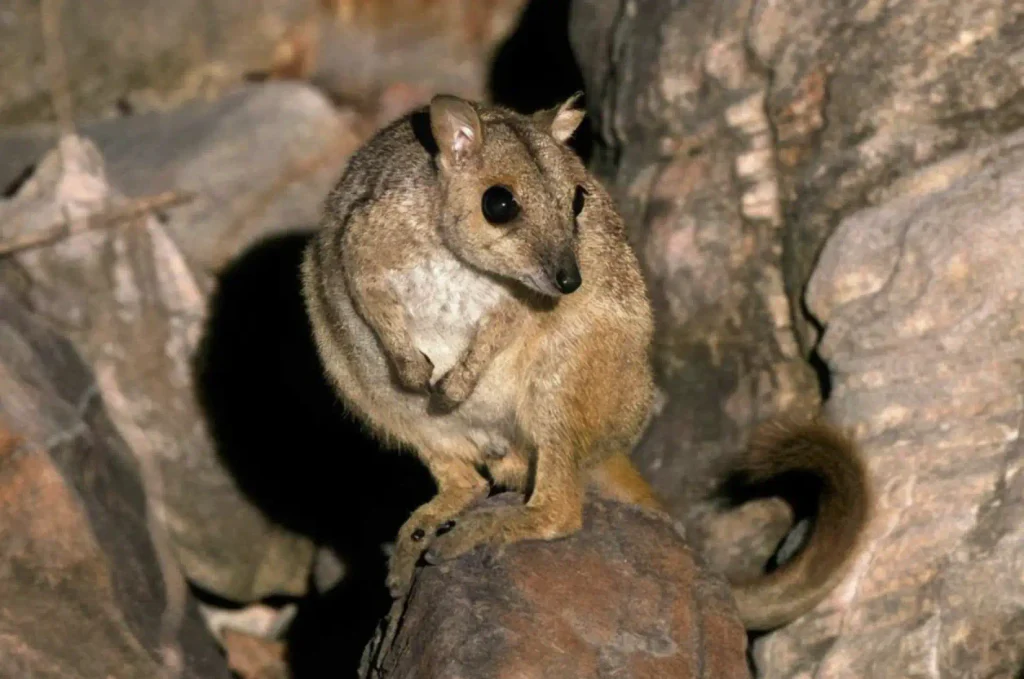
Nabarleks are one of the smallest species of rock-wallaby, recognizable by their gray-brown fur, compact bodies and long tails.
The species has become increasingly difficult to find in the wild.
Population declines have been linked to threats including introduced predators and wildfires, and the animals often live in remote, rocky environments that are difficult for researchers to access.
That combination has made monitoring them especially challenging.
So scientists began relying on hidden wildlife cameras to search areas where nabarleks might still be surviving.
Then Researchers Spotted Them In Two Places
Researchers with the Australian Wildlife Conservancy placed cameras across parts of the Kimberley region.
When they reviewed the footage, they discovered nabarleks moving through two separate locations.
The sightings were significant.
According to the researchers, one represented the first confirmed record of the species on mainland Dambeemangaddee Country in more than 50 years.
Another was the first recorded sighting in the Yampi Sound Training Area.
For an animal this elusive, finding evidence in two places was a major breakthrough.
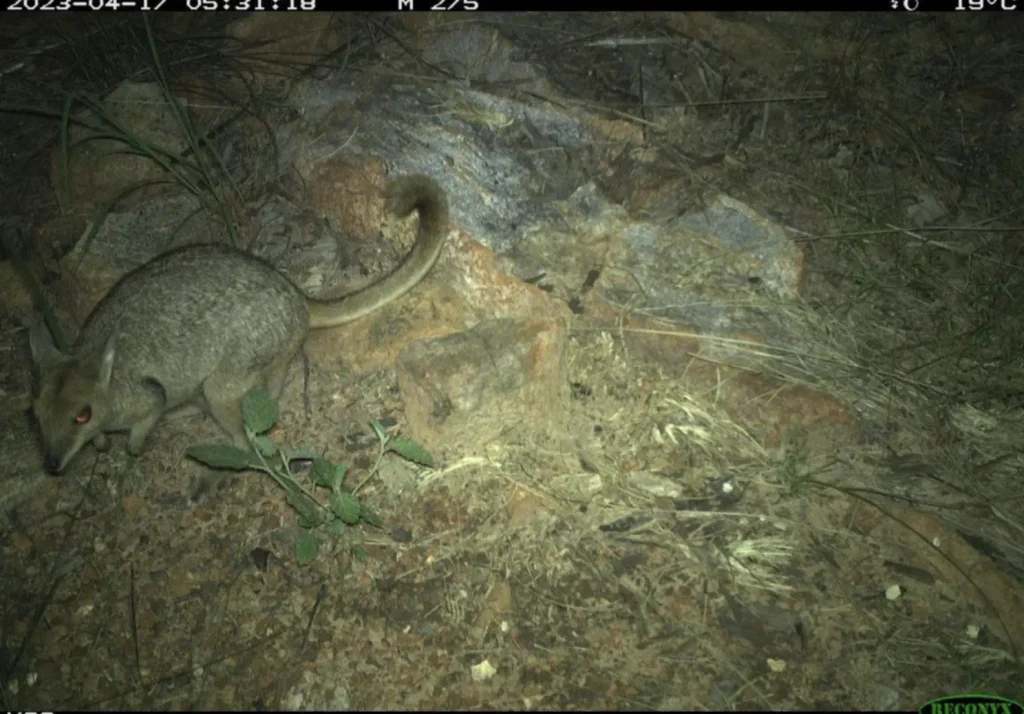
The discovery gave scientists something they had been missing for years: confirmation that nabarleks were still living in parts of the mainland landscape.
The Discovery Raised New Questions
Finding the animals was only the beginning.
Now researchers and Traditional Owners want to know how many nabarleks remain in the area and whether the newly documented groups represent healthy populations.
They also hope to compare the mainland animals with nabarleks living on nearby islands.
That information could help conservation teams understand whether the species is stable in these locations or continuing to decline.
In other words, the cameras answered one important question — but created many more.
These Tiny Wallabies Play An Important Role
Nabarleks may be small, but their presence matters.
Like other native herbivores, they interact with the vegetation around them as they feed and move through the landscape.
Protecting them therefore isn’t only about saving one unusual species. Understanding where they survive can also help conservationists protect the broader ecosystem they are part of.
For local communities, the animals carry cultural importance as well.
Hidden Cameras Could Help Protect Them
Researchers now have a clearer idea of where to continue looking.
Future monitoring could reveal whether the nabarleks caught on camera belong to larger breeding populations and how widely they are distributed across the region.
That information may help guide future conservation work and habitat protection.
For years, the tiny rock-wallabies remained largely unseen in these parts of Western Australia.
Then a few hidden cameras captured exactly what scientists had been waiting for.
After decades without confirmed sightings in some areas, the nabarlek had finally stepped back into view.