

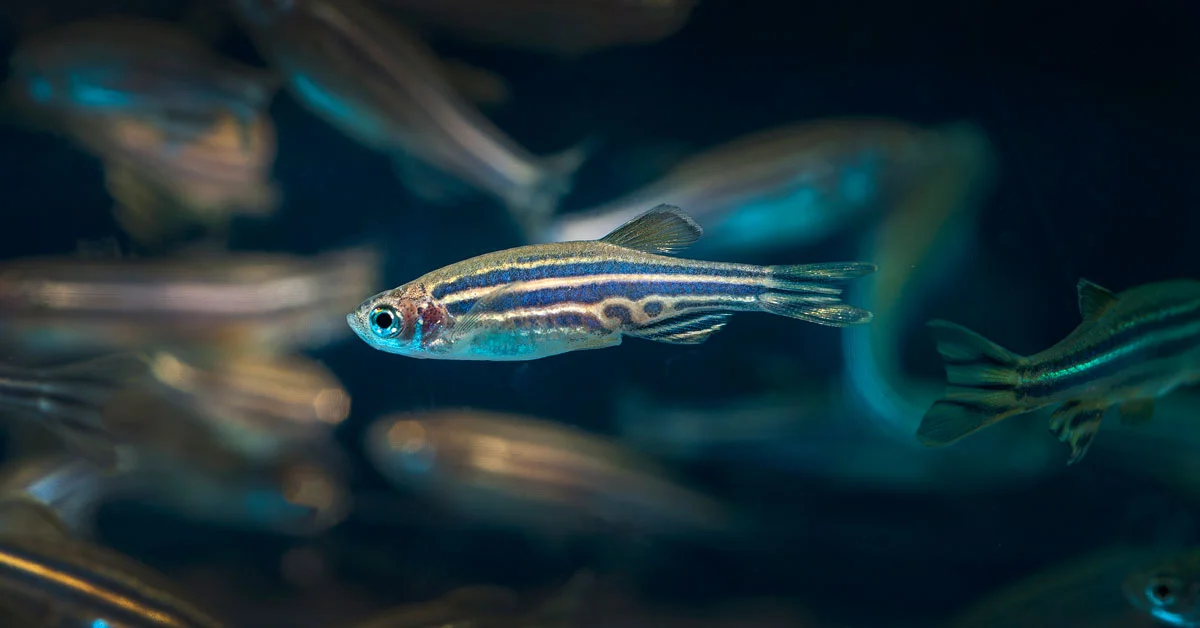
In 2024, researchers at Washington University School of Medicine made a breakthrough discovery by studying zebrafish — tiny freshwater minnows with a remarkable ability: they can completely regenerate their spinal cords after severe injury.
For years, scientists have known about this regenerative power but didn’t fully understand how it works. Now, researchers say they’ve uncovered important clues.
“We found that most, if not all, aspects of neural repair that we’re trying to achieve in people occur naturally in zebrafish,” said lead author Mayssa Mokalled in a press release. “Our study has identified genetic targets that will help us promote this type of plasticity in the cells of people and other mammals.”
Why Zebrafish Are So Extraordinary
When humans experience a spinal cord injury, neurons — the cells that carry signals in the nervous system — are often permanently damaged or destroyed. This typically leads to irreversible loss of function.
Zebrafish, however, respond very differently.
After injury, their damaged neurons undergo a dramatic transformation. Instead of dying, the cells shift their internal functions into a protective state. This temporary change helps them survive the initial trauma. Over time, they adopt new flexibility, allowing the spinal cord to regrow and restore function.
In essence, zebrafish neurons don’t just survive injury — they adapt and rebuild.
Are Humans Missing the Same Ability?
Mokalled and her team believe humans may actually possess versions of the same genetic tools — but they remain dormant.
“We are hopeful that identifying the genes that orchestrate this protective process in zebrafish — versions of which also are present in the human genome — will help us find ways to protect neurons in people from the waves of cell death that we see following spinal cord injuries,” she explained.
Rather than focusing only on regrowing tissue, future therapies might aim first to prevent neuron death. If damaged neurons can be kept alive long enough, scientists may be able to trigger similar regenerative pathways.
Comparing Fish and Mice
More recently, researchers at Vanderbilt University expanded on this work. Led by pharmacology professor Valentine Cigliola, the team compared spinal cord regeneration in zebrafish and neonatal mice — young mice that still retain some regenerative capacity.
Their study is the first to directly analyze regenerative similarities between these two species. It highlights epigenetic mechanisms — changes in how genes are activated or silenced — that allow regeneration to occur.
Understanding these mechanisms may help scientists “awaken” similar processes in adult mammals, where regenerative capacity is largely switched off.
According to a university statement, the research “provides a valuable foundation for advancing regenerative medicine strategies aimed at restoring function after central nervous system injury.”
Broader Implications for Neurological Disease
The implications extend beyond spinal cord injuries. Insights into these innate repair systems could inform treatments for neurodegenerative diseases such as:
Amyotrophic lateral sclerosis (ALS)
Multiple sclerosis (MS)
Spinal muscular atrophy
While therapies based on these findings are still in development, the research offers cautious optimism. By studying how zebrafish naturally protect and rebuild their nervous systems, scientists may one day unlock similar healing potential in humans.
For now, the tiny zebrafish continues to play an outsized role in the future of regenerative medicine.