

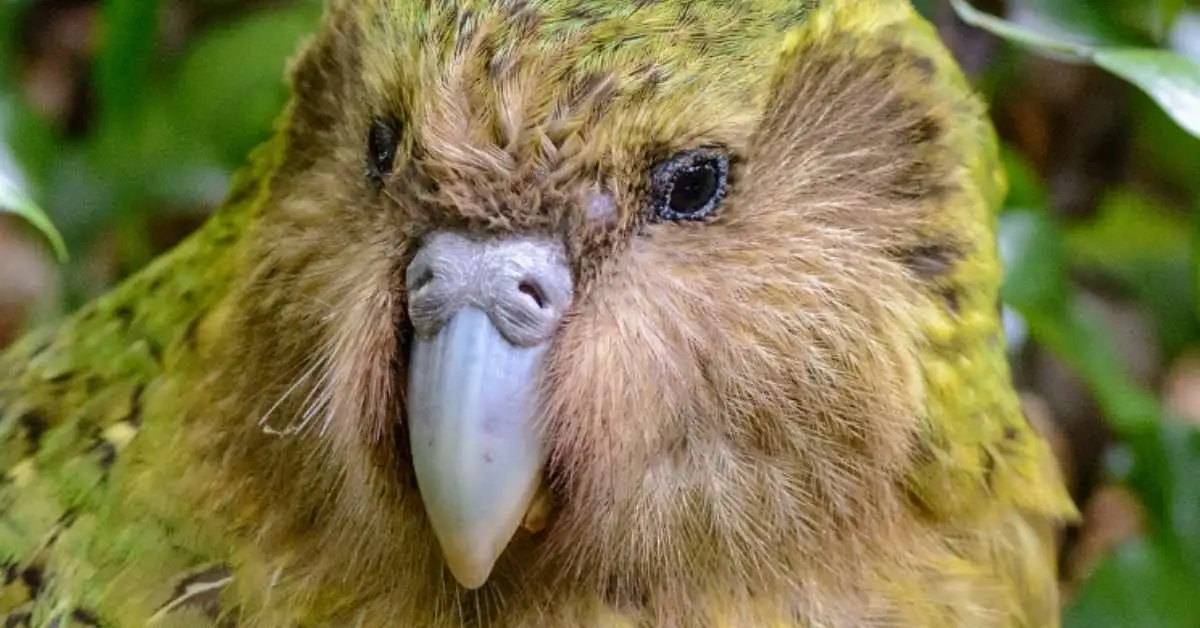
The kākāpō is one of the most unusual birds on Earth. Native to New Zealand, it holds several remarkable titles: the world’s heaviest parrot, the only flightless parrot, and perhaps the clumsiest parrot as well.
This quirky bird, about the size of a house cat, has wings that are mostly useless for flying. As the late author Douglas Adams once humorously described in his book Last Chance To See, a nervous kākāpō might even climb a tree and jump — forgetting that it can’t actually fly.
The result? It drops like a brick.
Nearly Lost Forever
Despite its charm, the kākāpō has faced a long battle for survival.
Introduced predators such as cats, rats and stoats devastated the species over the past century. By 1974, scientists feared the bird might already be extinct.
In 1995, the population dropped to just 51 birds.
Today, thanks to major conservation efforts, the population has grown to around 236 kākāpō.
Conservation Efforts Across New Zealand
The recovery of the species has been a massive team effort involving scientists, conservationists and the Indigenous Ngāi Tahu people.
Together with New Zealand’s Department of Conservation, they have worked to:
- Remove invasive predators from protected islands
- Restore habitats and ecological balance
- Monitor birds with regular health checks
- Raise and release chicks into the wild
For the Ngāi Tahu people, the bird holds deep cultural importance.
They consider the kākāpō a taonga, meaning a treasured species.
Playing Matchmaker for the Birds
Because so few kākāpō exist, conservationists also carefully manage their breeding to maintain genetic diversity.
According to conservation manager Deidre Vercoe, scientists even act as matchmakers to ensure the best genetic pairings.
Some particularly successful males are temporarily moved to separate islands — jokingly nicknamed “Bachelor Island” — so they don’t father too many chicks.
One famous male, Blades, has produced 22 chicks since 1982, earning a reputation as a “superbreeder.”
A Rare Baby Boom
Kākāpō breeding is unusual because it depends heavily on the fruiting cycle of the rimu tree, a tall evergreen native to New Zealand.
When rimu trees produce large amounts of berries, the birds are triggered to reproduce.
This year, a particularly strong rimu fruit season has led to a major kākāpō baby boom.
So far:
- Around 240 eggs have been laid
- Roughly half are expected to be fertile
- 26 chicks have already been confirmed alive
Conservation scientists say that soon the fluffy chicks will transform into what they affectionately call “weird little dinosaurs” with oversized feet.
A Symbol of National Pride
For New Zealanders, saving the kākāpō is about more than protecting a species.
It’s about protecting a national treasure.
As Vercoe explained, the country may not have famous landmarks like the Eiffel Tower or the pyramids — but it does have extraordinary wildlife like the kākāpō and the kiwi.
And preserving these unique animals has become a shared mission for the entire nation. 🦜🌿