

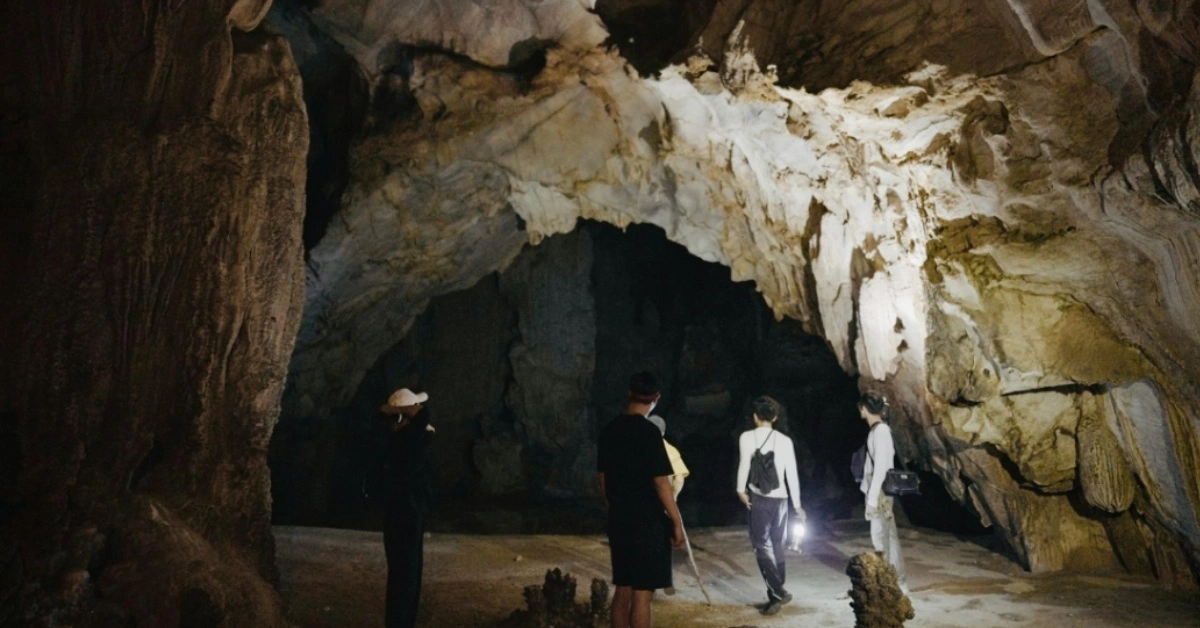
The research team spent nearly two years (from late 2023 to mid-2025) surveying around 60 karst caves — rugged limestone formations shaped over millions of years.
They expected to encounter rare animals like pangolins and langurs.
Instead, they uncovered a “treasure trove” of 11 new species, including:
- 🦎 Three previously unknown geckos
- 🐛 Two species of millipedes
- 🐌 Two micro-snails
- 🐍 A striking turquoise pit viper
Seven of these species have already been formally described, while others are still undergoing scientific classification.
🐍 The Star: A Turquoise Pit Viper
One of the most eye-catching discoveries is a brilliant blue-green pit viper with glowing yellow eyes.
- Its vivid color helps it stand out — at least to us
- Like other pit vipers, it has heat-sensing organs to detect prey
- It’s still awaiting official scientific naming
This snake alone highlights just how much biodiversity can remain hidden in isolated ecosystems.
🧬 Why These Discoveries Matter
Finding new species isn’t just exciting — it’s essential.
According to evolutionary biologist Lee Grismer:
“We can’t protect something if we don’t know it exists.”
These discoveries help scientists:
- Understand how species evolve in isolated habitats
- Identify areas that need protection
- Design better conservation strategies
In fact, one newly identified gecko population already shows signs of splitting into different evolutionary paths — meaning even more undiscovered diversity may exist.
🌏 A “Treasure Trove” Still Largely Unknown
Researcher Sothearen Thi described Cambodia’s karst landscapes as full of secrets still waiting to be uncovered.
And this is just the beginning.
Many caves remain unexplored, and each one could hold species that science hasn’t even imagined yet.
🐾 The Big Picture
This discovery is a reminder of something powerful:
Even in 2025, on a planet we think we know well, entire ecosystems — and the creatures within them — are still waiting to be found.
And protecting them starts with simply knowing they exist.