
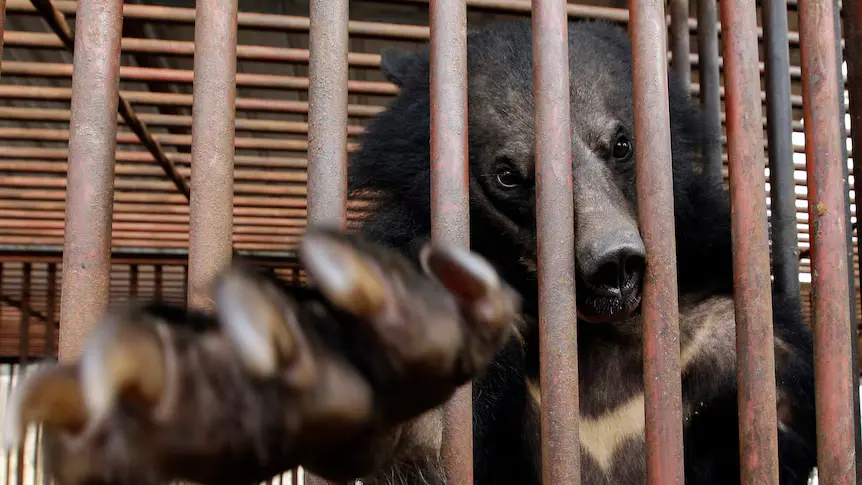
South Korea is taking a historic step this week by formally shutting down its long-controversial bear bile farming industry, though nearly 200 bears remain confined in breeding facilities as the transition unfolds.
On Tuesday, the Ministry of Climate, Energy and Environment confirmed that starting next year, the breeding, possession, and bile extraction of bears will be illegal. The move follows amendments to the country’s animal protection laws, which introduce prison sentences of up to two or five years for violators.
South Korea has been one of the last nations to legally allow bears — primarily Asiatic black bears, also known as moon bears — to be farmed for bile, a substance traditionally believed to enhance stamina and vitality. Over the past 20 years, however, demand has sharply declined as scientific doubts, affordable alternatives, and public concern over animal cruelty gained traction.
The ban stems from a 2022 agreement between government officials, bear farmers, and animal welfare organizations, which set 2026 as the deadline to end the practice entirely.
Under the agreement, animal rights groups are coordinating the purchase of bears from farmers, while the government works to expand sanctuaries where the animals can live out their lives. So far this year, 21 bears have been relocated to a government-run sanctuary in South Jeolla Province.
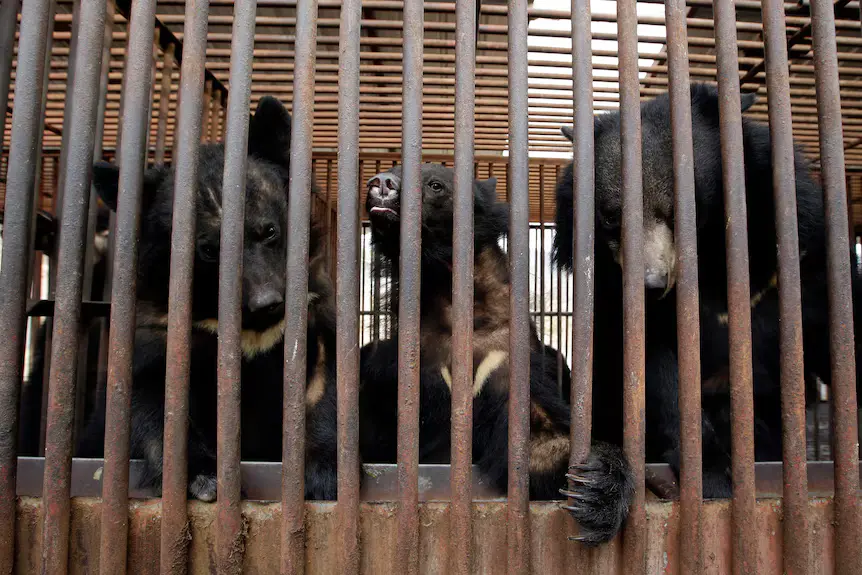
Despite this progress, 199 bears remain housed at 11 farms nationwide, as negotiations over farmer compensation continue. Some farmers argue the government’s buyout prices are too low, delaying the transfer of animals.
The Environment Ministry announced a six-month grace period for remaining farmers, during which bile extraction will be penalized under the new law. Financial incentives will also be offered to farmers who continue caring for the bears until relocation arrangements are finalized.
“Our plan reflects South Korea’s commitment to improving wild animal welfare and fulfilling our responsibility to protect these bears,” said Environment Minister Kim Sung-hwan, adding that the government aims to safeguard every remaining animal.
Resistance from farmers
Not all farmers support the policy. Kim Kwang-soo, who currently keeps 78 bears at his farm in Dangjin, said many of his peers sold their bears at steep losses due to financial strain.
“This policy is extremely unfair,” Kim said, noting that he has not sold his bears yet. While he plans to comply with the law, he said years of upkeep have left him with hundreds of thousands of dollars in debt.
At its peak in 2014, Kim’s farm held about 270 bears. Nationwide, approximately 1,000 bears were being farmed at that time. The industry began in the early 1980s using bears imported from Southeast Asia, including Malaysia.
Concerns over bear housing
Animal welfare advocates welcomed the government’s resolve but warned that housing capacity remains insufficient. While the Jeolla sanctuary is officially rated for 49 bears, activists argue that no more than 30 should be kept there to ensure proper care.
Plans for a second sanctuary were delayed after flood damage, pushing its opening back to 2027.
“It’s encouraging to see the government confront the bear bile industry head-on,” said Cheon Jin-kyung, head of Korea Animal Rights Advocates. “But without enough safe places for these bears, their future remains uncertain.”
As South Korea works toward fully closing this chapter, the fate of the remaining bears depends on how quickly shelters can be expanded — and whether long-standing disputes can finally be resolved.