

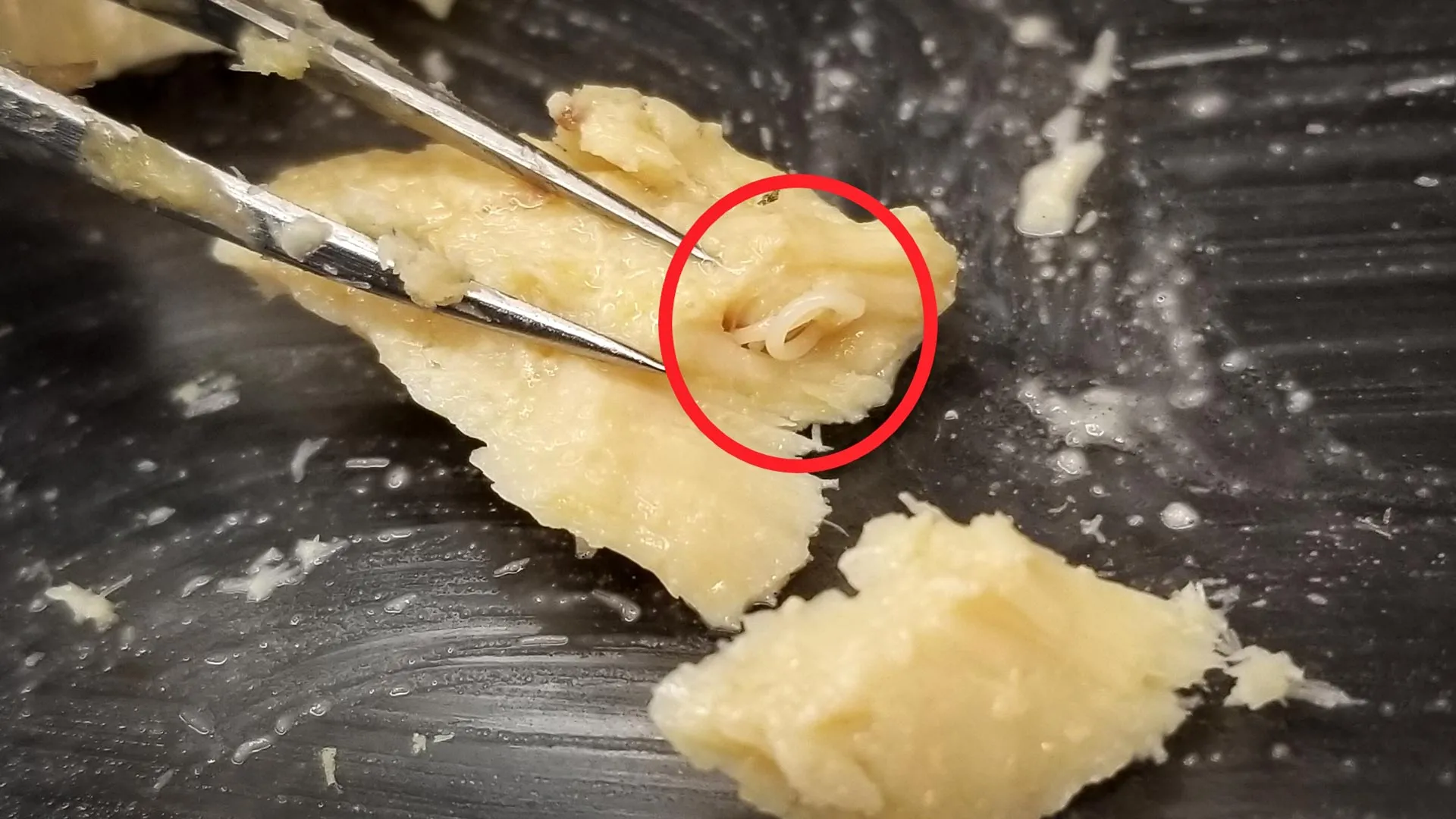
Scientists studying Alaska’s marine ecosystems have found an unlikely source of valuable data — decades-old cans of salmon.
With reliable historical samples hard to come by, researchers are getting creative. Natalie Mastick, now a postdoctoral researcher at Yale, turned to archived canned fish to better understand how ocean ecosystems have changed over time.
A surprising data source
While completing her doctorate at the University of Washington, Mastick and her team examined 178 cans of salmon collected over a 42-year period from the Gulf of Alaska and Bristol Bay.
Inside the preserved fillets, they counted tiny parasitic worms known as anisakids.
Though these parasites are killed during the canning process and pose no risk in cooked fish, they can reveal important information about the health of marine ecosystems.
What worms can tell us
At first glance, worms in fish might seem like a bad sign. But scientists say they can actually indicate a healthy environment.
Because anisakids rely on multiple species — from small organisms like krill to larger fish and marine mammals — their presence reflects a functioning, interconnected food web.
“Finding these parasites often means the ecosystem is working as it should,” researchers explained.
Tracking long-term changes
The study found that parasite levels increased in chum and pink salmon between 1979 and 2021, while remaining stable in coho and sockeye salmon.
This rise may signal a stable or even recovering ecosystem, where all the necessary species are present to support the parasites’ life cycle.
One possible reason is the recovery of marine mammals like seals and whales, which are essential for anisakids to reproduce.
Are they dangerous?
Humans are not part of the parasite’s life cycle, and properly cooked fish is safe to eat.
However, consuming raw or undercooked seafood can carry some risk, as live anisakids may cause illness in rare cases.
A new way to study the past
The salmon used in the research had been preserved for decades by a seafood trade group. By carefully dissecting the fillets under microscopes, scientists were able to count the parasites and uncover long-term trends.
Researchers believe this approach could be applied to other archived seafood, opening new ways to study historical ocean conditions.
Looking ahead
The study highlights the importance of thinking creatively when investigating environmental change.
By using unexpected sources like canned fish, scientists are gaining new insights into how ecosystems evolve — and how they might respond to future challenges.
As researchers put it, sometimes the answers to big questions are hiding in the most unlikely places — even inside an old tin of salmon.