

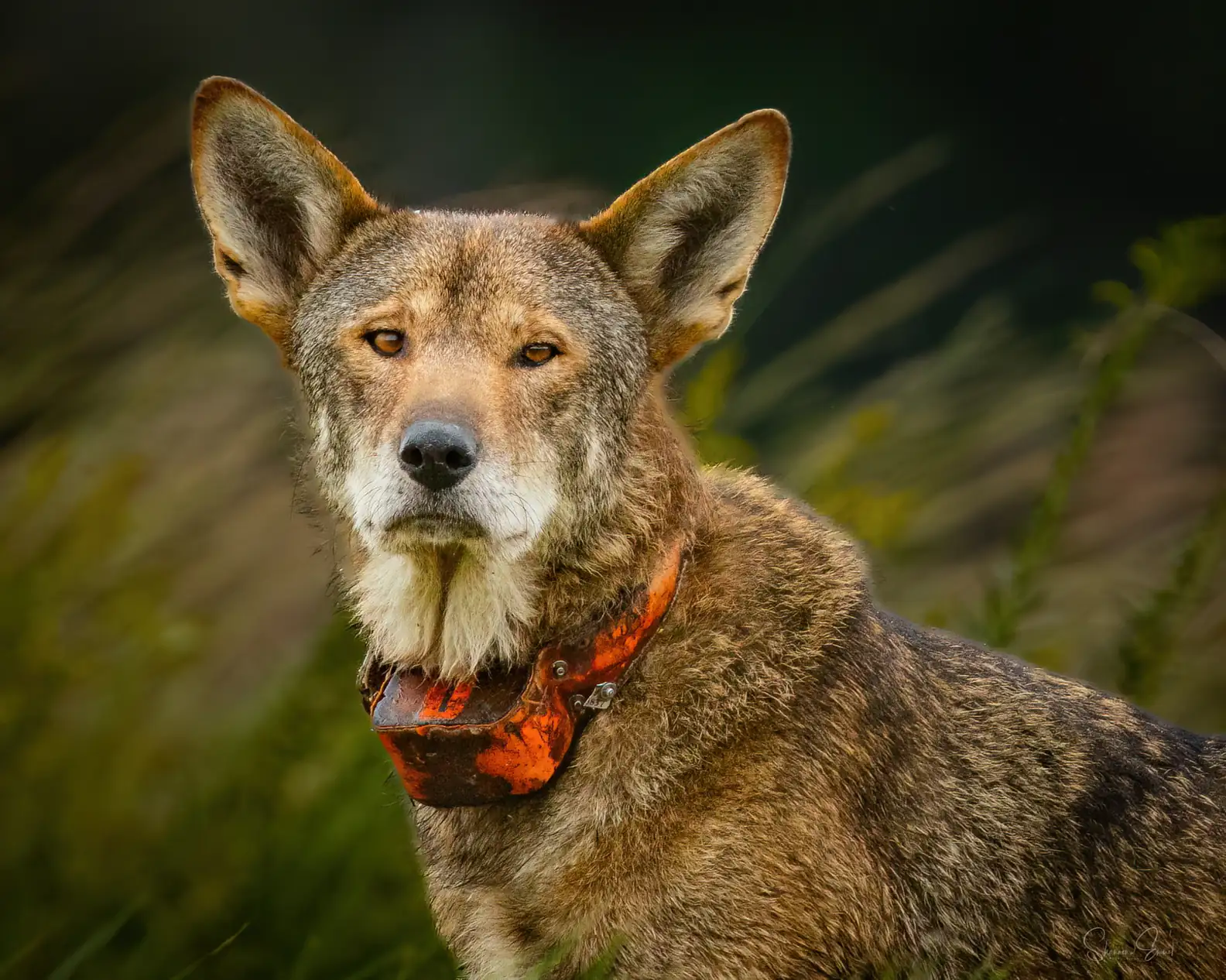
“My reaction? Overwhelming awe.”
With fewer than 40 red wolves believed to remain in the wild, seeing one in its natural habitat is an extraordinary experience.
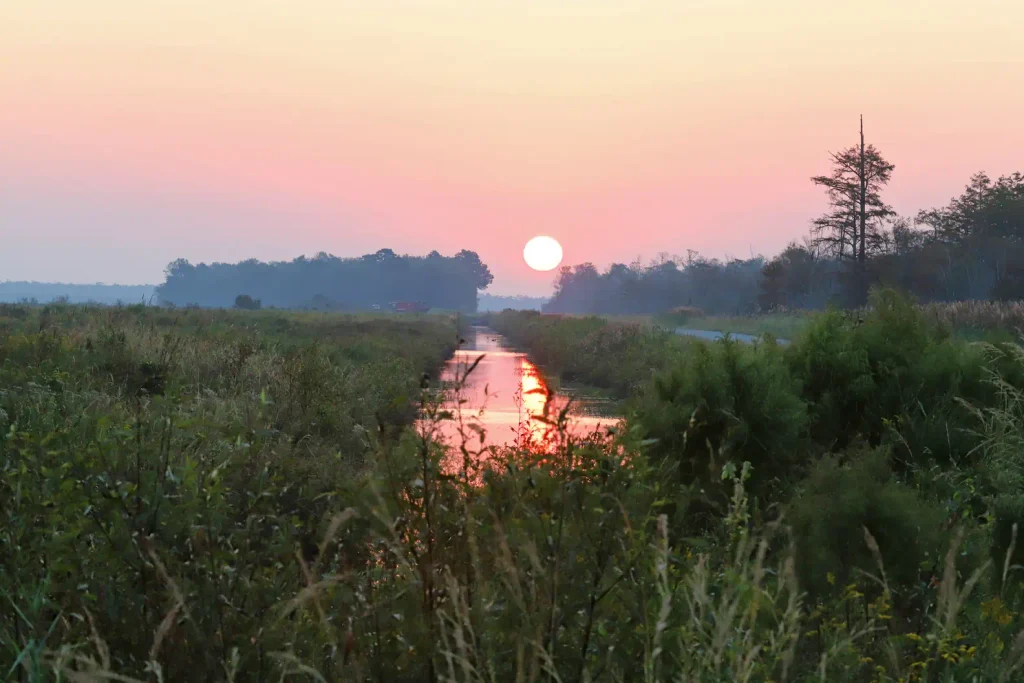
Today, the remaining wild population lives in and around the Alligator River and Pocosin Lakes National Wildlife Refuges in North Carolina. The animals are closely monitored, often with tracking collars, but finding one in the vast landscape is still extremely difficult.
Wildlife photographer Shannon Emmel recently experienced that rare opportunity.
Emmel and a friend traveled to the 160,000-acre Alligator River National Wildlife Refuge hoping to catch a glimpse of one of the elusive predators. After spending time searching the area, their patience finally paid off.
In the distance, Emmel noticed an animal moving through the landscape.
At first, she wasn’t even certain what she was looking at. She took a photograph and zoomed in, only to realize that she had spotted a red wolf.
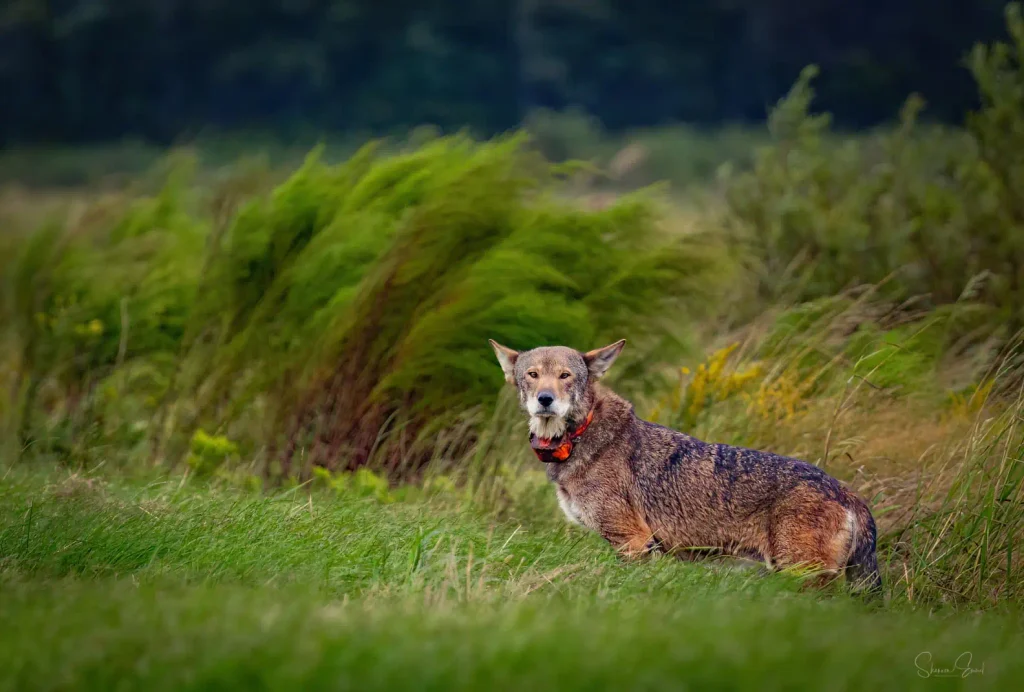
The wolf was Finch, an approximately 10-year-old animal who has become an important part of the species’ recovery effort.
Finch was born in captivity and released into the wild in 2024. Since then, he has successfully reproduced and fathered three litters of pups, making his continued survival particularly important to the recovery of the species.
“I actually spotted him in the distance by taking a picture and zooming in, realizing that it was a wolf,” Emmel said.
She and her friend watched as Finch crossed a canal and disappeared into tall grass.
Rather than leaving, they changed positions and waited.
Eventually, their patience was rewarded.
Finch emerged from the field and walked into the open area near them.
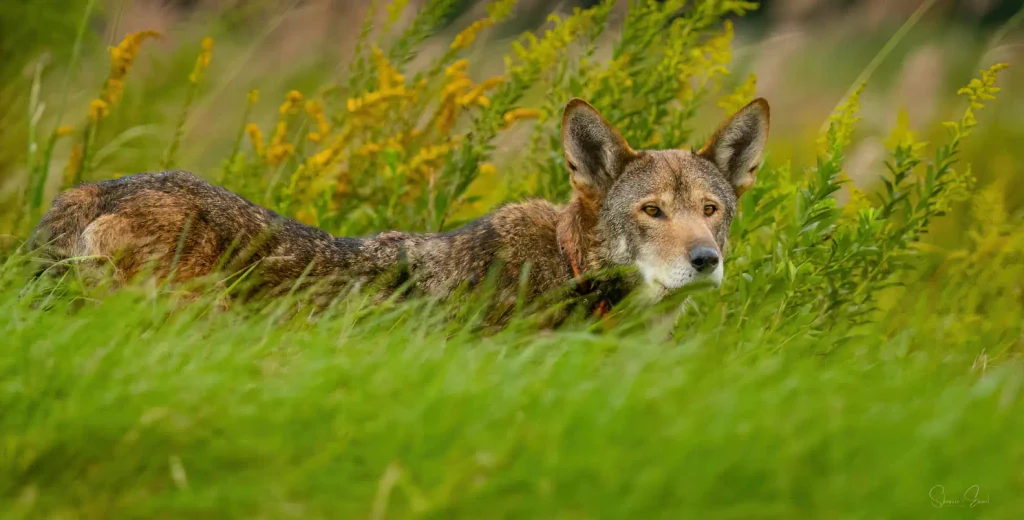
“He nonchalantly popped out of the field close to us,” Emmel said.
For Emmel, the encounter was difficult to put into words.
“My reaction? Overwhelming awe. The experience is surreal. They are absolutely amazing.”
Although photographs of red wolves can sometimes make it appear as though the animals are easy to find, Emmel emphasized that the opposite is true.
The species is exceptionally rare, and even visitors who spend hours searching the refuge may never see one.
“I know my photos give the impression they are easy to see, but they’re actually very hard to find — so I consider myself extremely lucky,” she said.
Emmel hopes the encounter will inspire more than admiration for the beautiful animal.
Red wolves remain protected, but their survival continues to be threatened by human activity. One of the few remaining wild red wolves was killed after being struck by a vehicle, highlighting the dangers that roads can pose to animals moving through their habitat.
For Emmel, protecting these animals means taking practical steps to make it safer for them to move through the landscape.
She hopes people will support wildlife protection efforts and the development of dedicated wildlife crossings and underpasses that could reduce the risk of animals being hit by vehicles.

“I hope to convey how incredible and special these red wolves are and how desperately they need our help,” Emmel said.
For now, her photographs provide a rare glimpse of Finch in the wild — and a reminder of just how precious these elusive animals have become.
Every time a red wolf is spotted safely roaming its natural habitat, it offers a glimpse of what conservation efforts can make possible and why protecting the species remains so important.