

Type / to choose a blockMore than 180 years after Charles Darwin brought the Galápagos Islands to global attention — and a century after invasive species pushed many native animals to the brink — the archipelago is showing powerful signs of ecological renewal.
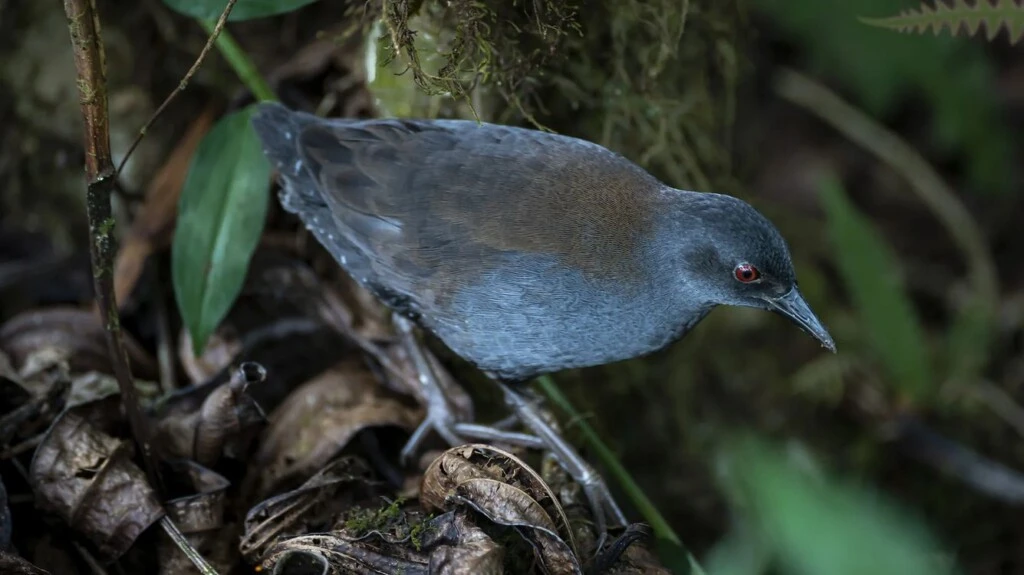
Few developments illustrate that recovery more vividly than the return of the striking Galápagos rail to Floreana Island. The small blue bird had not been recorded there for roughly 200 years, with the only historical evidence of its presence being a specimen collected by Darwin himself.
Following nearly a decade of preparation, conservation teams successfully removed invasive rats, feral cats, and parasitic avian vampire flies from Floreana. The effort was the result of close collaboration between international conservation organisations and the Galápagos National Park Directorate.
The impact has been swift and dramatic. Native species once driven into decline — including lava lizards, Galápagos doves, geckos, and dark-billed cuckoos — are now rebounding across the island.
“But the most remarkable discovery was the return of the Galápagos rail,” said Birgit Fessl, lead researcher for land bird conservation at the Charles Darwin Foundation. “This species had been absent from Floreana for centuries.”
The rail is a vivid and unusual bird. Its plumage ranges from deep midnight blue on its head to lighter cobalt and powder blue across its wings, offset by bright red eyes and a rich brown patch along its back. As a ground-dwelling species, it was especially vulnerable to predation, with cats hunting adults and rats feeding on eggs. While rails managed to survive on other Galápagos islands, they were long thought to have vanished entirely from Floreana.
Given the isolation of the islands — the very feature that allowed Darwin to develop his theory of natural selection — the rail’s reappearance raises an intriguing mystery. It remains unclear whether a tiny, undetected population survived in remote corners of the island or whether the birds recolonised Floreana from elsewhere once conditions improved.
“What’s incredible is how common they are now,” said Paola Sangolquí, a marine biologist with the Jocotoco Conservation Foundation. “You see them walking around, you hear them calling — it feels almost unreal.”
The ecological revival extends beyond the rails. Native finches on Floreana have begun singing more loudly, for longer periods, and in increasingly complex patterns. Researchers believe this behavioural shift reflects the sudden absence of predators.
For generations, young birds that sang boldly risked being spotted by cats or rats. With those threats gone, decades of suppressed song appear to have burst free, filling the island with new and unfamiliar melodies.
Floreana’s transformation is becoming a powerful reminder that, with sustained effort and cooperation, ecosystems damaged for centuries can still recover — and sometimes in ways that feel almost miraculous.