

For years, the ocean surrounding a remote group of islands in southern Chile seemed to be losing its life.
Waters that once supported thriving populations of fish, shellfish, and other marine creatures had become increasingly empty, leaving local families worried about the future of their livelihoods.
But one determined couple refused to accept that their familiar fishing grounds would remain that way forever.
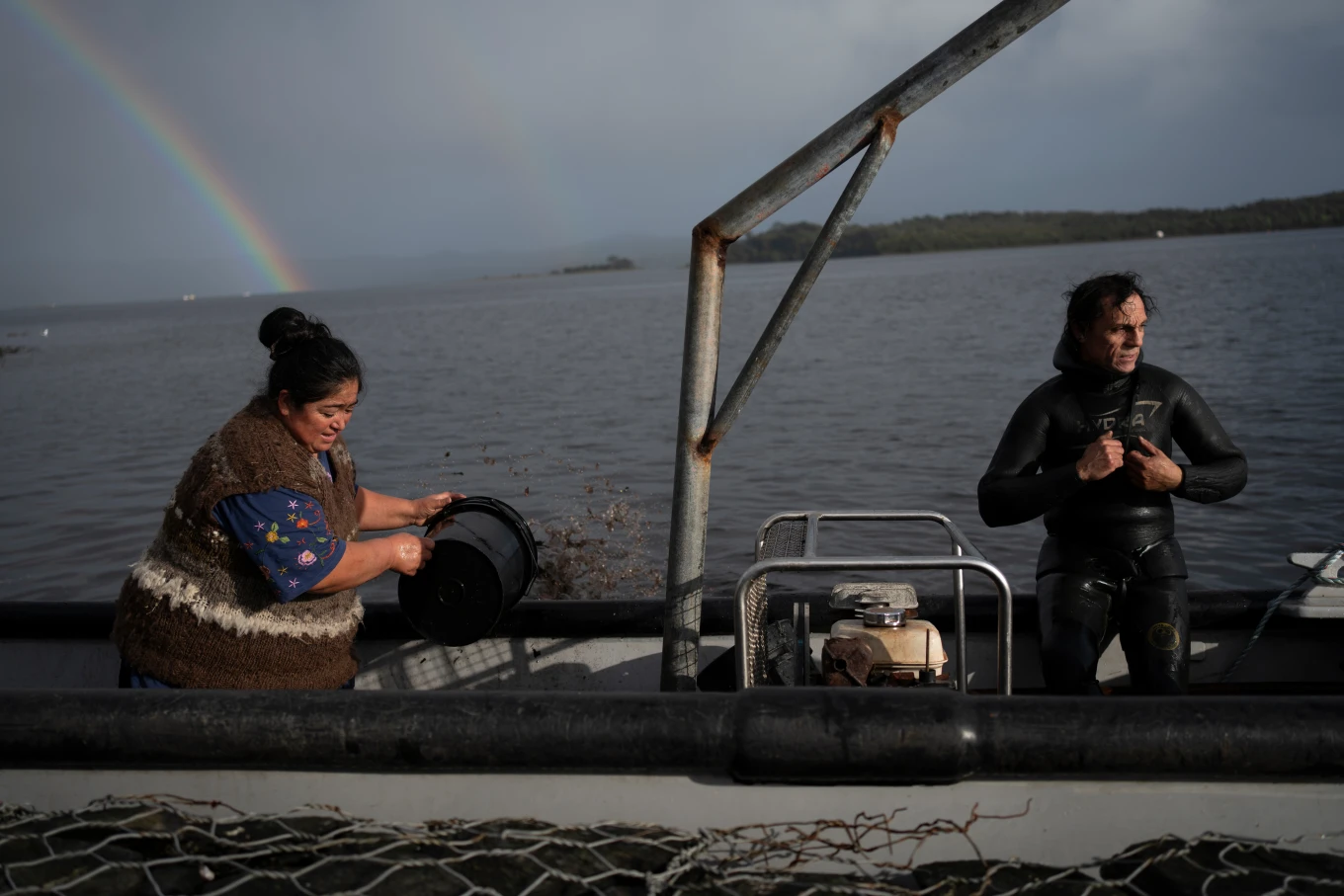
Instead of abandoning the area, Yesica Fabiana Leviñanco and her partner, Paulo Vera Perez, began an unusual effort to help restore the damaged marine environment.
Their approach was simple: introduce healthy shellfish from other areas and give nature an opportunity to recover.
Friends and relatives initially questioned whether their idea could work.
Yet after years of patience and persistence, the couple began noticing something extraordinary.
Marine animals were returning to waters that Leviñanco remembered as almost lifeless.
A Fishing Community Watches Its Ocean Change
The story takes place in Chile’s Guaitecas Archipelago, a remote collection of more than 40 islands near the northern entrance to Patagonia.
Surrounded by cold, nutrient-rich waters, the islands have supported fishing communities for generations.
For residents of Melinka, the archipelago’s main town, the ocean is much more than a beautiful landscape.
It provides food, employment, cultural identity, and a way of life passed down through families.
Leviñanco and Vera Perez know these waters intimately.
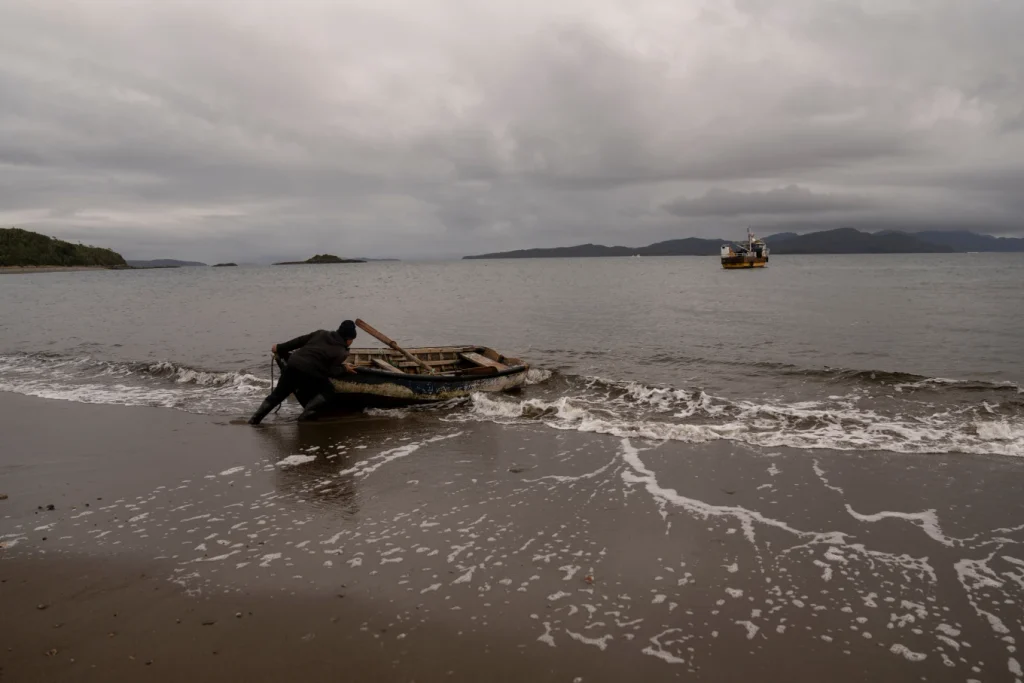
Both in their mid-40s, they regularly head out in a small wooden boat to gather shellfish from the surrounding sea.
While Vera Perez dives beneath the surface, Leviñanco manages the boat and helps collect their harvest.
Their catches can include mussels, clams, sea urchins, and crabs, which they sell at local markets.
But the couple remembers a time when finding such an abundance of marine life seemed almost impossible.
According to Leviñanco, sections of the ocean where they had traditionally worked suffered severe ecological deterioration.
Fish became harder to find, other marine animals disappeared, and even seabirds were noticeably absent.
She believes intensive salmon farming played a major role in damaging the area.
For a family whose livelihood depends on healthy coastal waters, watching the environment decline was deeply concerning.
And it prompted the couple to take action.
An Unusual Idea to Help the Ocean Recover
Rather than waiting for someone else to address the damage, Leviñanco and Vera Perez decided to experiment with restoring marine life themselves.
They began collecting healthy mussels and clams from other locations and introducing them into the affected fishing grounds.
It was a modest, hands-on effort, carried out with the hope of improving conditions in an area they knew well.
Not everyone believed it would make a difference.
Some friends and family members thought the couple’s plan was unrealistic.
After all, reversing years of environmental deterioration is an enormous challenge, even for professional conservation organizations.
But Leviñanco and Vera Perez continued.
They spent years working in the area, gradually observing changes in the marine environment.
Eventually, they began seeing encouraging signs.
Shellfish became more abundant, and fish and other marine animals started appearing again.
Leviñanco also noticed the return of birds to the surrounding waters.
For the couple, the changes were deeply meaningful.
Areas that had previously seemed empty were once again providing catches that supported their livelihood.
Their observations suggest that local marine life has improved, although no scientific assessment presented in the account establishes exactly how much of that recovery resulted from their shellfish introductions.
Nevertheless, their experience offers a compelling example of people taking an active role in caring for the environment they depend on.
Why Salmon Farming Has Become a Major Environmental Concern
The Guaitecas Archipelago is one of Chile’s most ecologically important coastal regions.
Its protected landscapes support a wide variety of wildlife, including species that depend on healthy marine habitats.
However, the region is also home to a significant salmon-farming industry.
According to the Chilean environmental organization Terram, at least 313 salmon-farming facilities have been authorized in the archipelago.
Chile is one of the world’s leading producers of farmed salmon, second only to Norway.
In 2025, the country produced more than one million metric tons of salmon, making the industry an important contributor to the national economy.
But the expansion of salmon farming has also generated growing environmental concerns.
Unlike many fish naturally found in Chilean waters, farmed Atlantic salmon were introduced from abroad.
Large aquaculture operations concentrate substantial numbers of fish in ocean enclosures, creating challenges involving waste accumulation, disease management, and chemical use.
Environmental organizations and scientists have warned that intensive aquaculture can contribute to pollution and declining oxygen levels near farming sites.
Organic waste, uneaten feed, and other materials can accumulate on the seafloor.
Under certain conditions, this buildup reduces the oxygen available to marine organisms, making it difficult for some species to survive.
For fishing communities that depend on the surrounding ecosystem, these changes can have serious consequences.
However, representatives of the salmon industry argue that declining wild fish populations cannot be attributed to aquaculture alone.
They point to additional pressures, including climate change, changing ocean temperatures, illegal fishing, and overexploitation of marine resources.
These competing perspectives have become central to the debate over how Chile should balance economic development with environmental protection.
Local Fishers Say the Seafloor No Longer Looks the Same
Leviñanco and Vera Perez aren’t the only residents worried about the condition of the archipelago’s marine environment.
Daniel Arturo Caniullan Huentel, an experienced diver and leader of the Indigenous Mapuche Pu Wapi community, has spent decades working in the surrounding waters.
Now in his early 50s, he has witnessed significant changes beneath the surface.
He remembers a time when the seafloor was filled with colorful organisms and abundant marine life.
Over the years, however, he says that many familiar species have become less common while others have appeared in areas where they were previously absent.
Caniullan Huentel believes the expansion of salmon farming has contributed to these changes.
His concerns reflect a broader struggle among Indigenous communities and traditional fishers who want greater protection for the waters they have used for generations.
For these communities, the issue extends beyond declining seafood catches.
It also involves preserving their cultural practices, traditional knowledge, and connection to the ocean.
Indigenous Communities Fight to Protect Their Ancestral Waters
In response to growing environmental concerns, members of the Mapuche Pu Wapi community have pursued legal measures designed to protect their traditional coastal areas.
Their efforts focus on a Chilean law known as Ley Lafkenche, introduced in 2008.
The legislation allows Indigenous communities to seek management rights over marine and coastal spaces where they can demonstrate longstanding ancestral practices.
These practices may include fishing, shellfish gathering, collecting seaweed, navigating traditional routes, and accessing culturally significant locations.
The law does not grant ownership of the ocean or seabed.
Instead, it provides a framework for protecting traditional uses while allowing communities to participate in managing important marine areas.
The Mapuche Pu Wapi community has submitted several applications seeking protection for waters surrounding the archipelago.
Previous requests covering approximately 8,000 hectares and 350,000 hectares were rejected in 2017 and 2024.
A later application sought protection for a smaller area of roughly 3,000 hectares.
At the time of the report, the community was awaiting a government decision.
For Caniullan Huentel and other residents, these efforts are about ensuring that future generations can continue relying on the same waters their ancestors knew.
They hope stronger local participation in marine management will help preserve both biodiversity and traditional livelihoods.
A Healthy Ocean Means More Than a Successful Fishing Trip
For Leviñanco and Vera Perez, seeing marine life return to their fishing grounds has brought a renewed sense of possibility.
Their small boat once again carries catches that include mussels, crabs, sea urchins, and other shellfish.
But the significance of these changes goes beyond the seafood they can bring to market.
Healthy coastal ecosystems support complex relationships among many species.
Shellfish help filter water as they feed, while their beds can provide habitat for other small organisms.
Fish, seabirds, and marine mammals depend on interconnected food webs that can be disrupted when environmental conditions deteriorate.
Restoring damaged marine habitats can therefore benefit entire communities of species.
Still, restoration is rarely simple.
The success of transplanting shellfish depends on ecological conditions, the species involved, and the potential for unintentionally spreading disease or disturbing existing ecosystems.
For that reason, conservation specialists generally emphasize careful planning and scientific monitoring when undertaking restoration projects.
The couple’s experience demonstrates the value of local environmental knowledge, while also highlighting the need for wider research and protection.
An Inspiring Reminder That Damaged Ecosystems May Have a Second Chance
The environmental challenges facing Chile’s Guaitecas Archipelago remain significant.
Aquaculture continues to provide important employment and export revenue, while local residents and conservation organizations call for stronger safeguards to protect marine ecosystems.
Finding a balance between these priorities will require cooperation, scientific research, responsible industry practices, and meaningful participation from coastal communities.
But amid these challenges, Leviñanco and Vera Perez have witnessed a change that once seemed unlikely.
After spending years working in waters they believed had been badly damaged, they are now seeing signs of renewed marine activity.
The return of shellfish, fish, and birds has given them hope that at least some of the ecological damage can be reversed.
Their story also shows how closely human livelihoods are connected to the health of nature.
When the ocean suffers, fishing families suffer alongside it.
And when marine ecosystems begin to recover, the benefits can extend far beyond the wildlife living beneath the waves.
For the couple, each successful fishing trip now carries a deeper meaning.
The shellfish in their boat represent more than an income.
They are reminders of the years of work, uncertainty, and determination that went into helping their familiar fishing grounds.
The wider archipelago still faces serious environmental pressures, and much more work is needed to protect its extraordinary marine habitats.
But the changes witnessed by one determined couple offer an encouraging lesson.
Even after years of environmental damage, recovery may still be possible when people refuse to give up on the natural world — and commit themselves to protecting it for generations to come.