

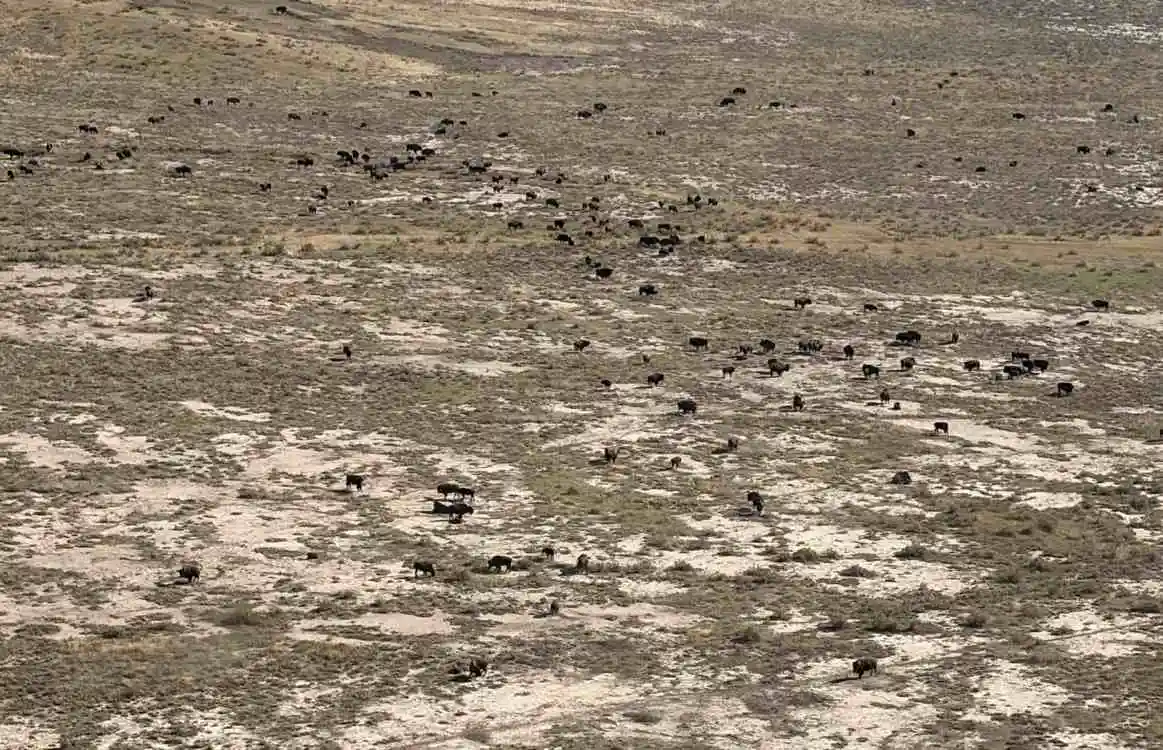
An extraordinary wildlife conservation effort in the heart of North America’s Great Plains has reached a historic milestone, offering new hope for one of the continent’s most iconic animals.
For the first time in more than two decades, the bison herd managed by the conservation organization American Prairie has grown to over 1,000 animals, marking a major achievement in its ambitious mission to restore the Great Plains ecosystem.
The exciting news comes as autumn settles across Montana’s vast grasslands, where these magnificent animals are gradually reclaiming landscapes that were once home to millions of their ancestors.
A Bold Vision To Bring Back America’s Great Plains
American Prairie is a nonprofit conservation organization working to create one of the largest connected protected prairie landscapes in the United States.
Its mission involves bringing together grasslands, ranch properties, rivers, rolling hills and natural habitats to establish an enormous conservation area where wildlife can thrive.
Over more than 20 years, the organization has assembled an impressive 603,657 acres of land, including 167,070 acres of privately owned property and 436,587 acres of leased public land.
But its ultimate vision is even more ambitious.
American Prairie hopes to protect and restore approximately 3.2 million acres, creating an expansive landscape that supports native wildlife while also providing opportunities for outdoor recreation.
To put the project’s current scale into perspective, if its existing reserve were designated a national park, it would already rank among the 10 largest national parks in the contiguous United States.
And the organization is still working toward its much larger goal.
Why Bison Restoration Matters So Much
Before European settlement dramatically transformed North America’s grasslands, tens of millions of American bison wandered across the continent.
These enormous grazing animals played a crucial role in maintaining healthy prairie ecosystems, shaping plant growth, supporting biodiversity and influencing the natural balance of the landscape.
However, widespread hunting and habitat destruction during the 19th century pushed the species dangerously close to extinction.
Although conservation programs helped save bison from disappearing entirely, their populations remain only a fraction of their historic numbers.
Current estimates suggest that today’s bison population represents approximately 1 to 3.5 percent of the animals that existed before industrial expansion.
Even more concerning, fewer than 10 percent of surviving bison are managed primarily for conservation or as wild animals.
Many conservation herds remain relatively small and are restricted to enclosed areas, limiting their ability to migrate, interact naturally and maintain healthy genetic diversity.
These limitations also prevent bison from fully carrying out their important ecological role across the prairie.
That’s what makes American Prairie’s expanding herd particularly significant.
By creating larger connected habitats, the organization hopes to give bison more opportunities to roam, graze and behave as they naturally would.
A Major Legal Challenge Threatened The Project
Despite its conservation successes, American Prairie has faced significant obstacles while working to restore bison populations.
One of the biggest challenges involves how the animals are classified under Montana law.
Unlike many other native wild animals, bison are legally treated as livestock rather than wildlife.
That classification means their movements and grazing activities are subject to regulations similar to those governing cattle, including rules intended to address disease transmission, livestock management and grazing boundaries.
In May 2026, the federal Bureau of Land Management revoked American Prairie’s bison grazing permits and ordered the nonprofit to remove its animals from certain federal public lands.
The agency argued that the applicable federal grazing law was intended to support commercial livestock production rather than conservation-focused grazing.
American Prairie challenged that interpretation, maintaining that the Taylor Grazing Act does not restrict permitted grazing exclusively to commercial activities.
On September 4, a federal judge issued a preliminary injunction, temporarily preventing the agency from enforcing its removal order on three federal grazing allotments in northeastern Montana.
The court indicated that the organization’s interpretation of the law was likely to succeed, although the preliminary decision did not permanently settle the legal dispute.
For American Prairie, the ruling represented an important victory in its efforts to keep restoring bison populations across the region.
A Historic Milestone: 1,016 Bison And Counting
<escape></escape>
Photo: American Prairie
Not long after that encouraging legal development, the organization received even more exciting news.
Its annual calf count, conducted near the end of the breeding season, confirmed that the herd had reached 1,016 bison.
This marked the first time since American Prairie’s founding that its resident herd had surpassed the 1,000-animal threshold.
The milestone reflects years of careful wildlife management, habitat protection and dedication from conservationists determined to restore a vital part of America’s natural heritage.
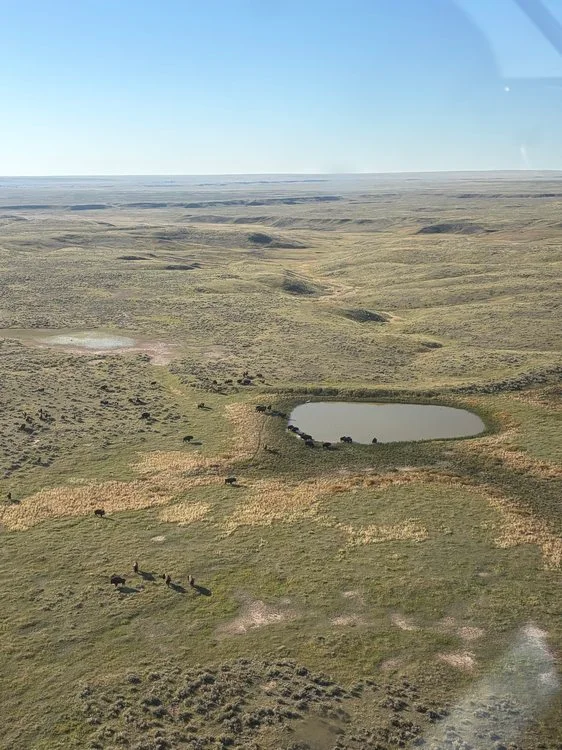
And while 1,016 bison is an impressive achievement, the organization believes the herd has the potential to grow much larger.
Conservationists consider a population of 5,000 bison an achievable long-term objective.
If American Prairie eventually succeeds in establishing its planned landscape of approximately 5,000 square miles, the expanded habitat could theoretically support tens of thousands of these remarkable animals.
Such a transformation would represent a significant step toward restoring the ecological processes that once defined the Great Plains.
A Brighter Future For America’s Iconic Bison
The return of bison is about far more than increasing the population of a single species.
As large grazers, bison help maintain the health of grassland habitats through their feeding patterns, movement and interactions with the environment.
Their presence can influence vegetation, create opportunities for other wildlife and contribute to the complex natural systems that make prairie ecosystems so valuable.
American Prairie’s growing herd demonstrates what can be achieved through long-term conservation planning, habitat restoration and persistent efforts to overcome legal and practical challenges.
There is still a considerable distance to travel before bison populations approach anything resembling their historic abundance.
But seeing more than 1,000 of these powerful animals roaming the Montana prairie offers an encouraging glimpse of what the future could hold.
After generations of decline, the animals that once dominated the Great Plains are slowly gaining ground again.
And with each new calf born, the dream of bringing America’s wild prairie back to life moves another step closer to reality.