

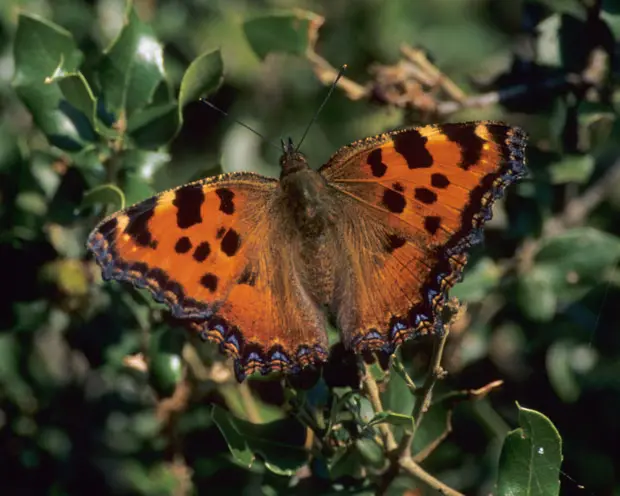
A striking butterfly once believed to be extinct in Britain has made an unexpected comeback.
The Large tortoiseshell, absent from the UK for decades, has been spotted across several regions this spring. Conservationists say the sightings show the species has re-established itself as a resident butterfly in Britain for the first time in many years.
The development increases Britain’s total number of native butterfly species to 60.
Sightings Across Southern England
Early spring sightings have been recorded in several locations, including:
- Kent
- Sussex
- Hampshire
- Dorset
- Cornwall
- Isle of Wight
These sightings occurred after adult butterflies emerged from winter hibernation in woodland habitats.
Because the insects are now appearing regularly and breeding in the wild, the charity Butterfly Conservation has officially classified the species as resident rather than migratory.
Why This Butterfly Disappeared
The large tortoiseshell vanished from Britain during the 20th century, with the last populations believed to have disappeared by the 1960s.
For many years, scientists suspected that Dutch elm disease was responsible, since the butterfly’s caterpillars often feed on elm trees.
However, researchers now think the explanation may be more complex. Britain may simply lie at the northern edge of the butterfly’s natural range, making its populations sensitive to climate conditions.
Climate Change and Migration
Recent population increases in nearby countries — including the Netherlands and France — have led to more butterflies migrating across the North Sea and the English Channel.
Warmer temperatures associated with climate change may also be helping the species survive in Britain once again.
Similar conditions have allowed other insects, such as the dramatic Clifden nonpareil, to return or expand their range in the UK.
How It Differs From the Common Tortoiseshell
The large tortoiseshell is often confused with its relative, the Small tortoiseshell, a common butterfly found in gardens.
Key differences include:
- Larger wingspan
- No white spots near the wingtips
- Tree-feeding caterpillars, rather than nettle-feeding ones
Its caterpillars typically feed on trees such as elm, willow, aspen, and poplar.
Signs the Species Is Breeding Again
Although sightings occurred earlier in the 2000s, some were suspected to be the result of unofficial releases by butterfly breeders.
More convincing evidence appeared in 2020, when caterpillars were discovered feeding naturally on trees in Dorset.
Since then, additional caterpillar colonies have been found across southern England, confirming that the species is breeding in the wild again.
How the Public Can Help
The butterfly hibernates as an adult, emerging in early spring to mate and lay eggs. The next generation of butterflies typically emerges in midsummer.
Conservationists hope that this year’s sightings will lead to a growing population later in the season.
To help track the species’ recovery, Butterfly Conservation is encouraging the public to record sightings using the **iRecord citizen science platform.
Every reported sighting helps researchers map where the butterfly is spreading — and determine whether this long-lost species is truly back in Britain for good. 🦋