

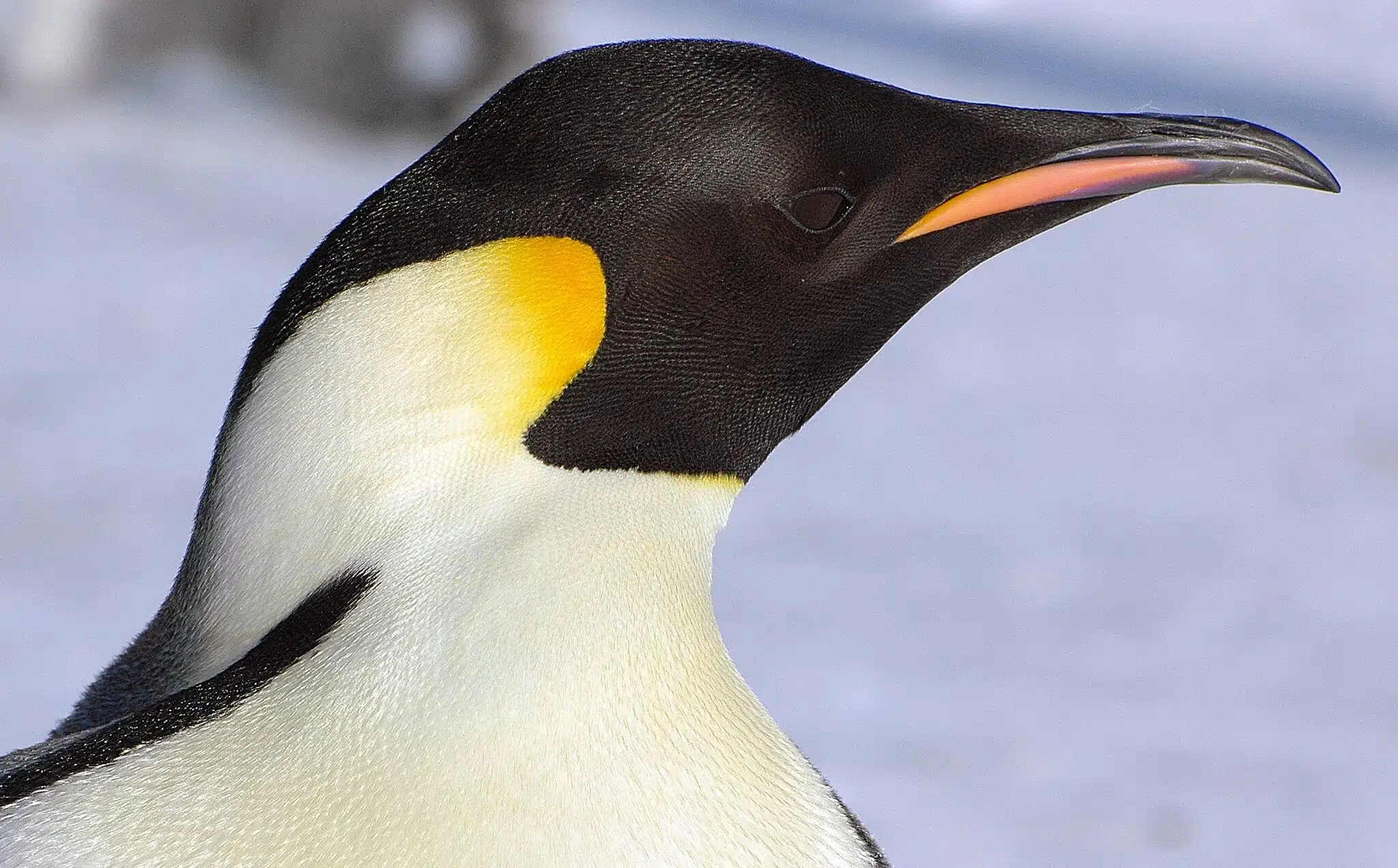
Scientists have uncovered a fossilized skull belonging to a giant ancestor of modern penguins along the Taranaki coast in Aotearoa, New Zealand. The discovery sheds new light on how ancient penguins thrived in warmer climates and raises questions about the factors that led to their extinction.
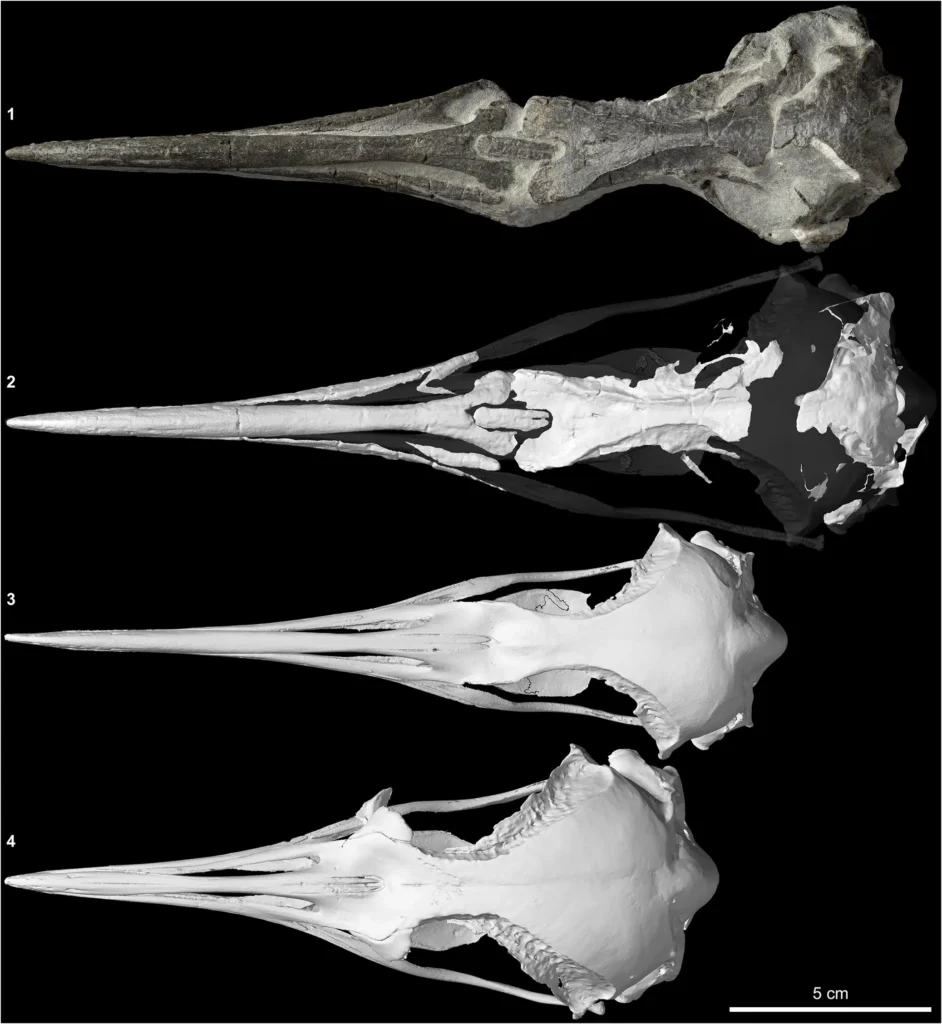
The skull is about 31% longer than that of today’s emperor penguins, suggesting the bird stood taller, weighed more, and had a longer, more robust beak—similar to a king penguin on a much larger scale. The species lived around three million years ago, when global temperatures were roughly 3°C (37.4°F) warmer than pre-industrial levels. At that time, South Taranaki’s coastal waters reached 20°C (68°F), far warmer than the icy seas that modern emperor and king penguins inhabit.
Despite the warmer waters, these giant penguins thrived, challenging the traditional view of penguins as strictly cold-water animals and highlighting their environmental flexibility.
The species vanished with the onset of the Pleistocene ice ages about 2.58 million years ago. While smaller penguins in the region survived, the giant species disappeared. Paul Scofield, senior curator at Canterbury Museum and co-author of the study, noted that cooler temperatures alone probably weren’t responsible, as crested and little penguins weathered the same climatic shifts.
Predation may have played a role. Open coastal colonies, where the giant penguins likely nested, could have left them vulnerable to predators such as the now-extinct Haast’s eagle and Forbes’ harrier, massive raptors that arrived from Australia in the past three million years. Changes in marine ecosystems and food availability may also have contributed, though researchers are still investigating why only the larger penguins disappeared.
Beyond uncovering an impressive extinct species, the fossil provides insight into how penguins and other marine animals might respond to rising ocean temperatures. As New Zealand’s waters warm and new species enter its ecosystems, studying these ancient warm periods offers crucial clues.
The team thanked Kerr Sharpe-Young for discovering the fossil and acknowledged the support of Ngāti Ruanui and Ngāruahine in facilitating the research.