

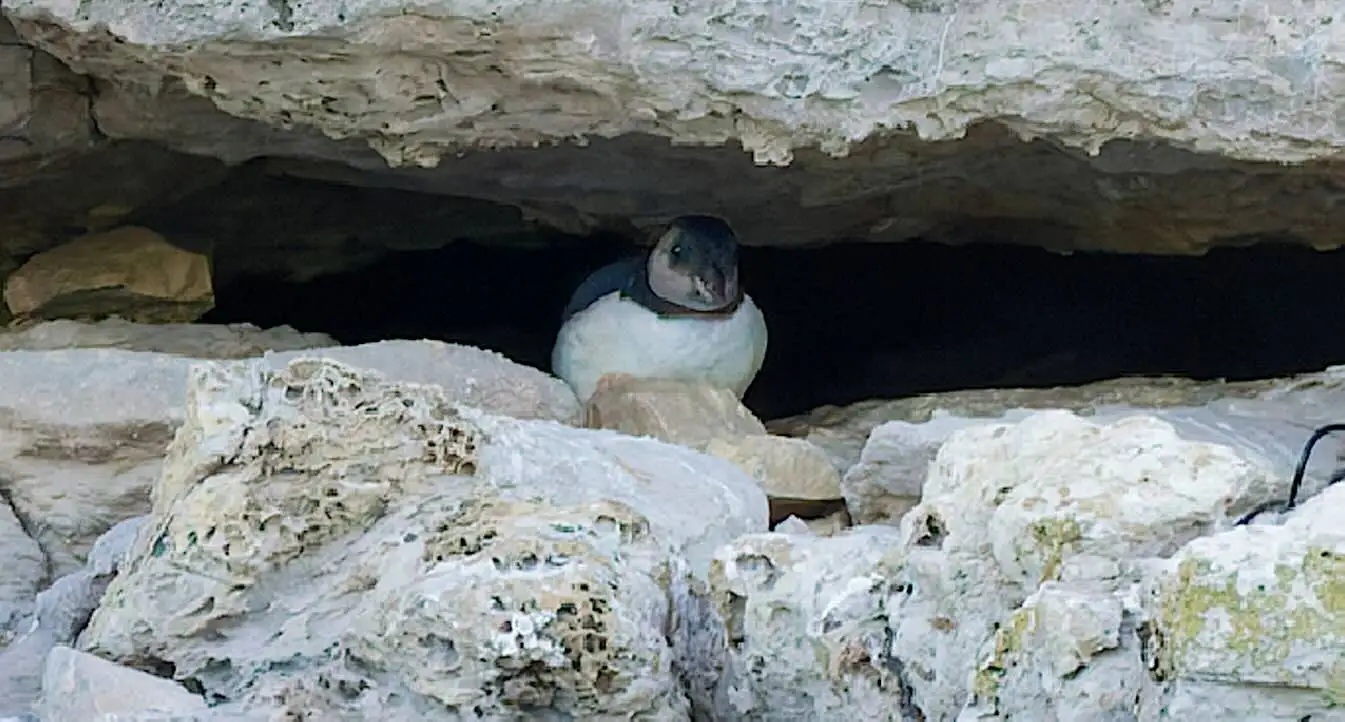
This spring, conservationists watched closely as the last puffin colony on the south coast of mainland England faced an uncertain future. Then came a welcome surprise: not only did the adult birds return, but a chick was also born.
For the first time in three decades, a newly hatched puffin chick, known as a puffling, was seen emerging from a nest hidden in the cliffs at Dancing Ledge in Dorset. In recent years, the colony had dwindled to just a handful of birds, prompting the National Trust and volunteer researchers to investigate why breeding had slowed so dramatically.
After weeks of installing cameras and observing the cliffside nesting areas, the team finally had reason to celebrate when they saw adult puffins bringing fish into the deep crevices where the nests are tucked away. Dr. Richard Caldow, who is leading the project, described the sight of the puffling as an exciting breakthrough and said it was the first one recorded in Purbeck in many years.
The situation for the colony remains fragile. Today, only three breeding pairs are thought to remain, compared with more than 40 in the 1950s. Still, researchers say even one chick is a meaningful sign that the birds are still capable of reproducing there.
Volunteers from the Purbeck Natural History Forum spent roughly 150 hours monitoring the ledges. They first saw fish being delivered into the nesting area on May 31, and the final food drop was recorded on July 5. Based on that timeline, the chick is believed to be around 38 to 40 days old. Dr. Caldow expects the young puffin to leave the nest soon, likely under cover of darkness, and begin the long solitary phase of life at sea.
If it survives, the puffling may one day return to Purbeck, possibly as early as age two, though puffins usually do not begin breeding until they are about four years old.
The discovery came after the National Trust installed motion-sensor cameras in March to look inside the nesting crevice and determine whether predators such as rats might be preventing eggs and chicks from surviving. The solar-powered cameras do not transmit live footage, so the research team will only know the full story once they retrieve and review the thousands of images captured during the season.
Ben Cooke, a project officer with the National Trust in Purbeck, said understanding what happens inside the nest is the missing piece of the puzzle. If researchers can identify what is causing eggs or chicks to disappear, they can begin exploring the best conservation steps to help protect the colony.
For now, the sight of one puffling has given everyone working to save the birds a powerful reason for hope. The colony is still at risk, but after so many years without a confirmed chick, this tiny new life has brought a rare and welcome sign of progress.