

It was an “Aha!” moment.
A chance underwater encounter in Papua New Guinea stayed with marine biologist Dave Harasti for over two decades. The strange, hairy orange fish he photographed in the deep didn’t match anything in the scientific record — and it wouldn’t be identified for another 23 years.
A Fish Like Nothing He’d Ever Seen
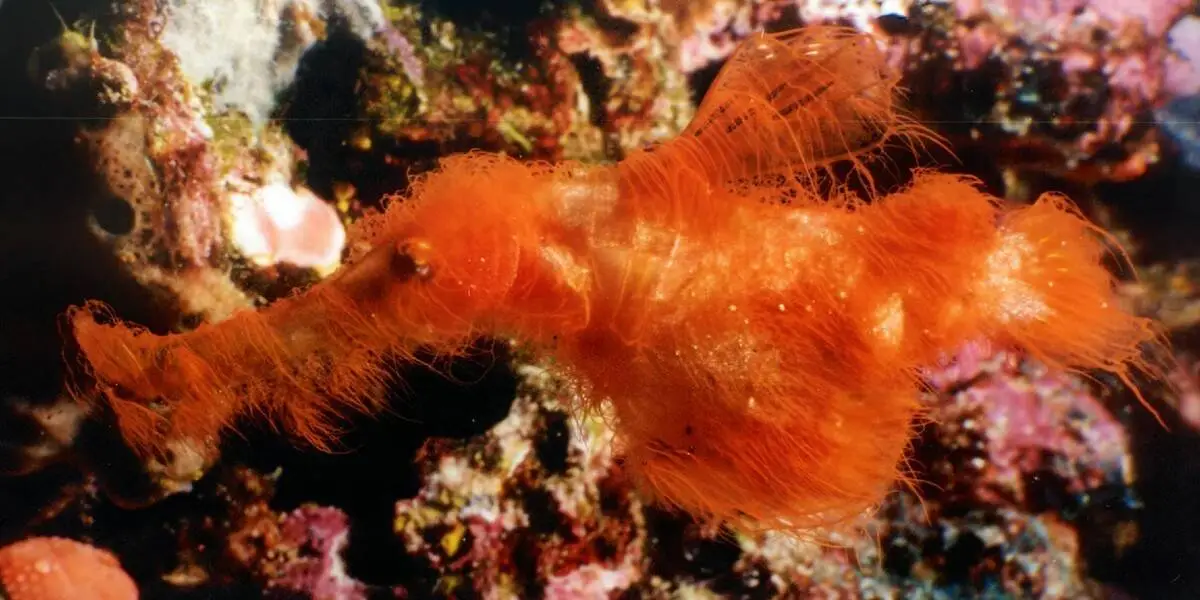
Twenty-three years ago, while diving in Papua New Guinea, marine biologist Dave Harasti came across a bright orange, hairy-looking fish unlike anything he had encountered before. He managed to snap a photo before it swam away.
Back on the surface, Harasti searched for answers — but the fish didn’t match any known species. As he shared on Instagram, he could never match it to anything documented in science.
Six Dives and No Answers
Convinced he might have stumbled upon something significant, Harasti returned to the same dive spot six more times hoping to catch another glimpse. The mysterious orange fish never reappeared.
Still, the encounter never left him.
A Reunion 23 Years in the Making
In 2020, while diving in the Great Barrier Reef alongside fellow marine biologist Graham Short, Harasti spotted a pair of familiar orange fish drifting past. He recognized them instantly — the same distinctive look, the same unusual features he had photographed all those years ago in Papua New Guinea.
After careful examination, Harasti and Short confirmed what they had suspected: they had found an entirely new species, distinguished by its unique hairlike tendrils that set it apart from every other fish in its genus.
Named After a Sesame Street Legend
As the first scientists to document the species, Harasti and Short earned the right to name it. They chose Solenostomus snuffleupagus — a nod to the beloved Sesame Street character Mr. Snuffleupagus.
“With help from the Australian Museum, Graham and I named the species Solenostomus snuffleupagus because it looks uncannily like Mr. Snuffleupagus from Sesame Street: long snout, shaggy filaments, the whole vibe,” Harasti wrote on Instagram.
Built-In Camouflage — and a Clue to Why It Hid So Long
Beyond its charming appearance, the fish’s shaggy, algae-like look serves a serious survival purpose. Solenostomus snuffleupagus blends seamlessly into floating seaweed, hiding from predators in plain sight — and likely hiding from scientists for just as long.
It’s entirely possible that divers have passed this species countless times over the years, mistaking it for nothing more than a drifting piece of algae.
A Discovery Worth Waiting For
For Harasti, the moment was as meaningful as it was memorable.
“This is one of the coolest things I’ve ever worked on,” he wrote on Instagram.