

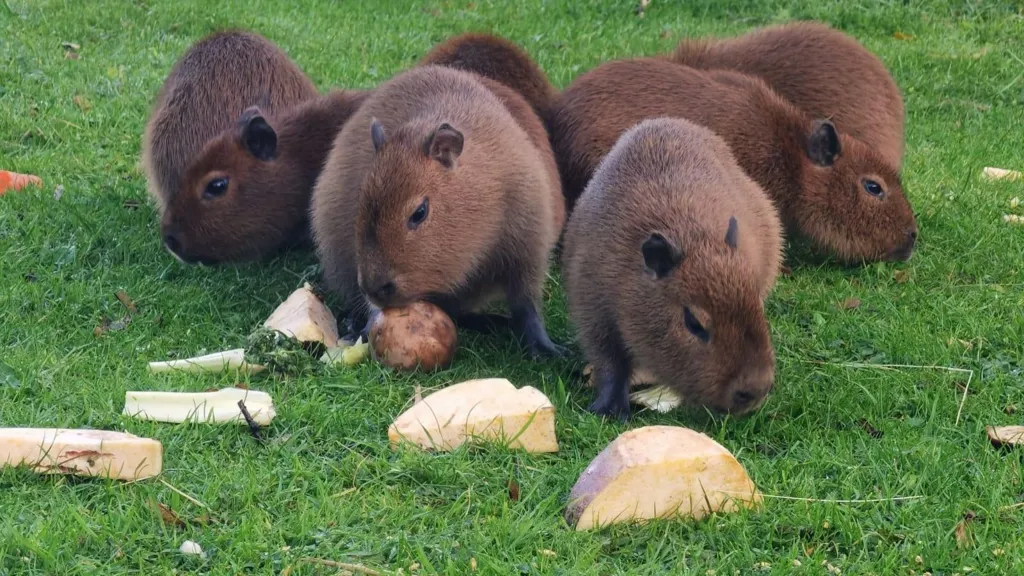
Curraghs Wildlife Park has enjoyed its busiest October weekend on record after welcoming eight adorable capybara pups, attracting excited visitors and raising valuable funds for wildlife conservation.
The newest additions arrived in two separate litters, born just days apart on 26 September and 1 October. Their arrival has quickly become one of the park’s biggest attractions, capturing hearts both online and in person.
Park manager Kathleen Graham described the public’s response as extraordinary, saying the baby capybaras had created a wave of excitement unlike anything the park had seen before.
“The car park was full, it was like a bank holiday. Everybody coming to see the capybara babies,” she said.
Tiny New Arrivals Steal the Spotlight
It has been four years since Curraghs Wildlife Park last celebrated the birth of a capybara pup, making the arrival of eight babies an especially exciting occasion.
Graham described the two litters as a “super overload of cuteness,” noting that visitors of all ages had been charmed by the playful youngsters.
Photos and videos shared on social media quickly attracted widespread attention, encouraging families and animal lovers to visit the park.
“They have been delighting people. Even grown men were like cooing,” Graham said with a laugh.
Native to South America, capybaras are the largest living rodents in the world. Known for their calm personalities, sociable behaviour and love of water, these fascinating animals naturally inhabit wetlands, riversides and marshy landscapes.
Their gentle nature and adorable appearance have also helped make them increasingly popular with animal lovers around the world.
More Than Just Adorable Animals
While the eight newborn capybaras have brought plenty of smiles, their arrival is also helping raise awareness about the importance of protecting wetland ecosystems.
Although capybaras are not considered endangered, the environments they depend on face growing threats from habitat destruction and environmental changes.
Curraghs Wildlife Park participates in the European Association of Zoos and Aquaria’s (EAZA) Wetlands for Life campaign. The park is also located within an internationally recognised Ramsar wetland site.
Graham explained that wetlands play a crucial role in supporting biodiversity, regulating water levels and protecting communities from flooding.
“We rely on wetlands to soak up excess rainwater. And they’re management systems, really. So they need looking after and protecting,” she said.
By attracting more visitors, the capybara pups have provided an opportunity to introduce people to these important environmental issues.
Record Visitor Numbers Support Conservation
The excitement surrounding the newborn capybaras has also delivered a welcome financial boost to wildlife conservation projects.
For every visitor entering the park, £1 is contributed to its conservation fund unless the visitor chooses to opt out.
With record-breaking crowds arriving to see the babies, the additional contributions have provided valuable support for ongoing environmental initiatives.
The fund helps finance conservation programmes both locally, through partnerships with Manx Wildlife Trust, and internationally, including efforts to protect wildlife and habitats in South America’s Pantanal region.
“Although themselves [capybaras] may not be endangered, they’ve actually created a lot of extra money this weekend for the conservation fund and spread a lot of joy and oohs and aahs,” Graham explained.
Eight Little Reasons to Smile
Beyond their contribution to conservation, the young capybaras have brought something equally meaningful to the community: happiness.
At a time when difficult headlines often dominate the news, the arrival of eight healthy baby animals has offered visitors a welcome chance to enjoy a simple, uplifting experience.
Graham believes moments like these serve as a reminder of the joy that wildlife can bring to everyday life.
“I think when there’s so many just awful things that happen in the world, sometimes these little things just give us a bit of light relief, don’t they?” she said.
For Curraghs Wildlife Park, the eight tiny newcomers have achieved far more than attracting record crowds. They have brought people closer to nature, raised awareness of threatened habitats and generated much-needed support for conservation.
And perhaps most importantly, they have given hundreds of visitors a reason to smile.