

In the United States, they’re commonly called “ladybugs,” but across the UK — and within scientific circles — these familiar red-and-black insects are known as “ladybirds.”
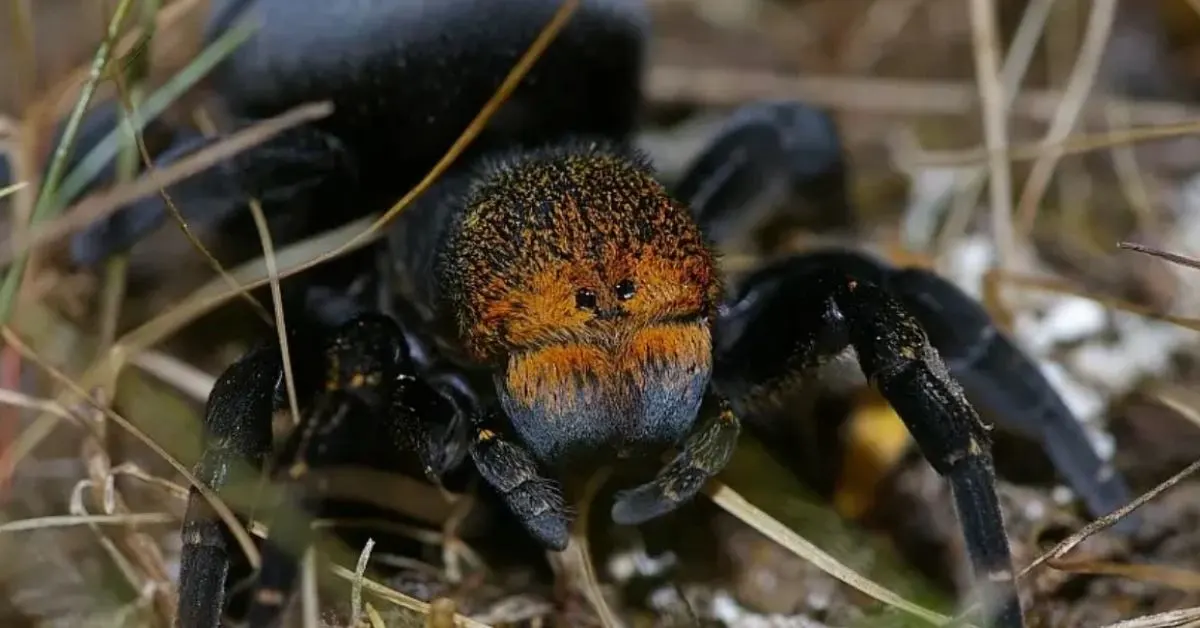
Remarkably, a group of spiders looks so much like these beetles that they’ve inherited the same nickname. Known as velvet ladybird spiders, their vivid coloring and bold patterns have earned them a reputation as some of the most visually striking spiders in the world.
The velvet ladybird group includes 38 known species, distributed across North Africa, parts of Europe, the Middle East, and Asia. Now, scientists have added a brand-new member to that list — discovered in a cork oak forest in southern Morocco.
The newly identified species stands out immediately. While male ladybird spiders typically have black heads covered in dark hairs, this one is dramatically different. Named Eresus rubrocephalus, it features bright red hairs across its head, front body section, and even its chelicerae — the spider’s mouthparts.
The discovery was detailed by researcher János Gál and colleagues in a study published in the journal Animals. The team referred to the spider as a “red-colored oddball,” noting that nothing like it had been previously documented.
“After examining all existing descriptions, we found no known ladybird spider species with a completely red pars cephalica in Europe, North Africa, or Asia,” the researchers explained.
To confirm their findings, the team conducted detailed comparisons of physical traits alongside genetic testing, ultimately concluding that the specimens represented an entirely new species.
Ladybird spiders play an important ecological role. As predators of ants and beetles, they help keep insect populations in balance by ambushing prey from silk-lined burrows dug into lowland heathland soils.
Despite their importance, many species have declined sharply due to habitat destruction. Populations have suffered in countries such as Sweden, Germany, and the UK, where large areas of heathland have been converted to forestry, agriculture, or urban development.
In Britain, one species — Eresus sandaliatus — disappeared for more than 70 years and was presumed extinct. Its unexpected rediscovery in Dorset in 1980 sparked conservation action, leading to recovery efforts under the Back from the Brink project.
“The ladybird spider relies entirely on lowland heathland,” the project notes. “Although conservation work has increased numbers to around 1,000 individuals across 19 populations, the species remains highly vulnerable.”
With the addition of Eresus rubrocephalus, scientists say the case for protecting this remarkable spider group grows even stronger.
“The diversity within the Eresus genus highlights the need for broader and more intensive monitoring across different regions,” Gál and his team concluded.
The discovery serves as both a celebration of biodiversity — and a reminder of how much remains to be protected.