

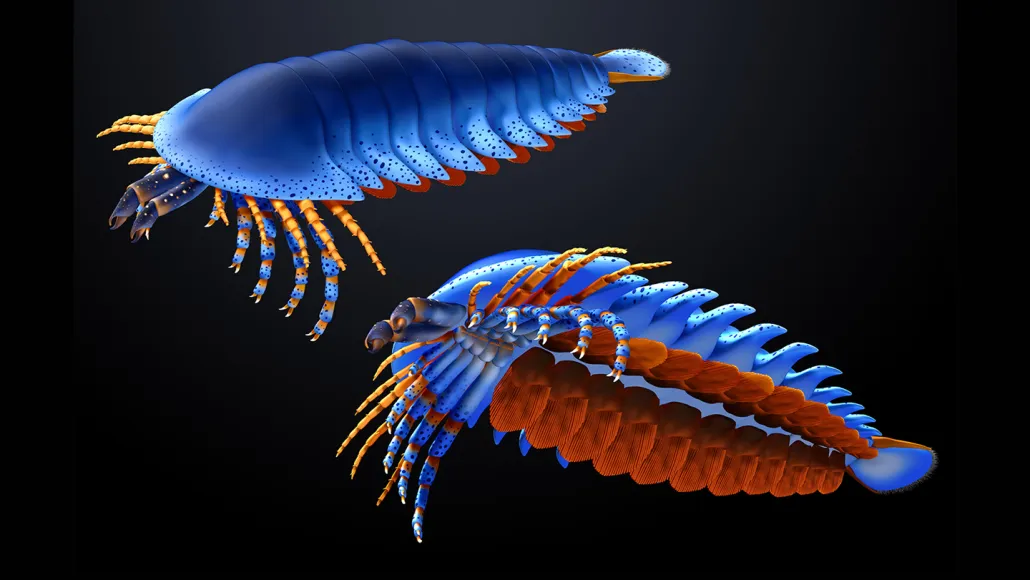
A remarkably well-preserved fossil has revealed that the ancestors of spiders and scorpions already had their signature claws around 500 million years ago.
The discovery offers the clearest evidence yet of how these distinctive features evolved — and shows that some early arthropods were surprisingly modern in design.
An ancient creature with modern features
The fossil, described in Nature, belongs to an early relative of chelicerates — the group that includes spiders, scorpions, horseshoe crabs and ticks.
Despite its age, the creature’s anatomy looks strikingly familiar.
“This animal is incredibly modern for something 500 million years old,” said paleontologist Rudy Lerosey-Aubril of Harvard University.
The origin of claws
The fossil clearly shows a pair of claw-like appendages near the creature’s mouth. In modern species, these structures — called chelicerae — serve different purposes.
- In spiders, they’ve evolved into venom-injecting fangs
- In scorpions, they function as small feeding tools
Until now, scientists weren’t sure where these appendages came from.
Some thought they evolved from antenna-like sensory organs seen in insects. But this fossil suggests a different story: the claws likely developed from grasping limbs used by even earlier arthropods.
Life in ancient seas
The creature probably lived on the seafloor of a prehistoric ocean. Based on its shape and where it was found, researchers believe it used its claws to grab prey — likely small worms — and bring them to its mouth.
A hidden treasure in plain sight
Interestingly, the fossil wasn’t a new discovery.
It had been sitting in a collection for decades after being found in Utah’s Wheeler Formation in the early 1980s. Only recently did scientists uncover its full details by carefully removing layers of rock covering it.
The fossil preserved both the top and underside of the animal, allowing researchers to reconstruct how it once looked.
Why it matters
This find helps settle a long-standing debate about the evolution of chelicerates and shows that key features of modern arthropods appeared much earlier than previously thought.
In short, creatures that looked and functioned like today’s spiders and scorpions were already taking shape half a billion years ago.