

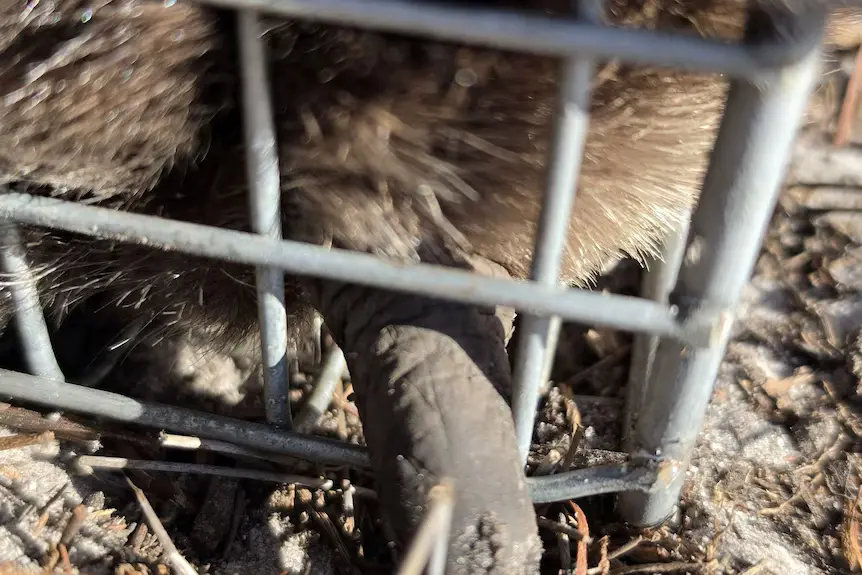
A routine wildlife conservation assignment on a remote Australian island turned into an unforgettable moment when a ranger discovered something completely unexpected inside a trap intended for feral cats.
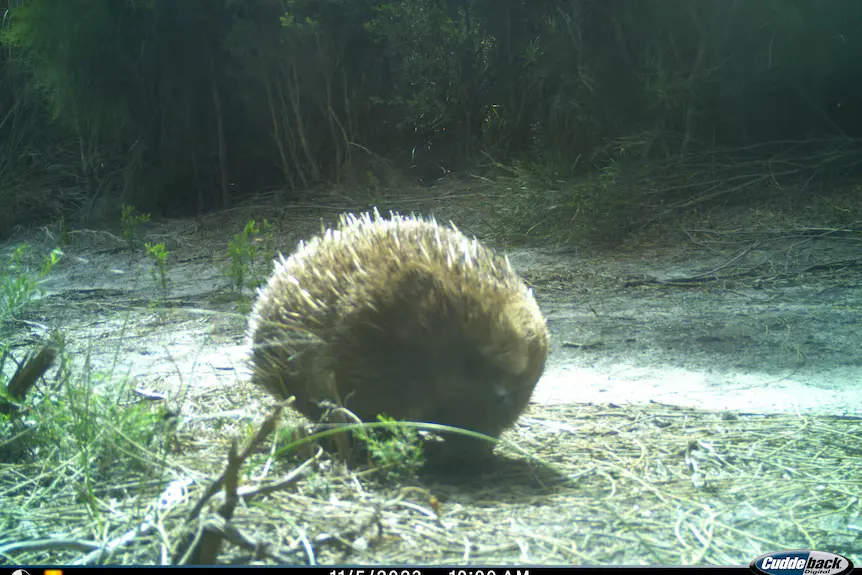
Curled up inside the cage was a small, spiny animal that hadn’t been encountered in person on the island for decades.
It was an echidna.
For ranger Tasha Cooper, the discovery was so overwhelming that she immediately reached for her radio, eager to share the incredible news.
But the encounter wasn’t just a heartwarming wildlife surprise.
It offered renewed hope that a native animal population feared lost after a devastating bushfire might still be surviving in one of Tasmania’s most remarkable island ecosystems.
Ranger Makes Unexpected Discovery While Checking Feral Cat Trap
In September 2026, Pakana ranger Tasha Cooper was learning how to trap feral cats on Lungtalanana, also known as Clarke Island, off Tasmania’s northeastern coast.
The work was part of a larger conservation effort aimed at removing invasive predators and protecting vulnerable native wildlife.
While inspecting one of the traps, Cooper noticed that something had wandered inside.
But it wasn’t a feral cat.
Instead, she found an echidna curled up in the cage.
The animal, known as trimanya in palawa kani, the language of Tasmania’s Aboriginal people, was a remarkable sight.
Although echidnas are native to Australia, the species had not been encountered directly on the island for many years.
For Cooper, realizing what she had found was almost too much to process.
“The excitement was overwhelming. I didn’t know if I was going to cry or scream or what,” she recalled.
Seeing the spiny little creature alive was an emotional moment for someone dedicated to restoring the island’s wildlife.
Echidna Discovery Brings New Hope After Devastating Bushfire
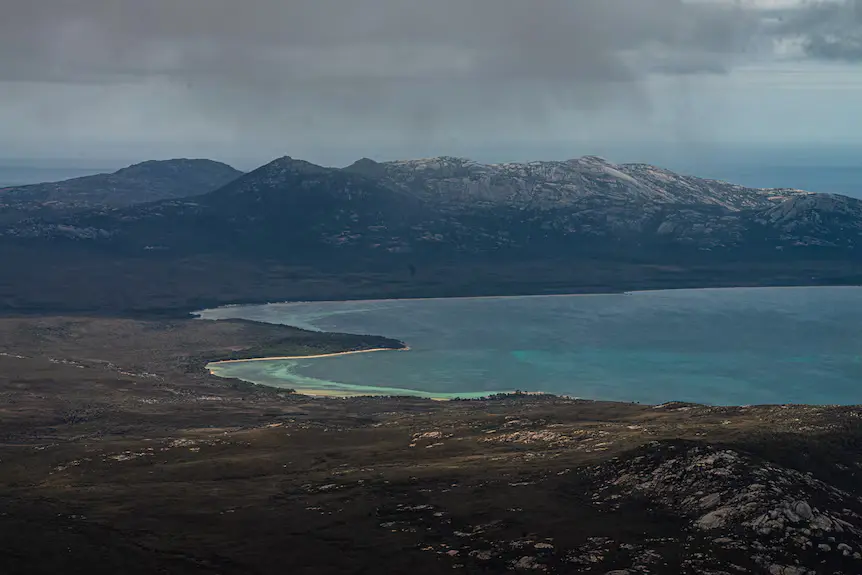
Lungtalanana/Clarke Island is part of the Furneaux Group in Bass Strait, northeast of Tasmania.
Covering approximately 8,230 hectares, the island is an important place for Aboriginal-led environmental restoration.
The land was returned to Aboriginal ownership in 2005, and Pakana rangers have been working to repair its damaged ecosystems.
But the island has endured serious environmental challenges.
In 2014, a devastating bushfire destroyed approximately 98% of its vegetation.
The destruction was so extensive that conservationists feared some native animals, including echidnas, might have disappeared from the island entirely.
With so much habitat damaged, surviving animals faced an uncertain future.
For years, there was little evidence that echidnas remained.
That is why Cooper’s unexpected encounter was so significant.
It provided direct confirmation that at least one echidna was alive on the island, offering an encouraging sign for conservationists.
Wildlife Camera Captures an Echidna Missing for Decades
Although Cooper’s encounter was extraordinary, it wasn’t the first recent clue that echidnas had survived.
In 2023, motion-activated wildlife cameras captured two photographs of an echidna on the island.
The images were taken several months apart.
However, because rangers had thousands of photographs to review, the pictures weren’t discovered until 2024.
Their discovery created excitement among the conservation team.
The animal had apparently survived in an environment where its continued presence had been uncertain.
WWF Australia, which supports the island’s Aboriginal-led restoration work, gave the mysterious animal an unforgettable nickname.
“Australia’s loneliest echidna.”
The nickname reflected an important question.
Was this the last surviving echidna on the island, or were others living quietly beyond the reach of wildlife cameras?
Determined to find out, rangers expanded their monitoring efforts.
And the additional surveillance soon produced more encouraging results.
More Echidna Sightings Suggest the Animal May Not Be Alone
Following the first camera discovery, conservation teams increased the number of locations being monitored.
Their efforts paid off.
An echidna was photographed again in 2025, followed by three additional camera detections during 2026.
The records now include four separate locations across the island.
For scientists, these findings raised the possibility that several echidnas had survived the island’s environmental disasters.
However, the camera images alone could not confirm exactly how many individual animals were involved.
Some photographs might show the same echidna traveling between different locations.
Others could represent separate individuals.
To better understand the evidence, conservationists contacted a researcher with extensive experience studying these elusive mammals.
Expert Believes More Than 20 Echidnas Could Be Living on the Island
University of Tasmania echidna specialist Stewart Nicol was asked to assess the growing number of sightings.
According to Nicol, estimating echidna populations can be extremely challenging because the animals are naturally secretive.
They often remain hidden and can be difficult to observe without specialized monitoring equipment.
Nevertheless, he considered the new sightings encouraging.
Given the island’s size and the number of recent detections, Nicol suggested that the population might be larger than previously believed.
He said he would be surprised if fewer than a dozen echidnas remained.
In fact, he considered it possible that more than 20 or 30 echidnas were living on the island.
That figure remains an expert estimate rather than a confirmed population count.
More extensive monitoring would be needed to establish how many individuals are actually present.
Still, for conservationists who once feared that the species had vanished locally, the possibility of a surviving population was welcome news.
Aboriginal Rangers Work to Restore the Entire Island
The echidna discovery comes during an ambitious effort to restore Lungtalanana’s native habitats.
The Tasmanian Aboriginal Centre launched the Lungtalanana Restoration Project in October 2026.
The initiative aims to repair ecosystems damaged by invasive predators, land clearing, and catastrophic bushfires.
The project includes several important conservation activities:
- Removing invasive species, particularly feral cats.
- Restoring damaged vegetation and wildlife habitats.
- Using cultural burning and traditional land management practices.
- Monitoring native animals through remote wildlife cameras.
- Preparing for the return of species that have disappeared from the island.
The long-term vision is to restore a healthier ecosystem where native wildlife can survive and reproduce.
The project also creates opportunities for Palawa people to strengthen cultural connections to Country while participating in land management and conservation work.
Conservationists Hope to Bring Wombats and Wallabies Back
Beyond protecting surviving echidnas, the restoration project has another ambitious goal.
Conservation teams hope to reintroduce native animals that once lived on the island but have since disappeared.
Among the species being considered are Bass Strait wombats, Bennett’s wallabies, and long-nosed potoroos.
The project aims to eventually re-establish at least six locally lost species.
However, bringing native animals back requires careful preparation.
One of the biggest challenges is the presence of feral cats.
These introduced predators can threaten small native mammals, making their removal an important step before large-scale wildlife reintroductions take place.
Healthy Country ranger Tooarn Brown emphasized that controlling feral cats must remain a priority.
“We want to make sure they’re gone before we start doing any major rehabilitation,” he explained.
By reducing threats from introduced predators, the team hopes to create safer conditions for returning wildlife.
Ranger’s Emotional Discovery Highlights Importance of Conservation
For Tasha Cooper, finding an echidna inside a feral cat trap was more than an unexpected encounter.
It was a deeply personal reminder of why restoring the island matters.
After years of uncertainty about the species’ survival, the discovery provided tangible evidence that native wildlife remained.
And the additional trail camera records offered even more encouragement.
For the Palawa community, the restoration project represents both environmental protection and a renewed connection to the island’s cultural and ecological heritage.
Cooper believes the work could have lasting benefits for the community.
“It’s going to be a huge win for us, for the Palawa community,” she said.
The project is still in its early stages, but the discovery of surviving echidnas has given the conservation team another reason to continue.
A Small Echidna Brings Big Hope for Tasmania’s Wildlife
The story of Lungtalanana’s echidnas shows how wildlife can sometimes survive even after devastating environmental disasters.
Following the destructive 2014 bushfire, researchers feared that the island’s echidnas might have disappeared.
Then, years later, a wildlife camera recorded a mysterious survivor.
Additional sightings followed.
And finally, in September 2026, ranger Tasha Cooper unexpectedly came face-to-face with one of the animals.
While scientists still need more information to determine the population’s size and long-term prospects, the discoveries are encouraging.
They also highlight the importance of habitat restoration, invasive predator control, and ongoing wildlife monitoring.
For the rangers working to bring life back to Lungtalanana, every sighting represents another valuable piece of evidence that the island’s native animals have not been forgotten.
What began as a routine check of a feral cat trap became an unforgettable moment of hope — and a reminder that nature can still hold wonderful surprises, even in places where wildlife was once feared lost.