

“It feels a bit like we’re in an episode of Jerry Springer.”
Deep inside a protected wildlife refuge in Australia, researchers have made an exciting discovery that could offer new hope for one of the world’s rarest mammals.
A tiny northern hairy-nosed wombat has been spotted outside her mother’s pouch, marking an encouraging development for a species struggling to survive.
But while the baby’s arrival is already cause for celebration, it has also left scientists with an unexpected question.
Who is the father?
The answer could reveal something important about the future of this critically endangered species.
One of the World’s Rarest Mammals Gets a New Addition
At the Richard Underwood Nature Refuge in southwestern Queensland, a small population of northern hairy-nosed wombats lives in underground burrows scattered throughout the protected habitat.
These unusual Australian marsupials are among the rarest mammals on Earth.
According to the Australian Wildlife Conservancy (AWC), their total population is estimated at just over 400 individuals.
Every successful birth is therefore an encouraging sign for conservationists working to protect the species from extinction.
Researchers regularly monitor the wombats at the refuge, using wildlife surveys and motion-activated cameras to understand how the population is developing.
Their findings help conservation teams determine whether their efforts are improving the animals’ chances of survival.
And a recent discovery has given them an especially interesting mystery to investigate.
Scientists Discover a Problem With the Wombat Population
During a wildlife survey in 2024, researchers identified 18 northern hairy-nosed wombats living at the refuge.
Although the count was encouraging, one detail raised concerns.
Of the 18 wombats recorded, only three were males.
For such a small population, having relatively few known breeding males could create challenges for long-term genetic diversity.
A healthy breeding population benefits from genetic variation, which can help reduce the risks associated with inbreeding.
Scientists were therefore eager to learn whether additional males might be living in the area without having been detected.
Then, during a later survey, researchers noticed something that gave them reason to hope.
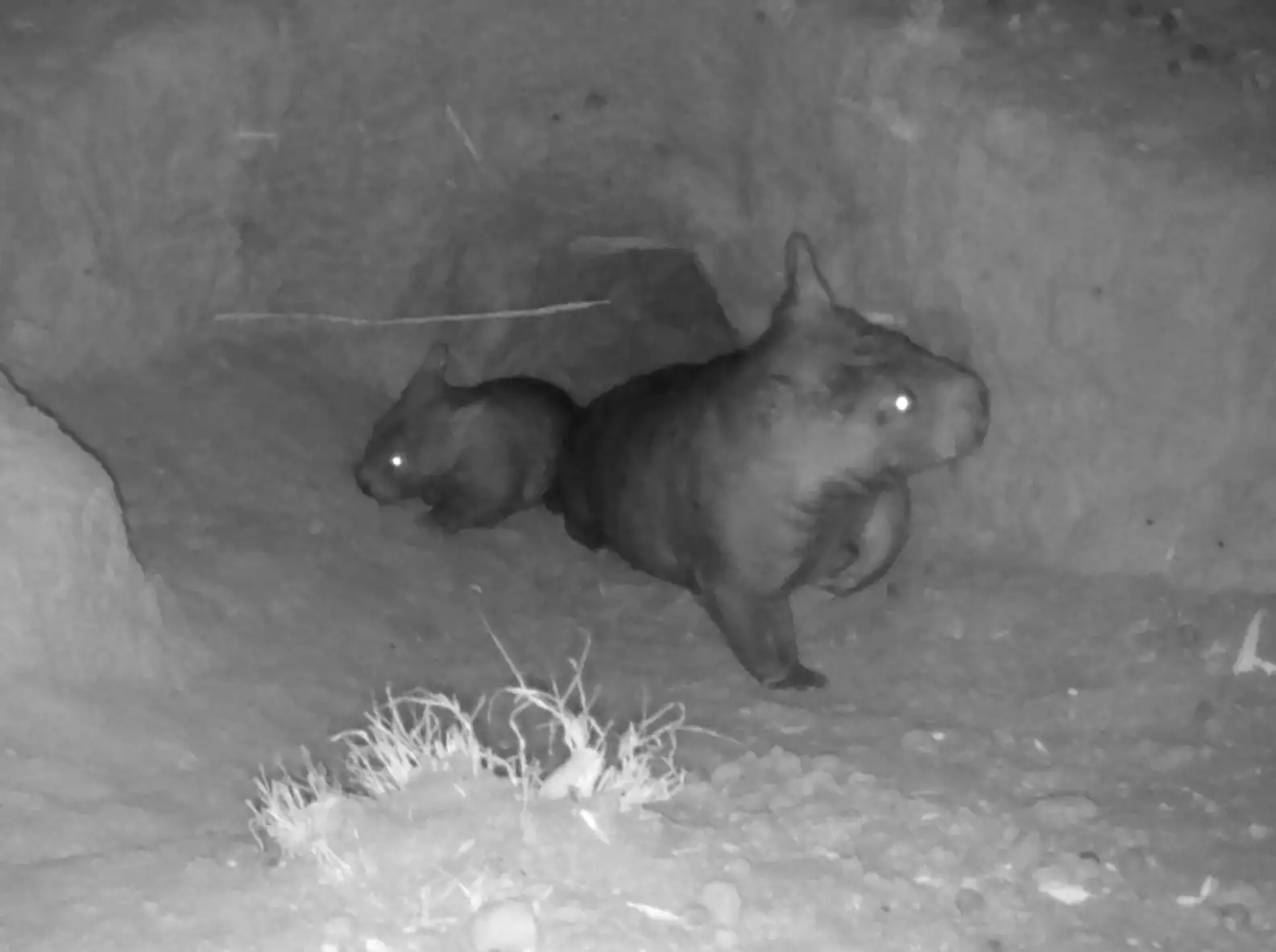
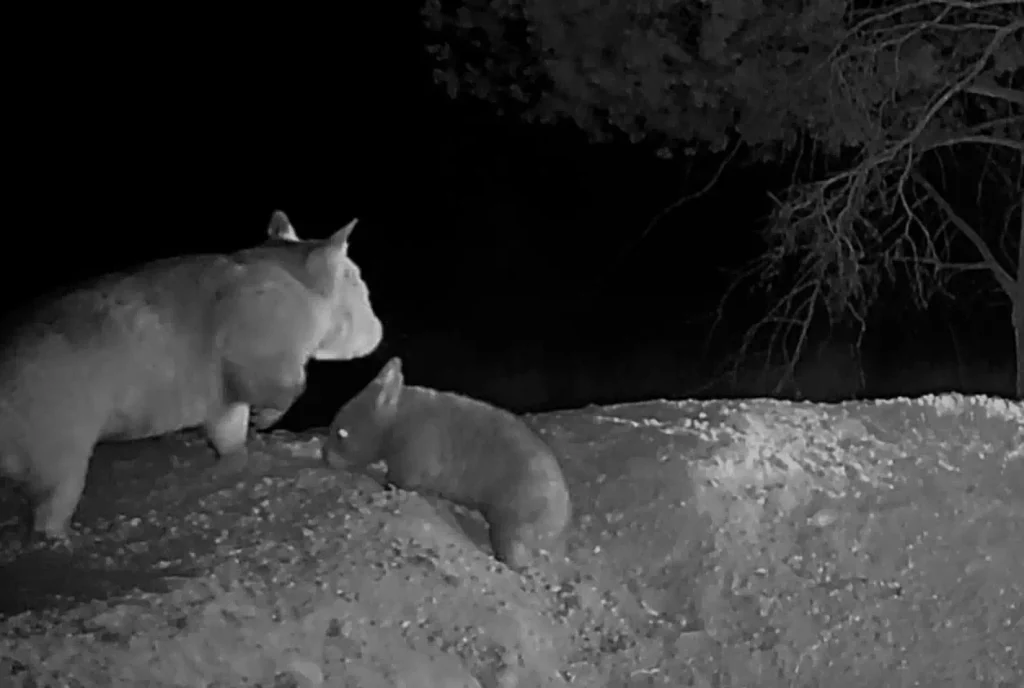
A young female wombat had appeared outside her mother’s pouch.
The baby was an exciting addition to the small population, but her arrival immediately raised another question.
With so few males identified at the refuge, researchers wanted to know which one had fathered her.
Rare Baby Wombat Appears on Wildlife Camera
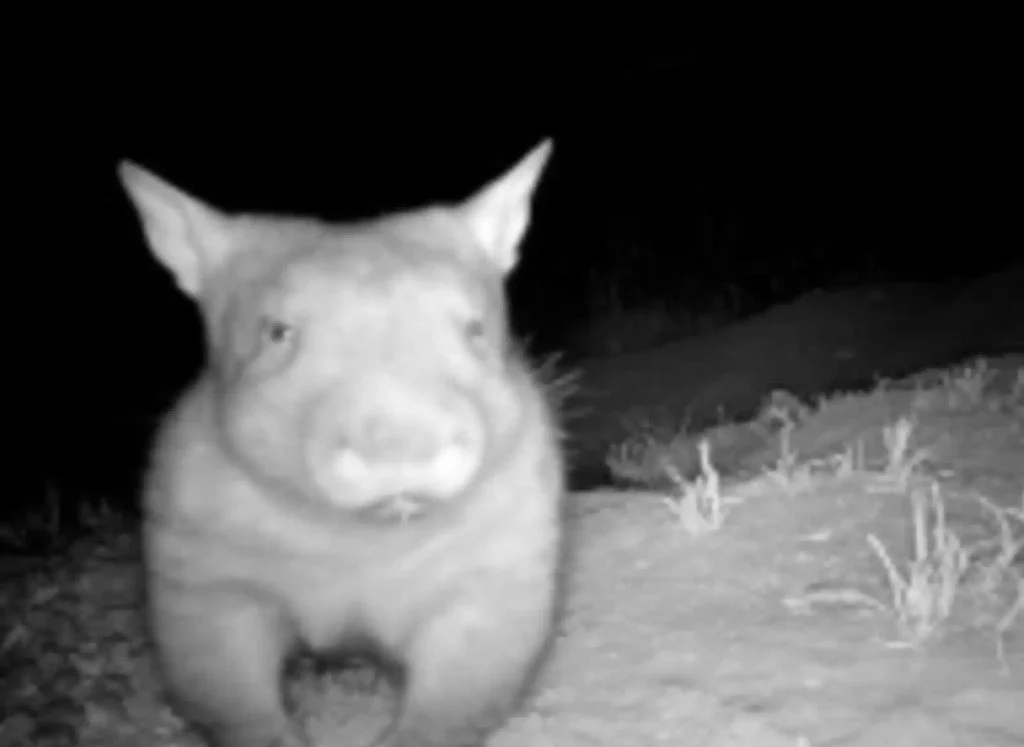
The young wombat was recorded by motion-sensitive cameras, giving scientists a glimpse of the newest member of the refuge’s population.
For researchers who spend their days monitoring these elusive animals, seeing a healthy-looking juvenile moving outside her mother’s pouch was an encouraging moment.
But determining her father’s identity would require more than camera footage.
Dr. Ben Stepkovitch, a wildlife ecologist with the Australian Wildlife Conservancy, humorously compared the mystery to an unexpected television drama.
“It feels a bit like we’re in an episode of Jerry Springer,” he said in a press release.
“We’re excited to see the little wombat popping up on motion sensor cameras; it’s reassuring to see the population growing, but we also need to conduct a paternity test.”
Although the comparison brought a little humor to the situation, the scientific question behind it is significant.
If the baby was fathered by a previously unidentified male, it could mean that the refuge’s wombat population has more breeding males than scientists currently know about.
That would be especially encouraging for a species with such limited numbers.
DNA Testing Could Reveal an Unknown Male Wombat
To solve the mystery, scientists plan to examine the young wombat’s DNA.
However, collecting a genetic sample from a wild juvenile wombat isn’t as straightforward as it might sound.
According to AWC, the researchers must wait until the youngster is old enough to produce solid droppings that can be collected for analysis.
This noninvasive approach allows scientists to gather genetic information without unnecessarily disturbing the animal.
Once a suitable sample becomes available, it will be sent to Adelaide University for testing.
Researchers hope the results will help identify the baby’s father and provide a clearer picture of the refuge’s breeding population.
The discovery of an additional male would be welcome news, especially considering the small number documented during earlier surveys.
Why This Baby Wombat Matters for Conservation
The northern hairy-nosed wombat has faced serious conservation challenges, making the survival of each individual particularly important.
With only a few hundred animals estimated to exist, conservationists closely monitor population growth, breeding success, and genetic diversity.
The birth of a new wombat is a positive development on its own.
But the potential discovery of another breeding male could provide additional insight into the population’s ability to recover.
“The juvenile’s DNA could tell us whether we have more breeding males in the population than we currently know,” Dr. Stepkovitch explained.
“Which would be very exciting, if that’s the case.”
For conservation researchers, information like this can help guide future wildlife management and breeding strategies.
Understanding which animals are reproducing is an important part of protecting a small, vulnerable population.
A Tiny Wombat Brings New Hope for an Endangered Species
While scientists wait for the DNA results, the young wombat continues to represent an encouraging sign for the species.
Her appearance shows that breeding is taking place at the refuge, providing conservationists with another reason to remain optimistic.
The mystery surrounding her father may eventually reveal a previously undetected male or confirm that one of the known males is responsible.
Either way, the information will help researchers better understand the animals they are working so hard to protect.
And although the investigation is still ongoing, the discovery has already created excitement among the conservation team.
For a species with such a small global population, every new arrival matters.
One tiny baby wombat may not solve every challenge facing her species, but her arrival is another hopeful step toward a more secure future.