

Something unusual has been appearing in the waters off the coast of Cornwall, England.
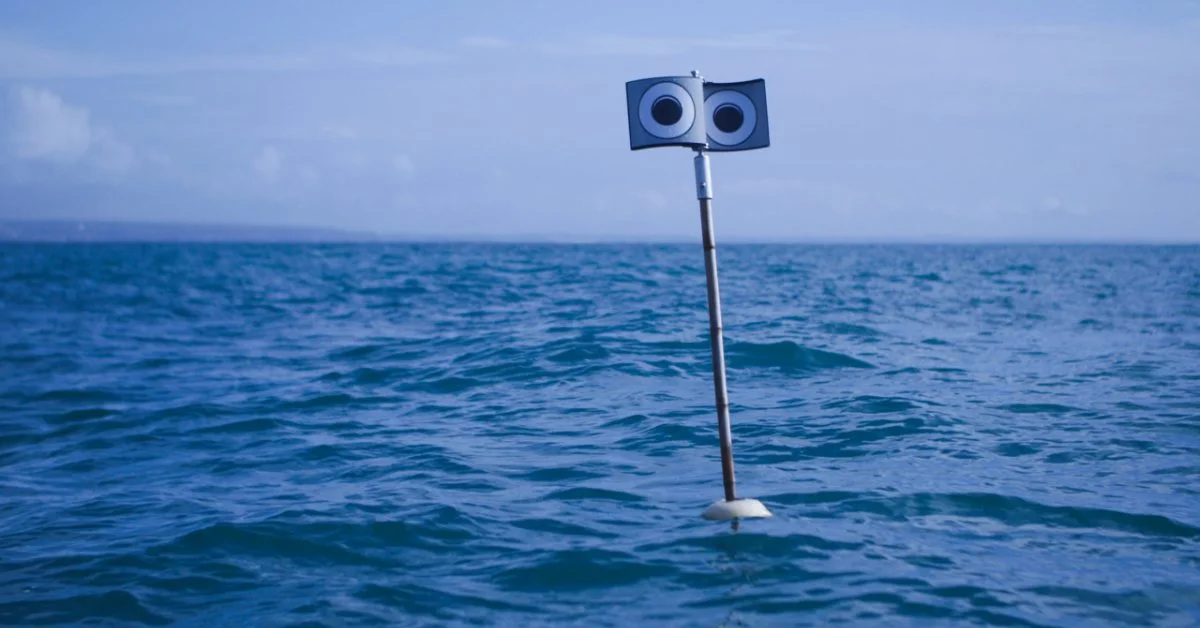
Floating above fishing nets are strange-looking devices with enormous spinning eyes. Nearby, kites shaped like birds of prey hover over the ocean, creating the impression that predators are watching from above.
At first glance, the unusual objects might look like decorations or an elaborate experiment.
But scientists have discovered that these simple inventions could help protect thousands of seabirds from a danger hidden beneath the waves.
In a major research trial, the devices significantly reduced the chances of vulnerable diving birds becoming trapped in fishing nets.
And the results suggest that protecting marine wildlife might sometimes require surprisingly simple solutions.
A Hidden Danger Beneath the Ocean’s Surface
Every day, seabirds such as guillemots and razorbills dive beneath the ocean’s surface in search of fish.
These skilled swimmers can travel underwater with remarkable speed, using their wings to propel themselves through the water.
But their natural hunting behavior can expose them to a deadly threat.
Fishing nets suspended beneath the surface are often difficult for diving birds to detect.
When a bird accidentally swims into the nearly invisible mesh, it may become entangled and unable to return to the surface for air.
The consequences can be fatal.
This accidental capture of animals that fishers aren’t trying to catch is known as bycatch.
According to a 2024 scientific review, gillnets in the Baltic Sea and Northeast Atlantic kill more than 95,000 seabirds annually.
Across European fisheries, approximately 31,000 common guillemots are estimated to die as bycatch each year.
For conservationists, finding ways to prevent these deaths has become an important challenge.
Simply removing all fishing equipment isn’t a practical solution for communities that depend on the sea for their livelihoods.
Instead, researchers have been searching for ways to make fishing safer for wildlife without unnecessarily disrupting commercial fishing activities.
And an unusual invention may offer part of the answer.
Giant Spinning Eyes Could Keep Birds Away From Dangerous Nets
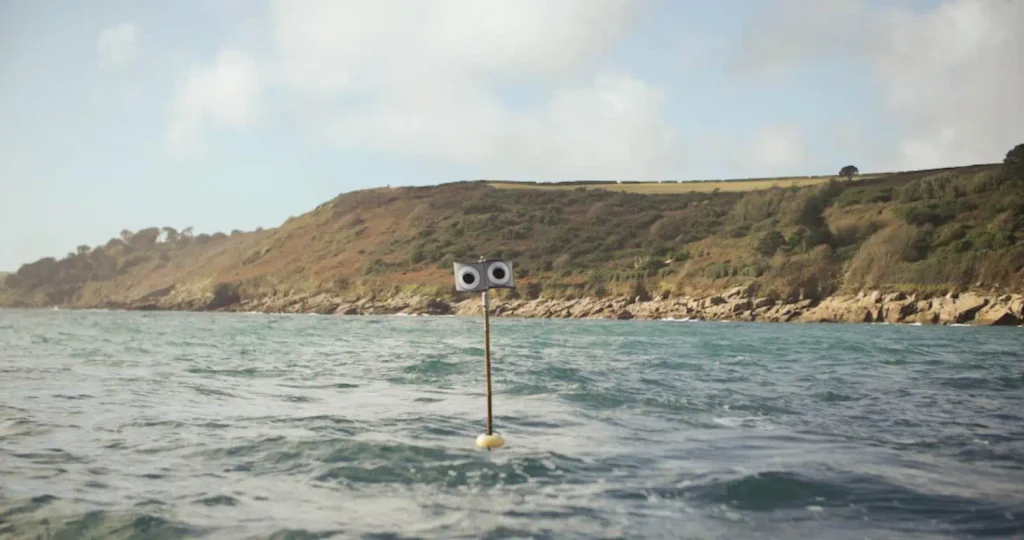
Scientists working with fishing communities in Cornwall began testing a device called the Looming Eye Buoy.
The invention looks rather unusual.
Mounted on a floating buoy is a pole supporting a spinning structure decorated with two large eyes.
As the head rotates in the wind, the eyes create movement intended to make nearby seabirds feel that a potential threat is approaching.
The idea is simple: frighten birds away from a dangerous area before they dive into the water.
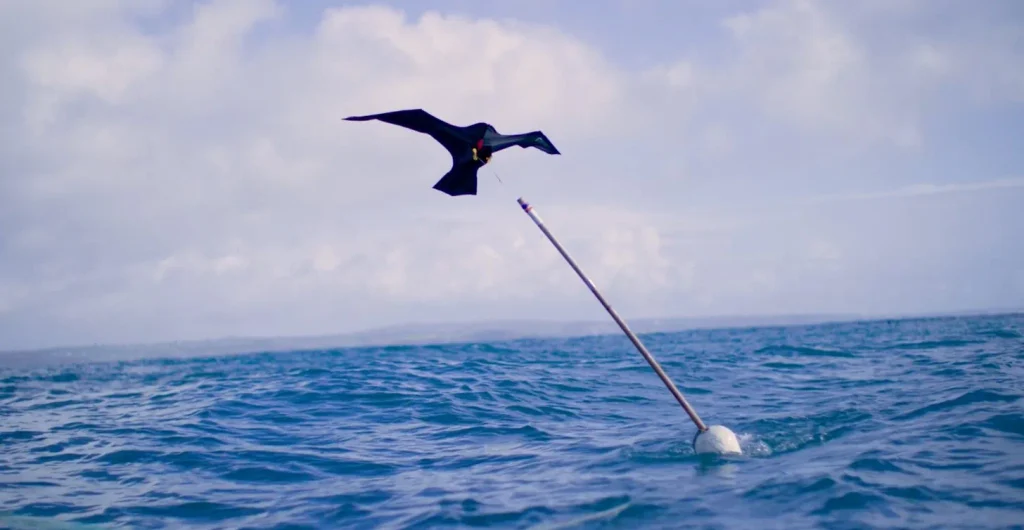
Researchers also tested another invention known as a scarybird kite.
This device resembles a bird of prey and flies above the fishing nets, creating the appearance of a predator patrolling the area.
Both inventions are designed to influence birds’ behavior before they encounter the nets.
Rather than attempting to free animals after they become trapped, the devices aim to prevent dangerous encounters from happening in the first place.
To determine whether the approach actually worked, researchers needed to test the equipment during everyday fishing operations.
More Than 1,000 Fishing Nets Put the Inventions to the Test
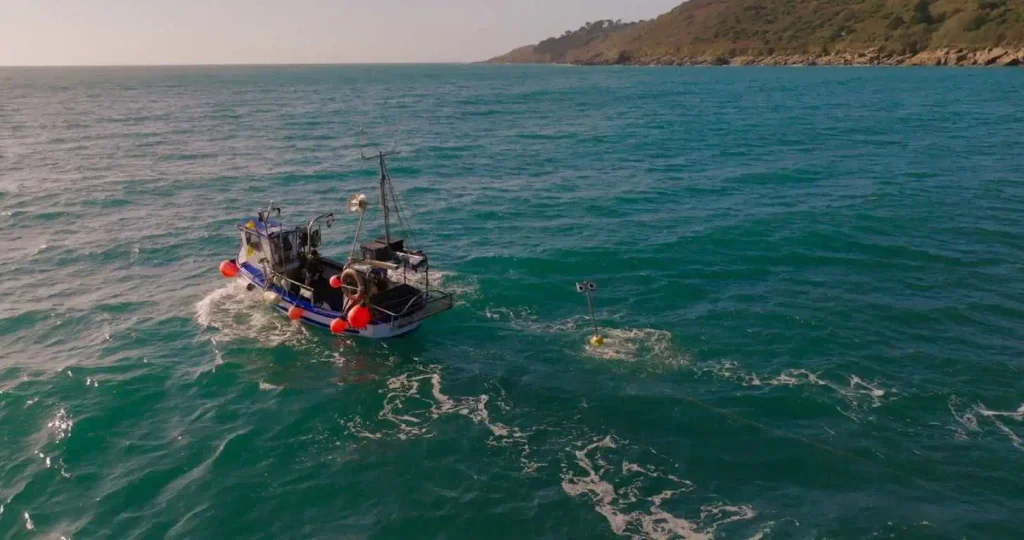
Between October 2023 and March 2025, researchers worked with 10 commercial fishers along the Cornish coast.
The trial involved 1,057 fishing-net deployments, representing a combined length of approximately 129 kilometers.
Some nets were fitted with the spinning-eye buoys, while others had bird-of-prey kites.
Additional nets were left without deterrents so scientists could compare the results.
Cameras and GPS equipment installed on the fishing vessels helped document what happened during the trial.
Over approximately 17 months, the monitoring equipment recorded a troubling number of accidental wildlife captures.
A total of 191 non-fish animals were caught.
These included 153 birds, 25 seals, and 13 cetaceans, such as dolphins and porpoises.
Most of the captured animals were already dead when the nets were brought aboard.
Guillemots and razorbills accounted for the majority of recorded seabird captures.
The figures demonstrated why researchers were so determined to find a solution.
But when they compared the different fishing nets, they discovered something encouraging.
The Results Surprised Researchers
The bird-scaring devices made a substantial difference.
According to the study published in Conservation Letters, fishing nets equipped with bird-of-prey kites had 71% lower odds of accidentally catching guillemots and razorbills compared with nets without deterrents.
The spinning-eye buoys also performed well, producing 59% lower odds of catching these birds.
For a conservation problem that has challenged researchers for years, the findings were especially promising.
The kites appeared to work best close to their position, particularly within approximately 30 meters.
The spinning-eye buoys had a more moderate effect over a wider surrounding area.
Researchers suggested that improved kites positioned every 60 to 80 meters along fishing nets could potentially offer a practical approach for coastal fisheries.
The results demonstrated that relatively inexpensive visual deterrents might help protect vulnerable birds without requiring major changes to fishing operations.
However, the study also revealed important limitations.
The Strange Devices Still Have a Few Problems
Although both inventions performed well, neither was perfect.
Fishers reported that the bird-of-prey kites sometimes struggled in very light winds.
During particularly strong winds, the kites also became more difficult to handle.
The spinning-eye buoys were generally easier to transport, store, and manage aboard fishing boats.
But researchers noticed a potential concern involving another group of marine animals.
During the trial, 15 seals were caught in nets fitted with the spinning-eye buoys.
By comparison, six seals were caught in untreated nets, while four were recorded in nets equipped with kites.
The difference raised the possibility that the unusual buoys might attract seals rather than discourage them.
However, the findings weren’t sufficient to establish that the devices were responsible for the increased seal captures.
Scientists emphasized that further testing would be necessary.
Another concern involves the possibility that seabirds could eventually become accustomed to the unusual objects.
A separate study in Denmark found that spinning-eye buoys initially discouraged certain seabirds from approaching a fishing trap.
But after approximately a month, the deterrent effect had disappeared.
This suggests that the equipment’s effectiveness may change over time.
For researchers, these limitations aren’t reasons to abandon the inventions.
Instead, they provide valuable information that can help improve future designs.
Winter Could Be the Most Important Time to Protect Seabirds
The Cornwall study revealed another discovery that could make conservation efforts more effective.
Seabird bycatch wasn’t distributed evenly throughout the year.
The highest rates occurred during January and February, particularly in nets targeting sea bass and mackerel.
These findings suggest that fishers might be able to reduce seabird deaths by using deterrents during the months when birds face the greatest danger.
Such an approach could be more practical than requiring the devices throughout the entire year.
By concentrating protective measures during high-risk periods, conservation teams could direct their resources where they are most likely to make a difference.
The information could also help fisheries develop more targeted wildlife protection strategies.
For scientists and fishers alike, understanding when accidental captures occur is just as important as discovering how to prevent them.
Fishers Play an Important Role in Protecting Marine Wildlife
One of the most encouraging aspects of the project was the cooperation between researchers and the fishing community.
The participating fishers didn’t simply allow equipment to be installed on their vessels.
They actively tested the devices during normal fishing operations and shared observations about what worked and what needed improvement.
Their practical experience helped researchers understand challenges that might not be obvious during smaller laboratory experiments.
Some of their suggestions have already influenced newer designs.
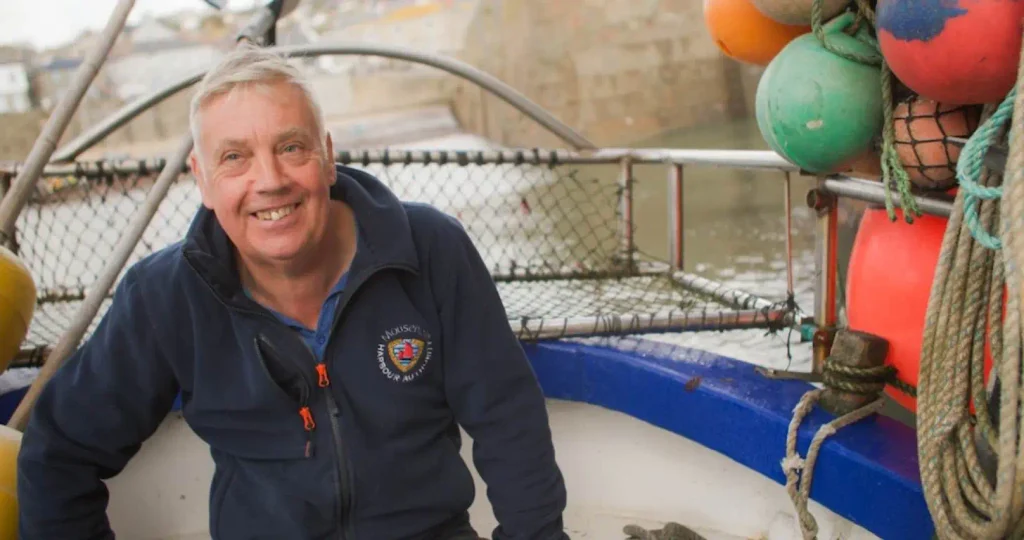
Micky Bacon, a fisher from the Cornish village of Mousehole, participated because he believed people who make their living from the sea should also help protect its wildlife.
His involvement reflected an important message behind the research.
Commercial fishing and marine conservation don’t always have to work against one another.
When scientists and fishing communities cooperate, they may discover solutions that benefit both people and animals.
The spinning-eye buoy was developed over several years by conservation engineering company Fishtek Marine in collaboration with the Royal Society for the Protection of Birds.
Scientists from the University of Exeter helped analyze the trial results.
Their combined efforts offer an example of how scientific research, technological creativity, and practical fishing knowledge can come together.
A Small Invention Could Make a Big Difference for Seabirds
The findings don’t mean that the problem of seabird bycatch has been solved.
The devices still require improvements, and researchers need to investigate their long-term performance and potential effects on other marine animals.
It also remains important to test whether similar results can be achieved in different fishing environments.
Nevertheless, the research offers encouraging evidence that accidental wildlife deaths can sometimes be reduced through relatively simple changes.
For years, underwater fishing nets have posed a serious danger to birds searching for food.
Now, something as unexpected as a kite shaped like a predator or a floating pair of giant eyes could help keep those birds away from hazardous areas.
The inventions might look unusual against the open sea, but their potential value goes far beyond their appearance.
Every seabird that avoids becoming entangled represents another animal that can return safely to its natural environment.
And for the scientists and fishers working to make the oceans safer, that possibility is worth pursuing.
Sometimes, protecting wildlife doesn’t require a complicated invention. It takes a creative idea, people willing to test it, and the determination to find a better way for humans and nature to share the same world.