

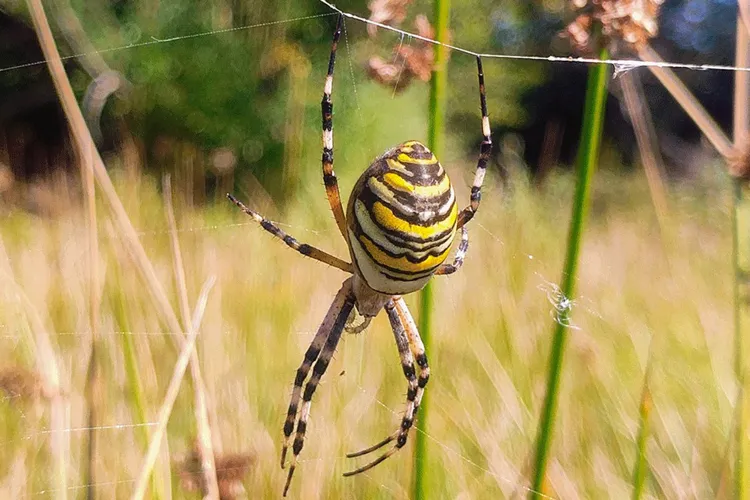
Conservationists at Chester Zoo have discovered Cheshire’s first recorded wasp spider, a striking yellow-and-black species whose arrival may be linked to rising temperatures and climate change.
The unusual spider was discovered during a biodiversity survey of Chester Zoo’s grounds in England. An expert from the British Arachnological Society confirmed that it was the first recorded sighting of the species in Cheshire.
The zoo’s conservation team has nicknamed the spider Wendy.
Although her colourful appearance resembles a wasp, experts say wasp spiders are harmless to humans.
The discovery has attracted attention because it provides another example of wildlife expanding its geographic range as environmental conditions change.
A Surprising Discovery at Chester Zoo
The spider was discovered by Rosie Cooper, an estate biodiversity assistant at Chester Zoo.
Cooper was surveying plant species when she noticed a large spider with distinctive yellow-and-black stripes.
Its unusual appearance immediately caught her attention.
Despite initially being surprised by the spider, Cooper was excited to discover that she had encountered a species never previously recorded in Cheshire.
Following the discovery, an expert from the British Arachnological Society confirmed the identification.
The conservation team named their unusual new resident Wendy.
The finding represents an important addition to Cheshire’s recorded wildlife and provides valuable information about changes in the distribution of British spider species.
What Is a Wasp Spider?
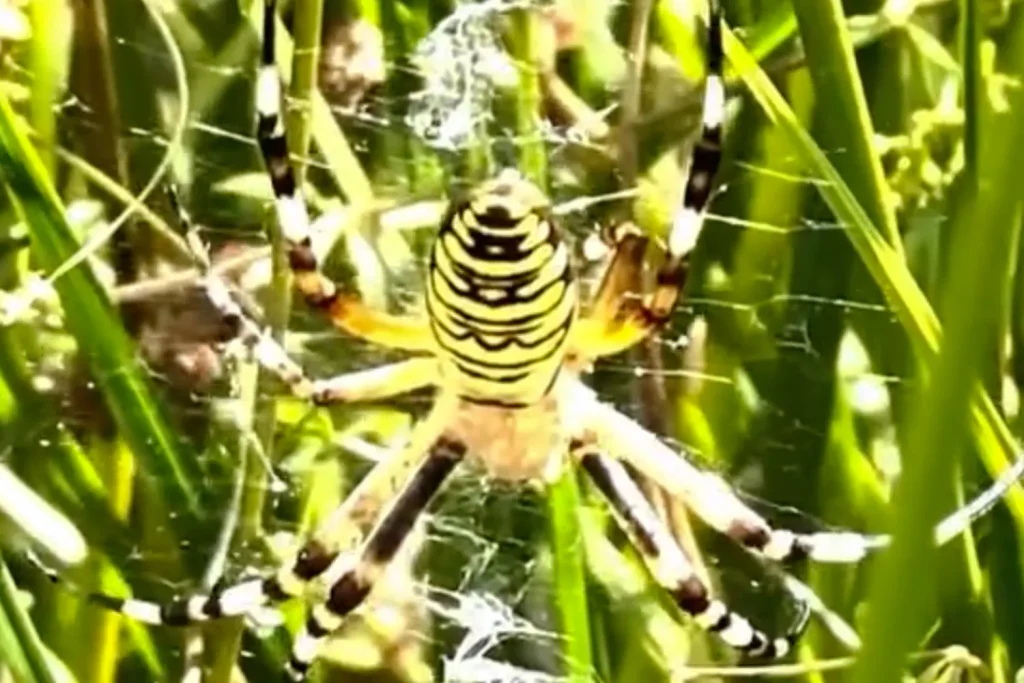
The wasp spider is a distinctive species known for its bright yellow-and-black markings.
Its striped appearance resembles a wasp, which is how it received its common name.
Despite its intimidating appearance, the wasp spider is not considered dangerous to humans.
These spiders construct elaborate webs that help them capture insects and other small prey.
Key Facts About Wasp Spiders
| Feature | Description |
|---|---|
| Common name | Wasp spider |
| Scientific name | Argiope bruennichi |
| Appearance | Yellow-and-black striped body |
| Typical habitat | Grasslands and areas with suitable vegetation |
| Web | Large, elaborate orb-shaped web |
| Danger to humans | Generally harmless |
| Cheshire discovery | First confirmed regional record |
Wasp spiders are usually associated with warmer environments and have been expanding their range into new parts of the United Kingdom.
Their distinctive appearance makes them relatively easy to recognise when they are spotted.
Why Are Wasp Spiders Moving North?
Chester Zoo’s conservation experts believe the discovery reflects a wider pattern of wildlife responding to changing environmental conditions.
Wasp spiders have gradually expanded their distribution northward across Europe and the United Kingdom.
Rising temperatures may be creating suitable conditions for the species in areas where it was previously uncommon or absent.
Ruby Merriman, Chester Zoo’s estate biodiversity manager, explained that warmer conditions are influencing the movement of wasp spiders.
Some conservation organisations describe animals that relocate in response to changing environmental conditions as climate refugees.
However, a single discovery cannot establish exactly why an individual spider arrived in a particular location.
Continued biodiversity monitoring is important for understanding how climate change affects wildlife distribution.
Chester Zoo’s Important Role in Wildlife Conservation
Wendy was discovered on Chester Zoo’s extensive estate, which covers approximately 205 hectares, or 507 acres.
The estate contains several different natural habitats that support a wide variety of wildlife.
These include:
- Grasslands
- Wetlands and ponds
- Woodlands
- Orchards
- Hedgerows
The habitats provide food, shelter and breeding opportunities for numerous native species.
Wildlife recorded across the estate includes harvest mice, great crested newts, badgers and nesting barn owls.
Chester Zoo’s conservation team conducts biodiversity surveys to monitor these species and identify environmental changes.
The discovery of the wasp spider demonstrates the importance of these surveys in understanding local biodiversity.
How Climate Change Affects Wildlife
The arrival of new species in previously unrecorded locations can provide important information about environmental change.
As temperatures rise, some animals may move into cooler regions or expand their geographic distribution.
However, not all species can adapt or relocate successfully.
Animals that depend on specific habitats, temperatures or food sources may face greater challenges.
Potential Effects of Climate Change on Wildlife
| Environmental change | Possible impact on wildlife |
|---|---|
| Rising temperatures | Some species expand into new regions |
| Changing rainfall | Alters habitats and food availability |
| Extreme weather | Damages ecosystems and breeding areas |
| Habitat changes | Forces some animals to relocate |
| Shifting seasons | Affects migration and reproduction |
These changes can influence entire ecosystems by altering relationships between plants, predators and prey.
Understanding how wildlife responds is essential for developing effective conservation strategies.
Why Wendy’s Discovery Matters
For Chester Zoo’s conservationists, discovering Wendy was both exciting and scientifically significant.
The spider’s appearance provides a new wildlife record for Cheshire and contributes to understanding how species distributions may be changing.
However, the discovery also raises concerns about the wider environmental changes affecting biodiversity.
Chester Zoo’s conservation teams have observed climate-related challenges in different parts of the world, including droughts in Chile and flooding in Indonesia.
These events demonstrate how changing environmental conditions can affect wildlife and natural habitats.
Monitoring newly arriving species is one way conservationists can better understand these changes.
Is the Wasp Spider Dangerous to Humans?
Despite its bright markings and resemblance to a wasp, the wasp spider is generally harmless to humans.
Its striking appearance may appear intimidating, but it is not considered a dangerous species.
Like many spiders, it plays a useful ecological role by feeding on insects.
Wasp spiders also contribute to local biodiversity and form part of natural food webs.
People who encounter these spiders should avoid unnecessarily disturbing them and allow them to remain in their natural habitats.
Conclusion
The discovery of Cheshire’s first recorded wasp spider at Chester Zoo represents an interesting development for British wildlife research.
Nicknamed Wendy, the yellow-and-black spider has become an example of how species distributions may change as temperatures rise.
While the discovery is exciting for local conservationists, it also highlights the importance of understanding the wider effects of climate change on biodiversity.
Through continued wildlife monitoring and habitat protection, conservation organisations can gather valuable information about changing ecosystems and help protect wildlife for the future.