

When Carolina Diz first started thinking about getting a pet, she had a dog in mind.
Her schedule and living situation, however, made that difficult. So she began searching for an animal that would fit more easily into her life.
“I honestly really wanted a dog, but I just didn’t have the space or time for one,” Diz said. “So I kind of just thought, ‘What’s the next best thing?’”
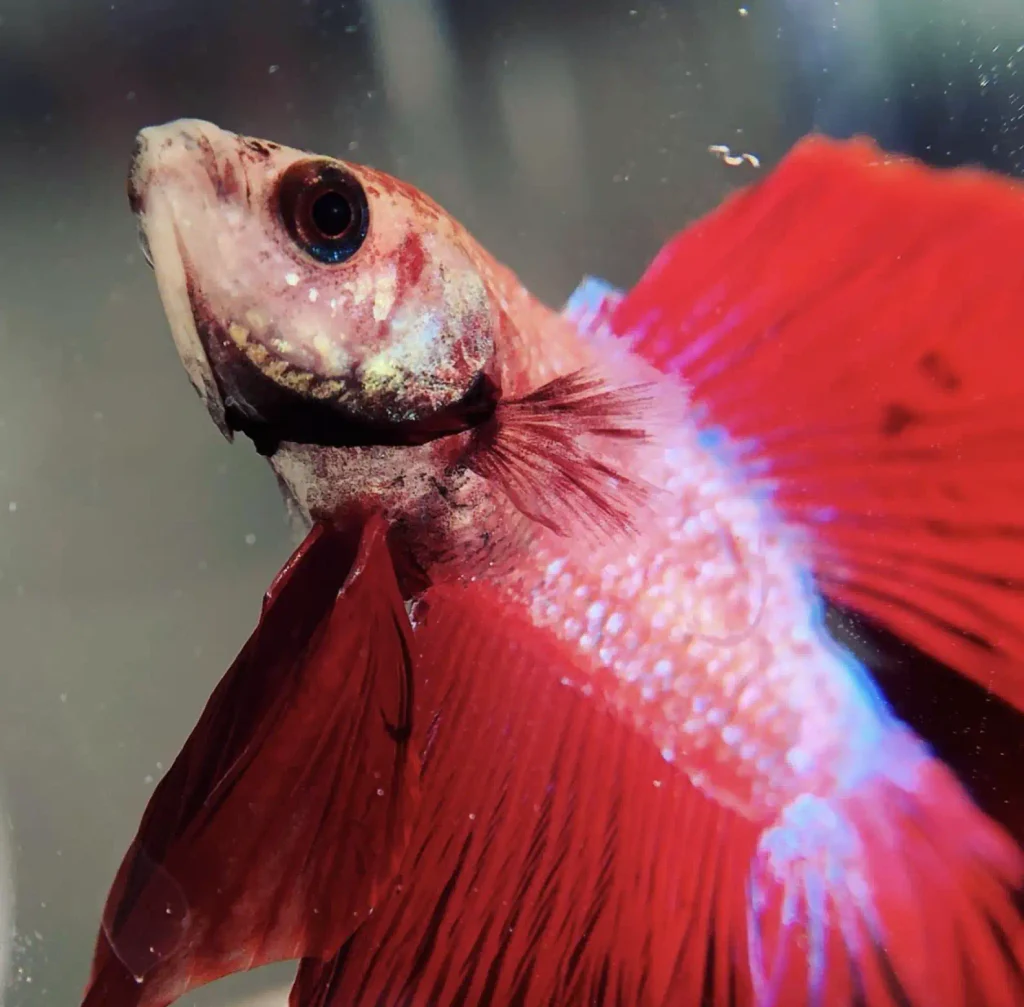
In 2019, she brought home her first betta fish, a colorful freshwater species known for its flowing fins and vivid appearance.
She named him April.
At first, Diz assumed caring for a fish would be relatively simple.
“I thought they would be very low-maintenance and kind of like a step up from plants,” she said.
April quickly proved that assumption wrong.
Over time, Diz went on to care for several other bettas, including Scar, Katara and Napoleon. Each one helped change the way she thought about fish and their ability to interact with people.
While learning more about bettas, Diz came across something she hadn’t expected: people were training their fish to perform tricks.
“Apparently you can teach them to follow your finger, to weave through a little obstacle course,” she said. “You can teach them how to jump through a hoop. And as soon as I read that, I had a goal.”
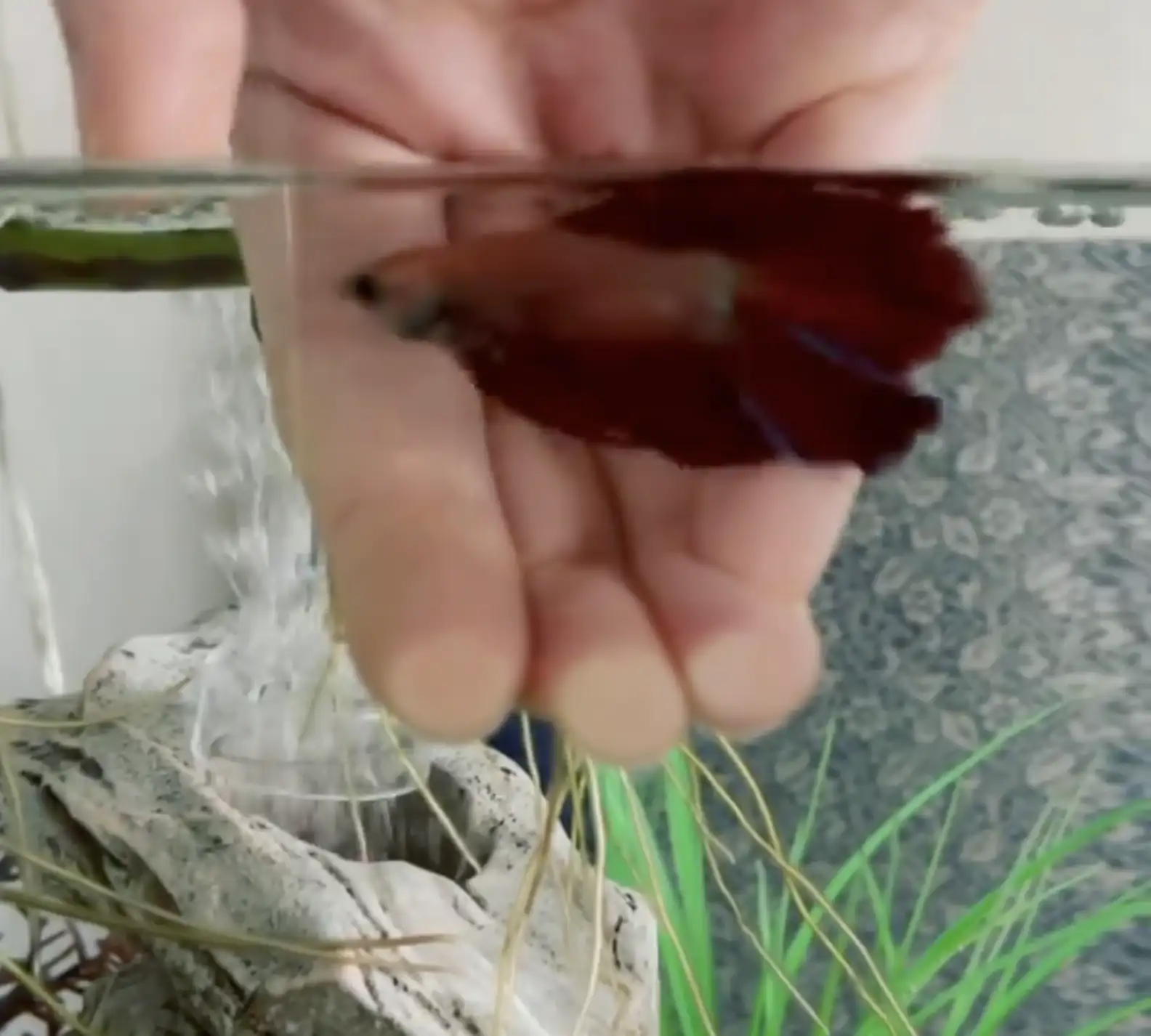
She began training April by encouraging him to follow her finger.
Progress required patience. Because bettas eat only small amounts at a time, Diz had limited opportunities to use food as a reward during each training session.
“You do something once and you reward them with the pellet,” she explained. “Then you just cross your fingers and hope they remember that for the next day.”
Once April understood how to follow her finger, Diz introduced a small hair tie.
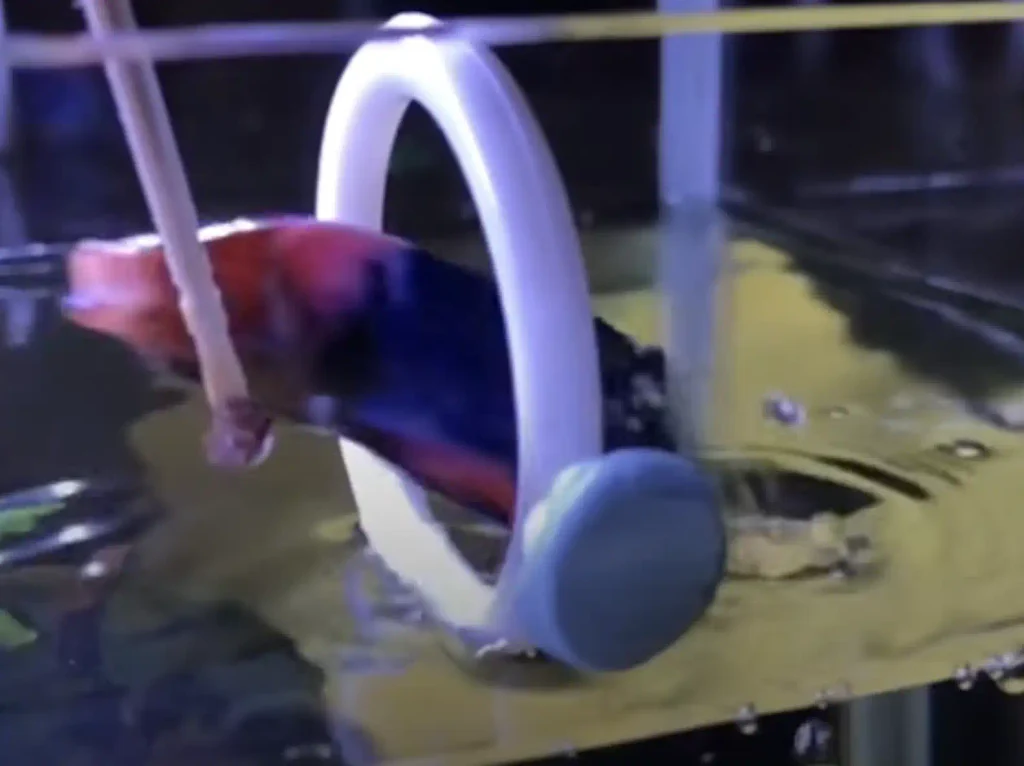
At first, she held it underwater and encouraged him to swim through it. Gradually, she raised the hoop higher until it eventually sat above the surface.
Then one day, April jumped through it.
That success inspired Diz to keep going.
Over the years, she taught three of her bettas how to jump through hoops, but Katara became her most enthusiastic pupil.
Diz adopted Katara during the COVID-19 pandemic, when spending more time at home gave her plenty of opportunities to experiment with new tricks.
“She could jump through a hoop, she could weave through chopsticks,” Diz said. “She could push a little bottle cap that I painted like a soccer ball, so it looked like she was playing soccer.”
Her pandemic hobby looked a little different from everyone else’s.
“While everyone was making sourdough starter, I was training my fish to jump through a hoop,” she joked.
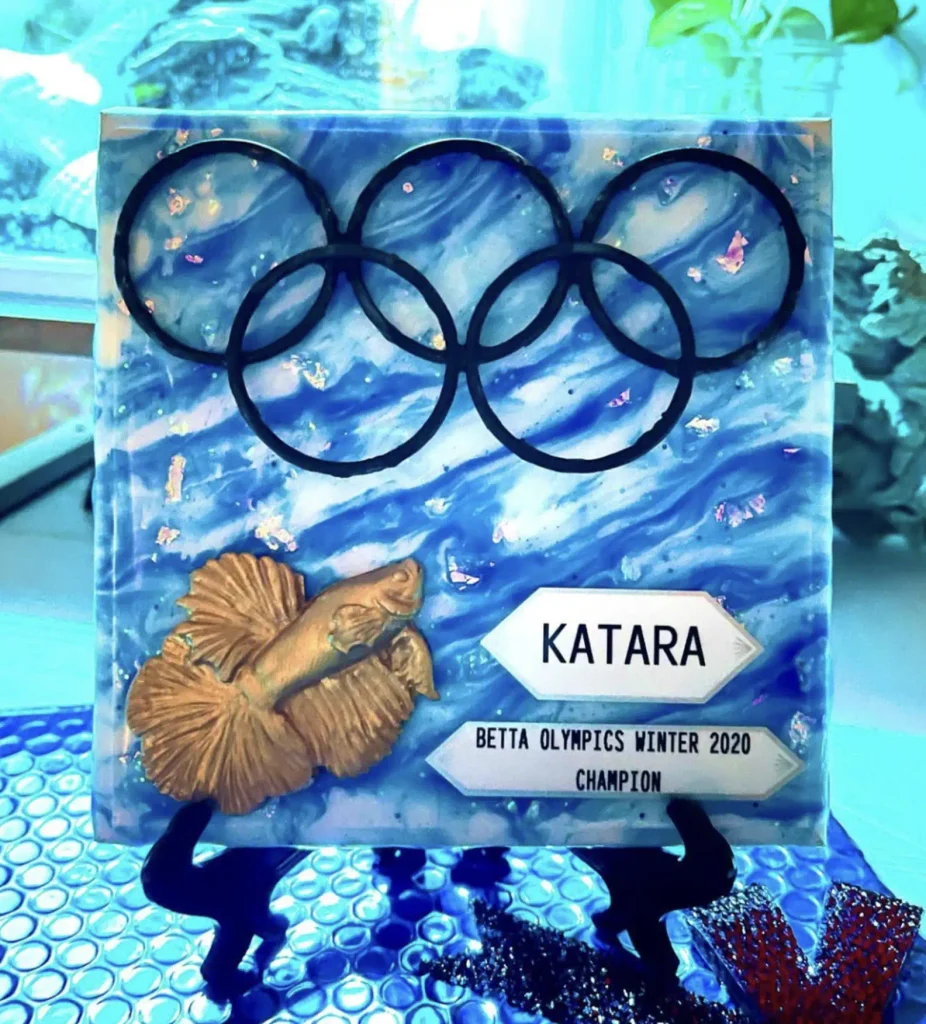
Katara became so skilled that she won the 2020 Betta Olympics, an online competition where owners showcased the abilities of their pet bettas.
But Diz believed Katara’s intelligence went beyond simply remembering commands.
She began noticing signs that the fish appeared to recognize her specifically.
“Katara could recognize my face and my hands and would immediately do tricks for me but not for others,” Diz said.
After Diz returned from being away, Katara would swim excitedly toward the front of the aquarium.
“She’d literally come to the front of the tank and just wag like a dog,” Diz said. “She’d just get really, really excited and wiggle.”
As her interest in bettas grew, Diz also became more focused on creating an environment where her fish could do more than simply survive.
“It’s easy to think that you’re just trying to keep them alive, but I really wanted to make them thrive,” she said.
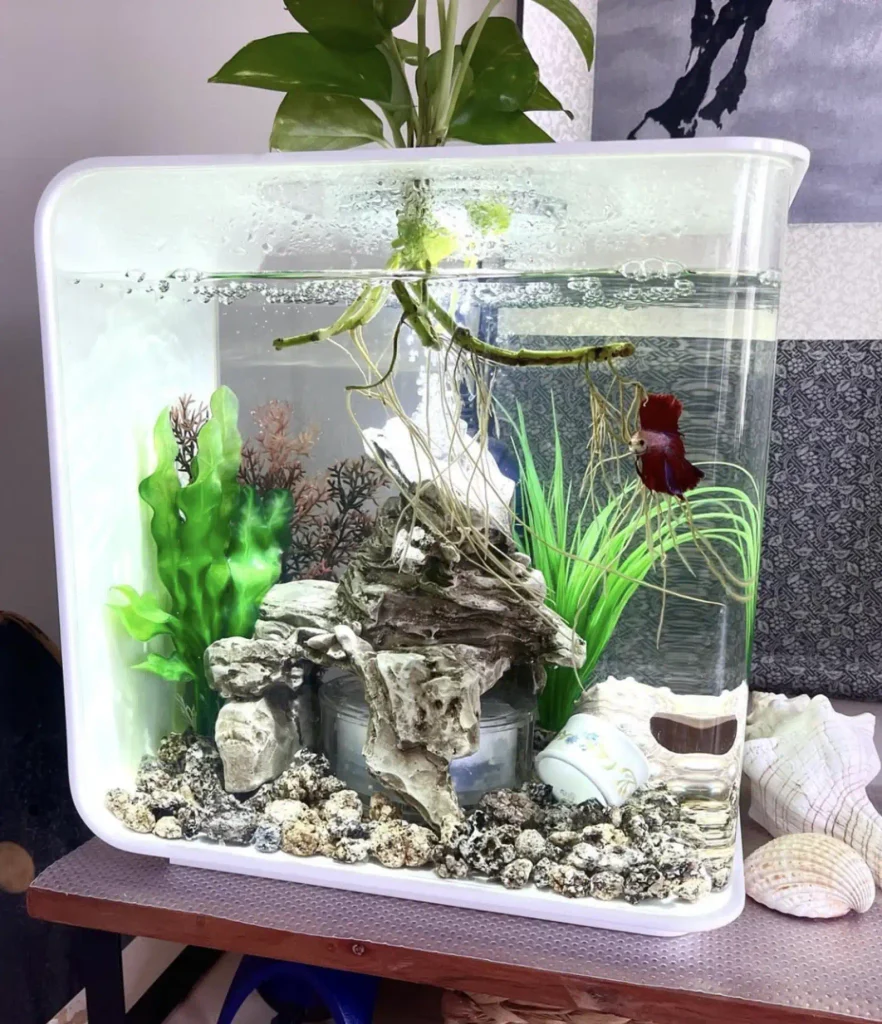
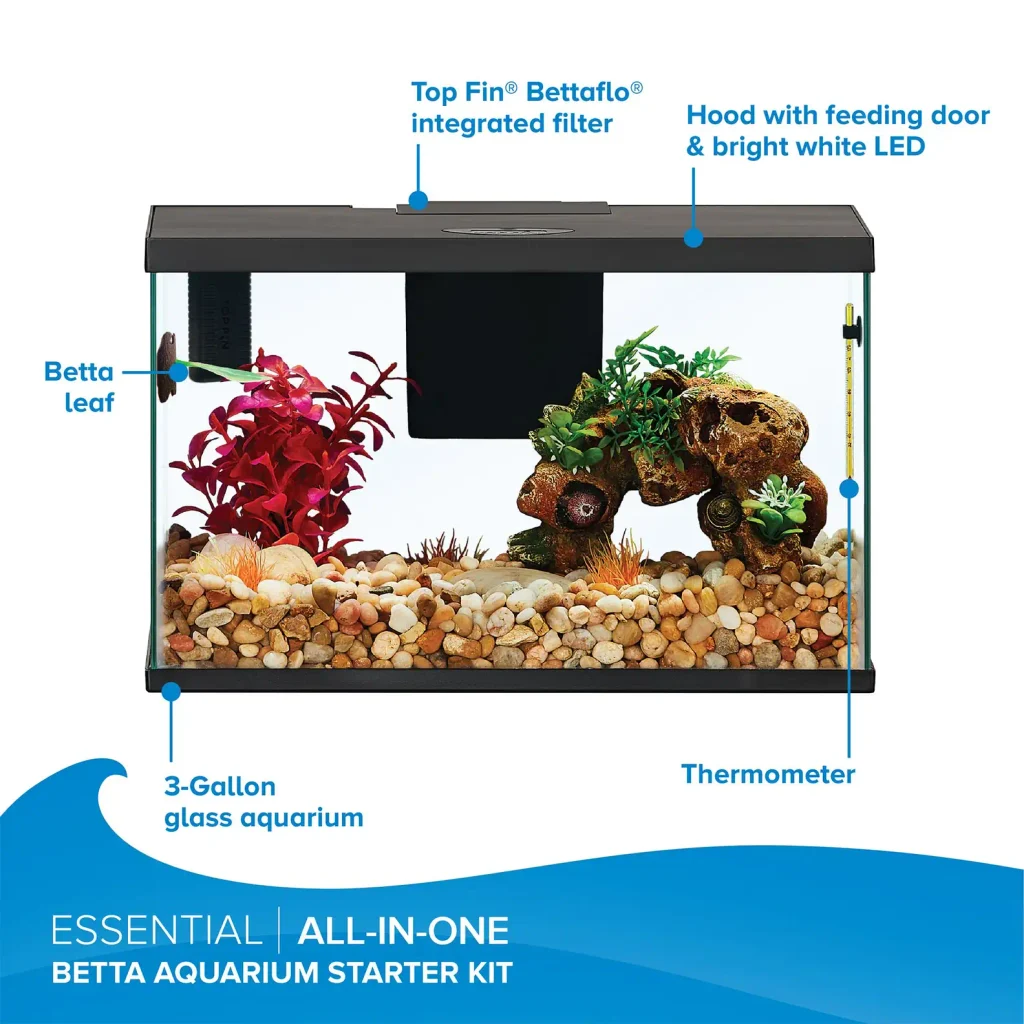
She eventually chose a 10-gallon aquarium equipped with a heater and filter and paid close attention to water quality and regular maintenance.
Every couple of weeks, she changed part of the water and checked important conditions such as pH and ammonia levels.
“It was mostly just trying to maintain an ecosystem,” Diz said. “You’re creating this entire world in a tiny place.”
Perhaps the biggest lesson came from discovering how different each fish could be.
April, for example, was curious and energetic. Scar turned out to be much more reserved.
“April was energetic and really curious,” Diz said. “Then my next fish, I really expected him to be the same way, but Scar ended up being very shy and very sweet — completely different energies.”
Those differences changed the way she interacted with each fish.
“So I just approached them differently,” she said. “I had different bonds with them.”
Today, Diz hopes other people will look beyond the idea of fish as passive pets meant only to be watched through glass.
Her experience convinced her that bettas can learn, recognize familiar people and develop distinct personalities.
“I just really want people to know that fish are not only truly mentally intelligent, but they’re also emotionally intelligent,” Diz said. “You can form real bonds with them, and they each have their own little personalities that make each relationship beautiful and unique.”