

Flowering plants in gardens, farmland, and residential areas often grow close to weeds treated with herbicides. These are also the same places honeybees visit in search of nectar and pollen, meaning the insects can come into contact with weedkillers while carrying out their everyday foraging.
New research from Virginia Tech suggests that glyphosate, one of the world’s most widely used herbicides, could affect honeybee behavior in ways that may have consequences for the health and stability of entire colonies.
The study, published in the Journal of Experimental Biology, was led by Associate Professor Margaret Couvillon and Ph.D. student Laura McHenry from Virginia Tech’s Department of Entomology in the College of Agriculture and Life Sciences.
The research received support from the National Institute of Food and Agriculture as well as a graduate student grant from the university’s Department of Entomology.
Why Glyphosate Could Matter to Bees
Glyphosate is the active ingredient in many popular weedkillers used across agriculture, gardens, and landscaped spaces. Because bees frequently forage in these environments, contact with the chemical may be difficult to avoid.
The herbicide works by interfering with an enzyme that plants need for normal biological processes. Honeybees do not possess the same enzyme, which has historically contributed to the belief that glyphosate poses relatively little direct danger to them.
However, the Virginia Tech researchers wanted to investigate whether the chemical might still influence bee behavior and brain function.
“We were interested in investigating the impact of glyphosate, the most widely used pesticide in the world, on the behavior and brains of honeybees, important pollinators that might encounter the weedkiller as they forage in the landscape,” Couvillon said.
Harm Does Not Have to Be Fatal
Exposure to glyphosate does not typically kill honeybees outright, but researchers were interested in whether it could cause more subtle, or “sublethal,” effects.
A chemical does not necessarily have to be deadly to affect an animal’s ability to function normally. In much the same way that some common medicines can produce side effects such as tiredness, exposure to a pesticide may alter behavior without immediately threatening an insect’s life.
For honeybees, even relatively small behavioral changes could matter because colonies depend on large numbers of workers repeatedly leaving the hive to collect food.
Foraging Activity Fell Within Days
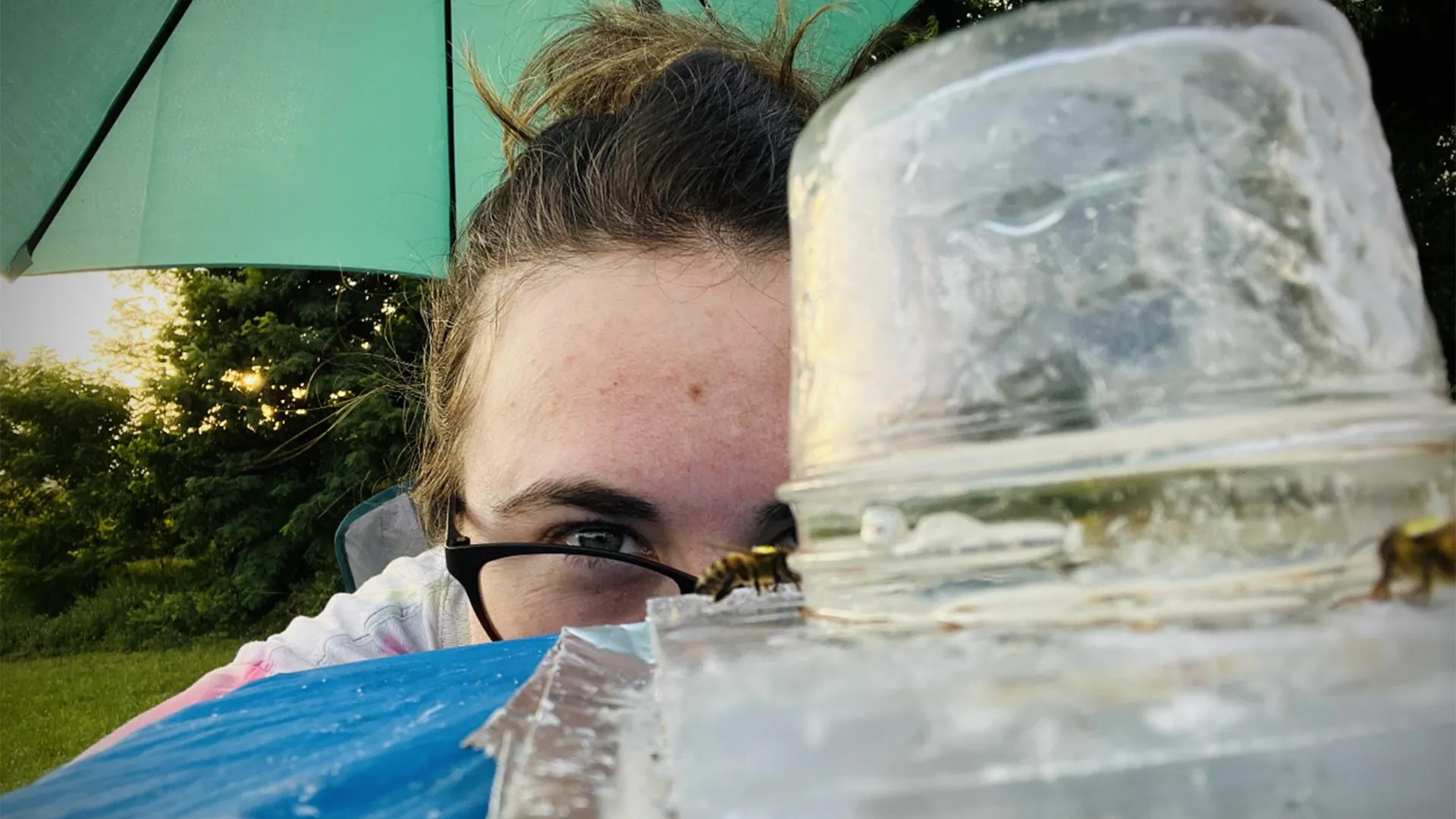
To test the effects of glyphosate, the researchers established two artificial feeding stations. One feeder contained glyphosate, while the other served as a control without the herbicide.
Honeybees were trained to visit the feeding stations, allowing the scientists to track their activity over several days.
After just three days, bees exposed to glyphosate showed a 13 percent reduction in foraging activity compared with bees that had not been exposed. Researchers also observed differences in brain chemistry between the two groups.
“For a colony, a 13 percent reduction in foraging can be consequential,” Couvillon said. “If the entire colony was exposed, this could lead to decreased pollination effectiveness and reduced honey production, risking colony survival and long-term stability.”
A Small Decline Could Have Bigger Colony-Wide Effects
A 13 percent reduction may not appear dramatic when looking at the behavior of an individual bee, but the potential impact becomes more significant when considered across thousands of workers in a colony.
Honeybee colonies depend on a constant supply of nectar and pollen brought back by foragers. If large numbers of bees make fewer trips, less food could reach the hive.
Over time, that could contribute to lower honey production, weaker colony performance, and reduced pollination of crops and wild plants in the surrounding landscape.
Researchers Detect Changes in Bee Brains
The researchers also examined chemicals within the honeybee brain that are associated with behavior, including neurotransmitters and amino acids.
They found changes in the brain chemistry of bees exposed to glyphosate that were not observed in the control group.
These differences could help explain the reduction in foraging activity, suggesting the herbicide may interfere with the neurochemical systems involved in normal bee behavior even when exposure is not immediately lethal.
Rethinking Herbicide Use Around Pollinators
The findings add to growing interest in understanding how agricultural and landscaping chemicals affect beneficial insects beyond simply determining whether a substance kills them.
Researchers say the results could help inform more careful decisions about where, when, and how herbicides are applied, particularly in areas frequently visited by pollinators.
“Understanding how weedkillers affect beneficial insects like pollinators will help us make more strategic regulatory choices about when and where to use them for maximum benefit and minimum harm,” said McHenry, who is now a postdoctoral researcher at Penn State and carried out the work while completing her Ph.D. at Virginia Tech.
More Research Is Still Needed
The researchers say further investigation is necessary to understand how glyphosate-based herbicides interact with honeybee biology under real-world conditions.
Laboratory and controlled feeding experiments can reveal important biological effects, but bees in natural environments encounter complex combinations of chemicals, food sources, weather conditions, and other environmental pressures.
Because glyphosate is so widely applied and honeybees forage across many of the same environments where the herbicide is used, opportunities for exposure are likely to be frequent.
The study suggests that the risks associated with that contact may extend beyond immediate toxicity, with more subtle changes in behavior potentially influencing pollination, honey production, and the long-term resilience of honeybee colonies.