

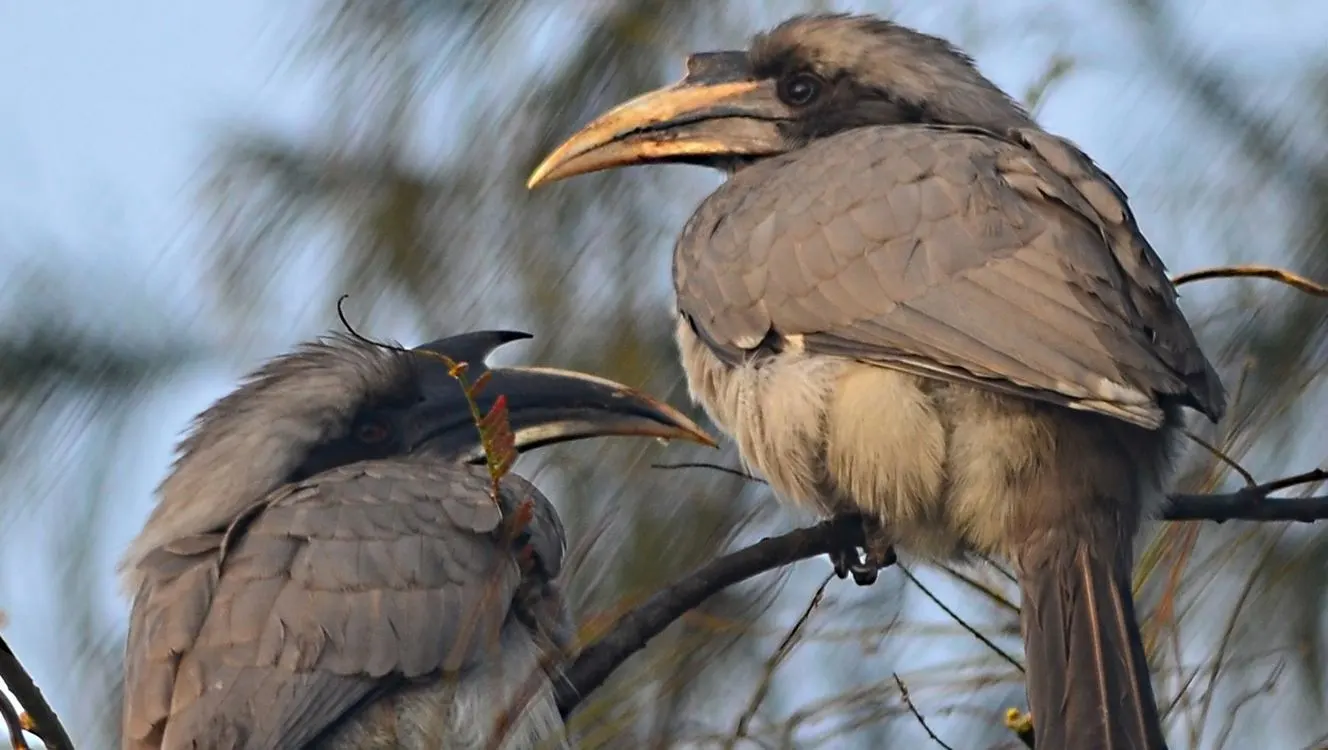
Even Gir National Park, one of India’s most celebrated reserves, stretching 540 square miles across the deserts of West India, hadn’t recorded a nesting hornbill pair since the 1960s. The birds had simply vanished from the region, displaced by the kind of slow habitat erosion that doesn’t always make headlines but quietly reshapes ecosystems over decades.
Then, in 2021, a strategic reintroduction program began.
Four years of success
This year marks the fourth consecutive breeding season since the program launched — and for the fourth year running, nesting pairs have been recorded successfully raising chicks. The reintroduced population now stands at 40 individuals and growing.
It is, by any measure, a genuine conservation win.
A bird that needs everything to be right
The Indian grey hornbill is not an easy species to please. At nearly two feet long, it requires large, mature native trees — old enough to have developed the hollows it nests inside. It also needs a generous, reliable supply of fruit from the surrounding forest.
Those requirements make it demanding. They also make it meaningful.
A mirror for the forest
Indian conservationists describe the hornbill as one of the subcontinent’s great indicator species — a bird whose presence signals that an ecosystem is genuinely healthy, and whose absence is an early warning that something is going wrong. Its return to Gujarat isn’t just good news for one species.
It’s a sign that the landscape itself is healing.