

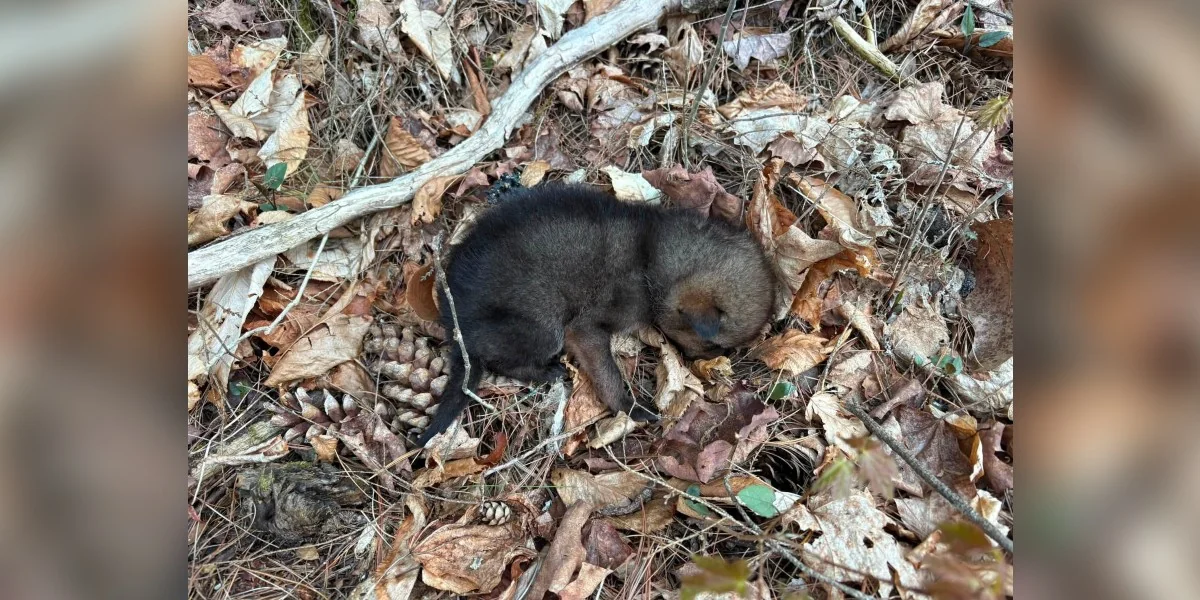
They’d been all alone for days.
A woman was walking her dog through the woods in Vermont when she came across a heartbreaking sight: six newborn coyote pups scattered across the forest floor. At first, she backed away, assuming their parents were nearby and would return soon. But the next morning, she could not stop thinking about them and went back to check.
When she returned, the pups were still in the exact same place. Worse, they felt cold to the touch. Realizing they could be in serious danger, the woman reached out to Howling Mountain Wildlife Rescue for help. The rescue team quickly agreed to take the babies in.
The woman carefully placed the tiny coyotes into a box, drove them to a McDonald’s parking lot, and handed them over to Medora, the founder of the rescue. Medora said that in her years as a wildlife rehabilitator, she had raised coyotes before, but this was the first time she had ever been responsible for an entire litter from such a young age.
By the time the pups were in her care, they were barely hanging on. Medora placed them on a heating pad and began the drive home, hoping to bring their body temperatures back up. By the time they arrived, the little ones had perked up and were wriggling and crying from inside their box.
Medora estimated that the pups were only about two weeks old. They were very small, severely dehydrated, and clearly had been without their mother for several days. Each one weighed only a few hundred grams, about the same as a can of dog food.
It seemed likely that something had happened to their parents, leaving the litter orphaned. The rescuer was especially grateful that the dog walker had gone back to check on them, because without that second visit, the pups probably would not have survived.
Over the following weeks, the coyote pups grew stronger every day. They began to howl, play, and interact with one another, and Medora enjoyed watching their personalities develop. She kept human contact to a minimum and gave them small color-coded collars so she could tell them apart.
Medora is still caring for the litter and is looking forward to the day they are strong enough to return to the wild.