

Every year, millions of squirrels are killed while attempting to cross busy roads in search of food.
For architect Amos Peters, witnessing this heartbreaking problem in Longview, Washington, became impossible to ignore.
Working in an office overlooking Olympia Way, Peters and his colleagues regularly watched squirrels dart across traffic. One day, after finding a squirrel that had been struck by a car while still clutching a nut in its mouth, they decided something had to change.
That emotional moment inspired an idea that would eventually gain worldwide attention.
The Birth of the First Squirrel Bridge
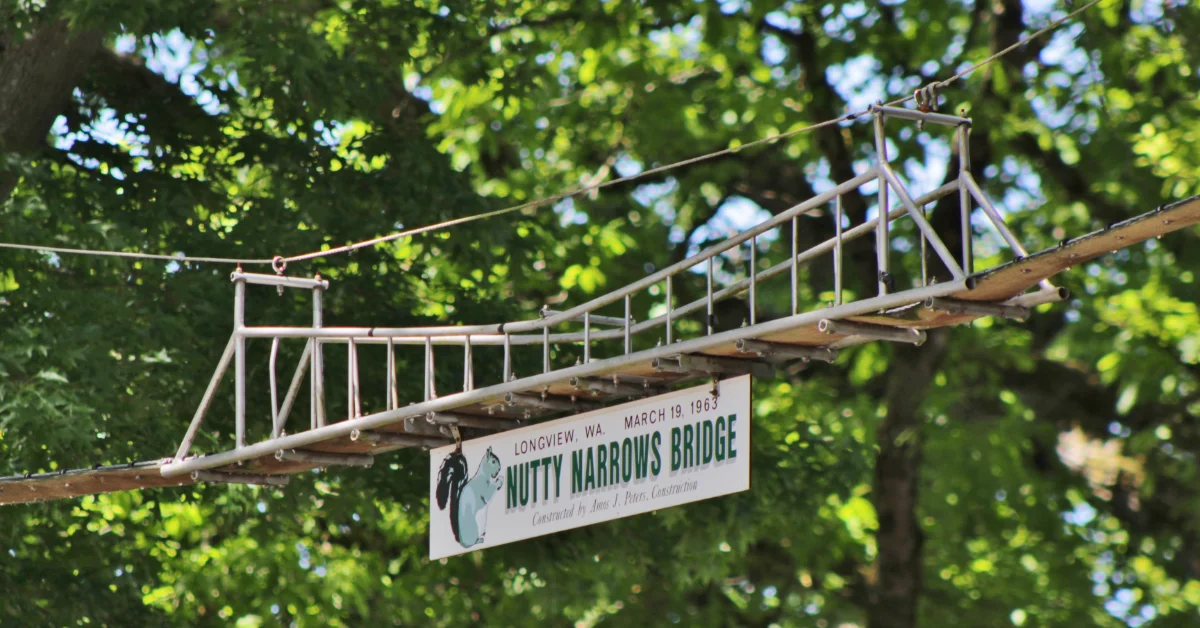
In 1963, Peters and his coworkers proposed building a bridge designed exclusively for squirrels.
After receiving approval from the city council, they constructed the original Nutty Narrows Squirrel Pedestrian Bridge.
The bridge stretched about 60 feet across the road and was built using aluminum and old fire hose, costing approximately $1,000.
Simple as it was, the unusual crossing quickly became a local landmark.
Squirrels Quickly Learned to Use It
It didn’t take long for the neighborhood squirrels to discover their new shortcut.
Residents soon began reporting sightings of squirrels safely crossing above traffic instead of risking dangerous dashes across the road.
Some even watched mother squirrels guide their babies across the bridge, teaching the next generation how to use it.
The project became an international curiosity, attracting newspaper coverage from around the world.
Peters even began receiving heartfelt letters from supporters.
“One man wrote, ‘Little men take time to cater to big people who might do them good. Only big men pause to aid little creatures,’” the City of Longview later recalled.
A Lasting Legacy
The success of the original bridge inspired additional crossings throughout the city.
Today, nine squirrel bridges can be found across Longview, helping countless animals safely travel between trees.
Although the original Nutty Narrows bridge required repairs after two decades of use, it still stands today as a symbol of compassionate engineering.
Following Peters’ death in 1987, the city honored his remarkable contribution by installing a 10-foot wooden squirrel sculpture near the original bridge.
A New Generation Continues the Mission
More than 60 years later, Peters’ idea has inspired another Washington community.
In July 2026, the neighboring city of Duvall unveiled its own squirrel crossing thanks to local resident Nikita Kozhekin.
Like Peters decades earlier, Kozhekin became determined to act after witnessing a tragic accident.
He watched a Douglas squirrel lose her life while trying to carry a hazelnut across the road.
“All she wanted was to carry the hazelnut across the street and hide it somewhere. Is that really too much to ask?” Kozhekin wrote after burying the squirrel in his yard.
Turning Compassion Into Action
Rather than accepting the danger as unavoidable, Kozhekin began working with city officials to find a solution.
The project required permits, approval from nearby property owners, engineering plans, and the assistance of a licensed contractor and arborist.
After contacting nearly 80 engineers, he finally found someone willing to help bring the vision to life.
The result was the Douglas B. Squirrel Memorial Bridge, named in honor of the squirrel whose death inspired the project.
A Simple Design That Works
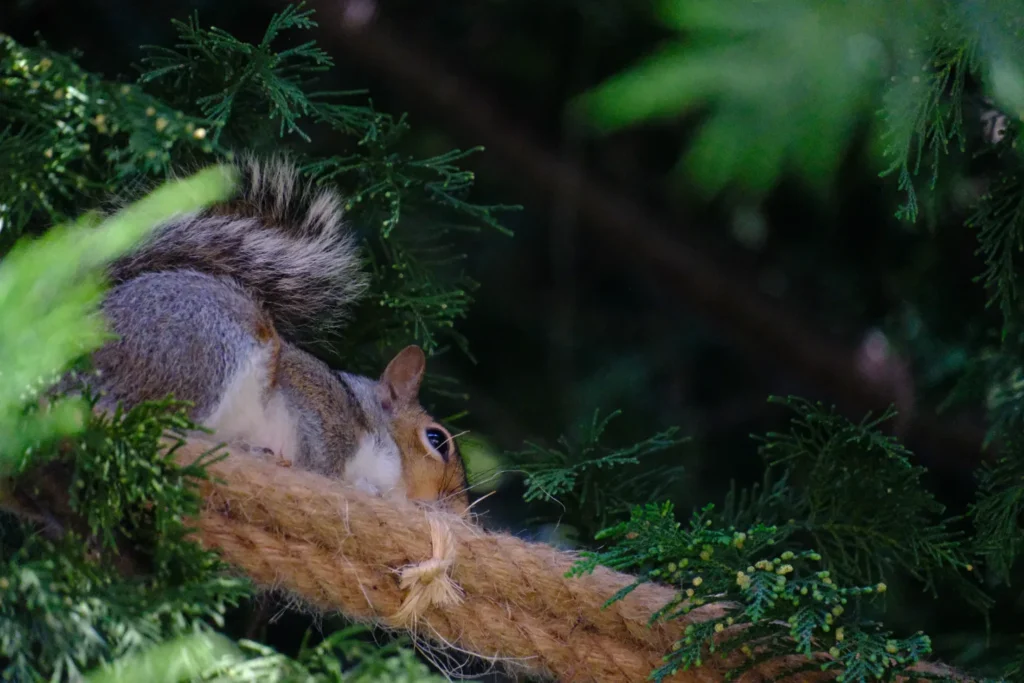
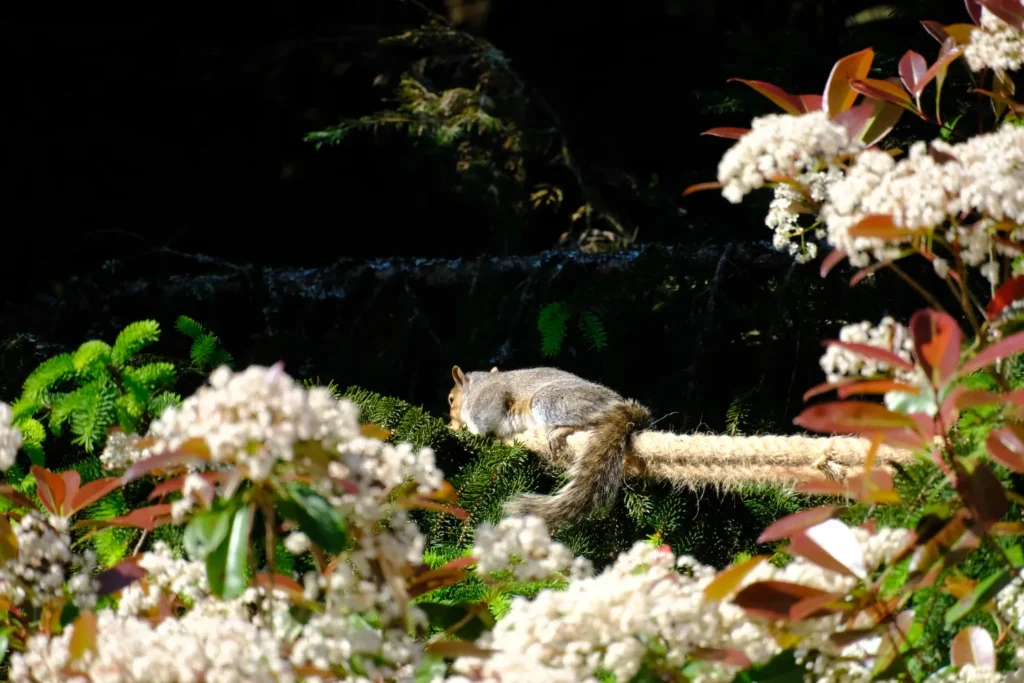
Unlike Longview’s original bridge, Duvall’s version uses a simple rope suspended between two trees.
The crossing stretches approximately 80 feet and sits about 16 feet above the ground, providing squirrels with a safe route over the busy roadway.
At first, some people questioned whether squirrels would actually use it.
They didn’t have to wait long for an answer.
Within a week, local squirrels had discovered the bridge and began crossing it regularly.
Kozhekin even installed a trail camera, capturing videos of the tiny commuters making their way safely across.
Helping Wildlife—and Drivers
The bridges don’t just benefit squirrels.
They also make roads safer for motorists, who often instinctively swerve to avoid hitting animals.
By giving squirrels an elevated crossing, both wildlife and drivers face fewer dangerous encounters.
It’s a simple solution with benefits for everyone.
A Vision for the Future
Today, squirrel bridges can be found not only in Longview and Duvall but also in several locations across Europe.
For Kozhekin, however, this is only the beginning.
“Imagine a world where every tree on every street is connected by bridges, where millions of crossings span the sky, and habitats are safe and connected,” he wrote.
“How wonderful would that be?”
What started with one architect’s compassion in 1963 has grown into an inspiring conservation idea proving that sometimes the simplest solutions can save countless lives—one squirrel at a time.