

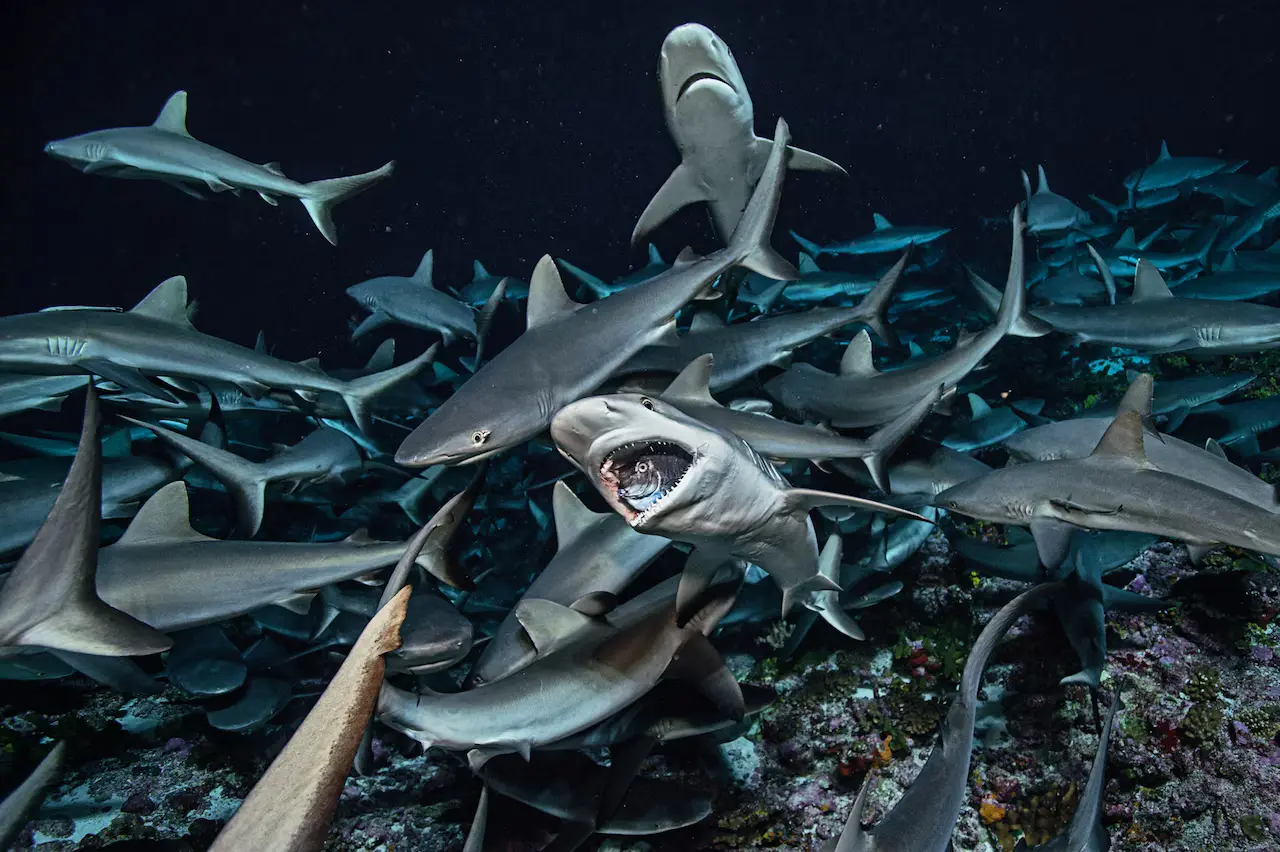
Sharks are among the ocean’s most powerful predators, yet they are also some of its most threatened animals. Today, around 75% of open-ocean shark and ray species are threatened with extinction, largely because of overfishing.
Scientists have long believed that sharks are keystone species—animals whose influence on an ecosystem is far greater than their numbers alone would suggest. New research from Shark Bay, Western Australia, is providing some of the strongest evidence yet that this is true.
What Is a Keystone Species?
A keystone species plays a crucial role in maintaining the balance of an ecosystem.
If a keystone species disappears, the consequences can include:
- Changes in food webs
- Habitat degradation
- Declines in biodiversity
- Ecosystem collapse
For decades, scientists suspected sharks filled this role, but proving it was difficult because sharks are highly mobile and live in complex marine environments.
Why Shark Bay Is So Important
Researchers have spent more than 20 years studying Shark Bay, a UNESCO World Heritage Site in Western Australia.
The bay covers approximately 8,800 square miles (22,800 km²) and contains:
- Large populations of tiger sharks
- Dugongs
- Sea turtles
- Fish
- Extensive seagrass meadows
Unlike many marine ecosystems, tiger sharks appear in Shark Bay seasonally, allowing scientists to compare what happens when sharks are present versus when they are absent.
This natural cycle has made Shark Bay one of the world’s best outdoor laboratories for studying predator-prey relationships.
Sharks Regulate the Ecosystem Through Fear
One of the most important discoveries surprised scientists.
Tiger sharks don’t have to kill large numbers of animals to influence the ecosystem.
Instead, their presence changes animal behavior.
When tiger sharks are nearby:
- Dugongs avoid certain seagrass meadows.
- Sea turtles graze more cautiously.
- Herbivores move frequently instead of feeding in one place.
This phenomenon is known as the “ecology of fear.”
Simply knowing sharks might be nearby prevents herbivores from overgrazing important habitats.
Protecting Seagrass Protects the Climate
The study revealed that shark behavior indirectly protects temperate seagrass meadows.
These underwater plants are incredibly important because they:
- Absorb carbon dioxide.
- Store carbon in ocean sediments.
- Slow water currents.
- Improve water clarity.
- Provide habitat for countless marine species.
Scientists now recognize seagrass as one of Earth’s most effective natural carbon sinks.
Some seagrass ecosystems can capture carbon faster than tropical rainforests.
Even more importantly, the sediments beneath seagrass store carbon for tens of thousands of years.
What Happens Without Sharks?
Where shark populations decline, herbivores often become much bolder.
For example:
- Sea turtles spend longer feeding.
- Dugongs overgraze seagrass.
- Carbon-rich habitats become degraded.
Researchers have observed similar patterns in parts of the Caribbean and Indonesia, where protected sea turtle populations now heavily graze seagrass because there are fewer sharks to regulate their behavior.
Scientists emphasize that the solution is not reducing sea turtle protection.
Instead, healthy populations of both sharks and herbivores are needed to maintain ecological balance.
Sharks Help Ecosystems Recover From Climate Change
In 2011, Shark Bay experienced an extreme marine heatwave that destroyed approximately 90% of its temperate seagrass.
Researchers used this disaster as a natural experiment.
They asked:
What would happen if tiger sharks disappeared while the damaged seagrass tried to recover?
The answer was striking.
In experimental plots where tiger sharks were effectively absent:
- Dugongs fed heavily.
- Remaining seagrass declined even further.
- Some areas collapsed completely.
Where tiger sharks remained present:
- Herbivores grazed less.
- Seagrass recovered more successfully.
- The ecosystem remained far more stable.
The sharks essentially bought the damaged habitat time to recover.
Sharks Increase Ecosystem Resilience
These findings suggest sharks do much more than control prey populations.
They also make ecosystems more resilient to major disturbances such as:
- Marine heatwaves
- Climate change
- Habitat loss
- Other environmental stressors
Healthy predator populations may therefore help ecosystems withstand future climate impacts.
Sharks May Play Other Hidden Roles
Scientists believe there are still many ecological roles of sharks that remain poorly understood.
For example, researchers suspect that young bull sharks, which can live in freshwater, transport nutrients into the Florida Everglades.
Exactly how important these nutrient transfers are is still being investigated.
Why Shark Diversity Matters
Researchers compare shark species to the support beams of a bridge.
Each species contributes to ecosystem stability in different ways.
As shark species disappear:
- The ecosystem gradually loses support.
- Damage accumulates.
- Eventually, the system may reach a tipping point and collapse.
The challenge is that scientists cannot predict exactly when that collapse will occur.
A New Understanding of Sharks
For many years, sharks were viewed primarily as fearsome predators.
Research from Shark Bay paints a far more complex picture.
Tiger sharks help maintain healthy oceans not simply by hunting, but by influencing the behavior of other animals, protecting vital seagrass habitats, preserving long-term carbon storage, and making marine ecosystems more resilient to climate change.
These discoveries reinforce an important conservation message: protecting sharks is not just about saving one group of animals—it is about safeguarding the health and stability of entire ocean ecosystems that countless other species, including humans, depend upon.