

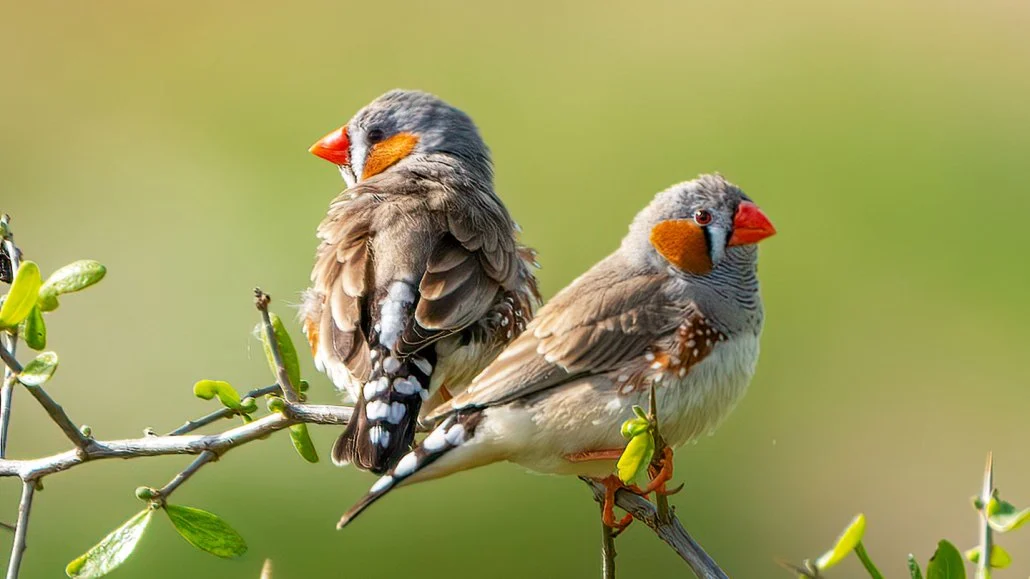
Zebra finches may begin preparing their babies for extreme heat before they even hatch.
In the hot woodlands of Australia, adult zebra finches make a fast, high-pitched “heat call” when temperatures rise. New research suggests that this sound can trigger changes in the brains of developing chicks while they are still inside the egg.
Scientists reported that these calls appear to act like an early weather warning. By hearing them before hatching, the chicks may become better prepared for the hot environment waiting outside the shell.
Researchers first discovered about 10 years ago that zebra finch embryos exposed to heat calls behaved differently after hatching. The chicks grew more slowly, preferred warmer nesting areas and seemed better able to handle high temperatures.
What remained unclear was how a simple sound could cause such physical and behavioral effects.
To investigate, researchers focused on the hypothalamus, a small but important part of the brain involved in metabolism and temperature regulation. They raised zebra finch embryos in stable temperatures, exposing some to recordings of heat calls and others to control sounds.
When the scientists examined brain tissue from the embryos, they expected to find changes in hormone-related genes. Instead, they found changes in genes linked to blood vessel control in the brain.
The heat calls seemed to reduce activity in genes that help regulate how blood vessels contract and expand. Researchers believe this may help young birds manage blood flow in a way that keeps the brain cooler during hot conditions.
Keeping the brain from overheating is crucial in extreme temperatures. These early changes may help protect the chicks from heat stress or even heat stroke once they hatch.
Interestingly, the sound did not appear to alter the entire brain region. Only a small portion of genetic activity in the hypothalamus was affected, suggesting the heat calls target specific systems that are especially vulnerable to high temperatures.
Scientists describe the calls as a kind of biological forecast, allowing young birds to adjust their development based on the conditions they are likely to face.
Similar sound-based preparation has been seen in other birds. For example, some chicks that hear warning calls before hatching later show stronger defensive behaviors after they emerge from the egg.
Researchers now wonder whether zebra finches are just one example of a broader natural phenomenon. Other birds may also use sounds to prepare their unborn young for heat, predators or other environmental challenges.
In zebra finches, at least, a parent’s call may do much more than communicate — it may help shape a chick’s ability to survive.