

Scientists have identified two humpback whales that made extraordinary journeys between Australia and Brazil, setting new records for known humpback travel.
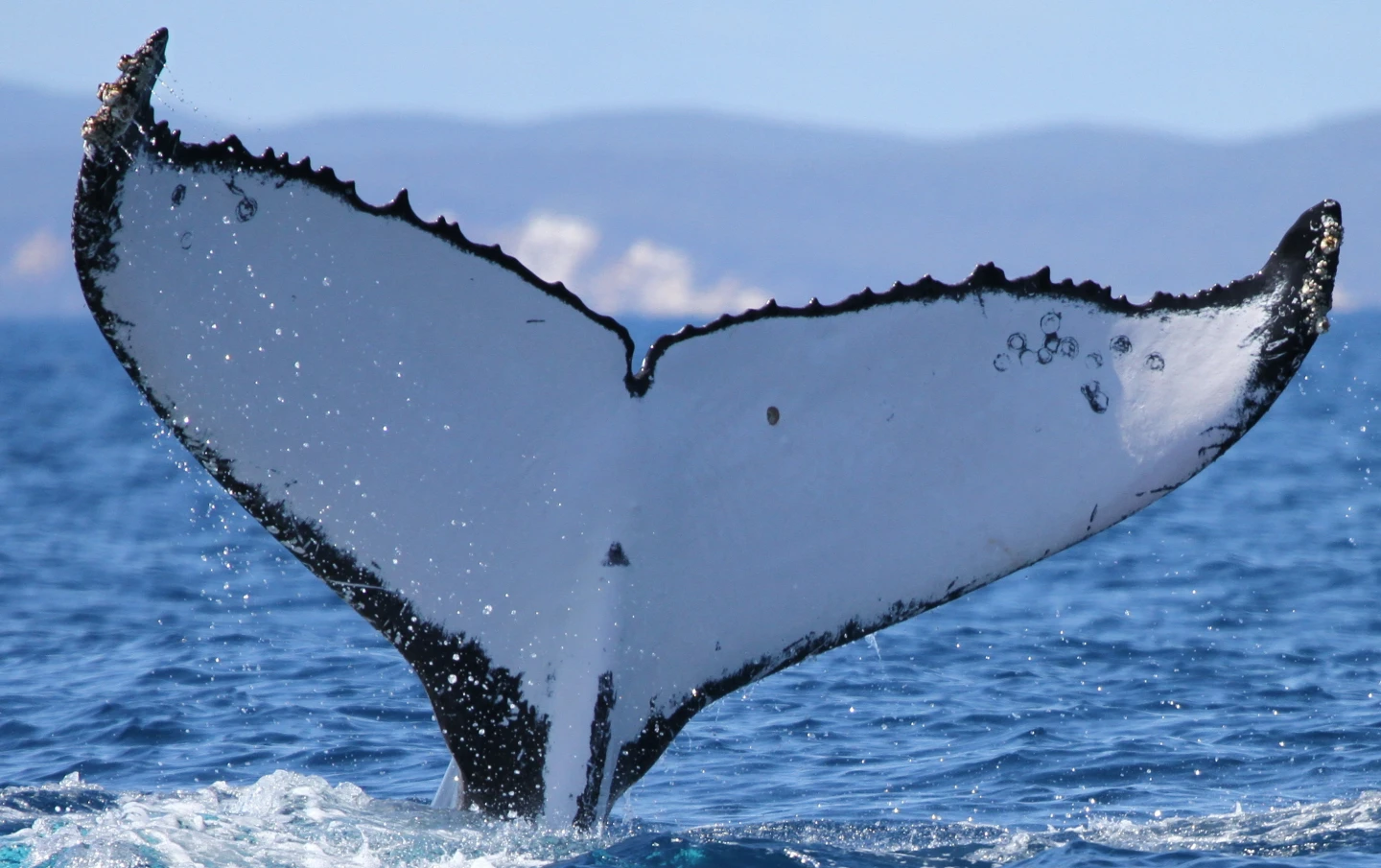
The whales were recognized by the unique markings on their tails, which work almost like fingerprints. Photos taken in eastern Australia and Brazil showed the same individuals at locations about 9,000 miles apart.
What made the discovery even more remarkable is that the whales traveled in opposite directions. Each crossed an enormous stretch of ocean, going farther than any humpback whale previously recorded.
Humpback whales are already famous for long migrations. They usually feed on krill and small fish during warmer months, then travel to tropical waters to breed during winter. Most follow migration routes learned from their mothers, which makes these unusual Australia-to-Brazil crossings especially surprising.
Tracking whales is difficult because they spend most of their lives underwater. For this study, researchers analyzed more than 19,000 whale images collected over four decades by scientists and citizen observers.
Using recognition software, the team compared the color patterns and jagged edges of the whales’ tails. That allowed them to match individual whales photographed years apart in different parts of the world.
One of the whales traveled more than 9,300 miles, breaking previous known humpback migration records, including a whale that swam from Colombia to Zanzibar.
Because researchers only have photos from the starting and ending locations, they do not know the exact routes the whales took. They also are not sure why the whales traveled between breeding areas, since humpbacks usually return to familiar mating grounds.
One possibility is that the whales met others at shared feeding areas and then followed a different group instead of returning to their original population.
The discovery challenges what scientists thought they knew about how separate humpback whale populations really are. It also shows how powerful photo identification and citizen science can be for understanding whale movement.
As climate change warms oceans and shifts where krill and other food sources are found, tracking these long-distance journeys may become even more important. These record-breaking whales show that humpbacks are capable of traveling far beyond the routes scientists once expected.