

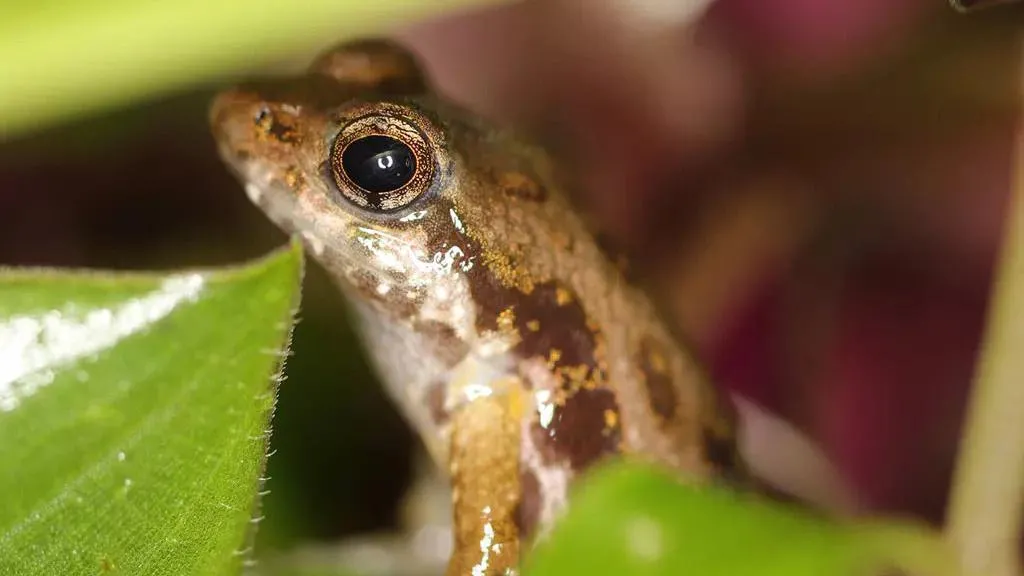
London Zoo is now caring for two critically endangered frog species from Ghana as part of an urgent effort to prevent them from disappearing forever.
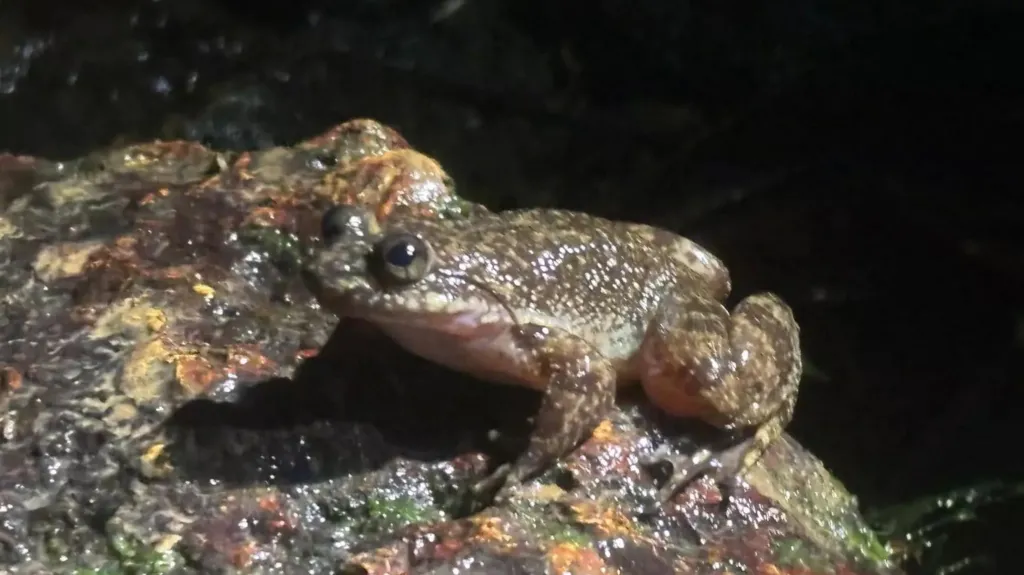
The frogs — the Atewa slippery frog and Afia Birago’s puddle frog — both come from Ghana’s Atewa Hills Forest Reserve. They are now living in London Zoo’s Secret Life of Reptiles and Amphibians exhibit, where experts can study and protect them.
Both species are facing serious danger in the wild because of habitat destruction, especially from mining activity in the forest reserve.
The Atewa slippery frog is a very recent scientific discovery. It was only identified in 2021, and researchers believe fewer than 1,500 remain in the wild. The species is known for its unusual fish-like swimming style and a call that sounds like a whistle.
Afia Birago’s puddle frog is even smaller. First described in 2018, the tiny frog is small enough to fit on a £1 coin. Scientists now believe it may survive in only two pools within the reserve.
The frogs were transported to London in September 2025 through a partnership between the Zoological Society of London, Herp Conservation Ghana and the Forestry Research Institute of Ghana.
Zoo staff said all 20 Atewa slippery frog tadpoles survived the 4,500-mile trip to the UK. After arriving safely, they continued developing and eventually grew into adults.
Then, in November 2025, London Zoo reached another milestone by becoming the first institution in the world to breed the Atewa slippery frog in human care.
According to zoo experts, moving some of the frogs to London was necessary because both species are at immediate risk of extinction. Conservationists also needed to learn more about how to care for them while there is still time.
Amphibian keeper Unnar Aevarsson also traveled to Ghana to help establish what conservationists describe as West Africa’s first dedicated amphibian conservation facility.
To give the frogs the best possible care, researchers collected water samples and studied the plants in their natural habitat. This helped teams recreate similar environments both in Ghana and at London Zoo.
The long-term goal is to breed the frogs safely in human care and, eventually, return captive-bred individuals to protected habitats in the wild.
For now, visitors to London Zoo can see the rare frogs on public display, while conservationists continue working to secure their future.