

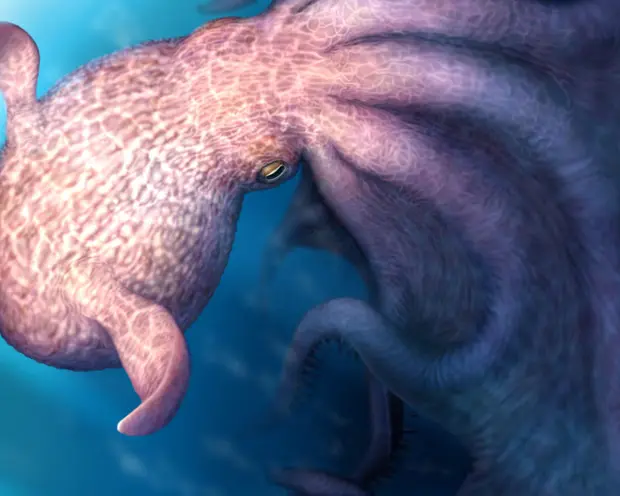
Researchers have uncovered evidence that enormous ancient octopus relatives may have been among the most powerful hunters in the Cretaceous seas. According to a new study, some of these “kraken-like” creatures may have grown up to 19 meters long and used strong, sharp beaks to crush through the hard parts of their prey.
The discovery is based on the study of fossilized beaks dating back as far as 100 million years. Because octopuses have soft bodies that almost never fossilize, scientists know far less about their ancient relatives than they do about marine reptiles and fish from the same period. Their beaks, however, are hard enough to survive in the fossil record, making them an important clue to understanding what these animals were like.
The research team examined 15 large fossil beaks that had previously been thought to belong to vampire squid-like animals. Their new analysis suggests the beaks actually came from an extinct group of octopus relatives called Nanaimoteuthis. Using advanced imaging, the scientists also found 12 more hidden beaks inside Cretaceous rock samples.
One species, Nanaimoteuthis haggarti, stood out because of the huge size of its beak. It was even larger than the beak of a modern giant squid, an animal that can reach around 12 meters in length. By comparing the fossil beaks with the relationship between jaw size and body length in modern finned octopuses, researchers estimated that N. haggarti may have measured between 7 and 19 meters long.
If those estimates are correct, it could make the animal one of the largest, or possibly the largest, invertebrates ever known.
The fossil beaks also revealed how these animals likely hunted. In younger individuals, the beaks still had sharp edges, but in larger adults, the edges were worn down, rounded and marked with chips and scratches. This pattern suggests the animals regularly bit into tough material, such as shells and bones.
Rather than swallowing prey whole, these ancient octopus relatives may have hunted in a way similar to modern octopuses. They likely grabbed prey with long arms, held it in place and used their powerful beaks to break it apart.
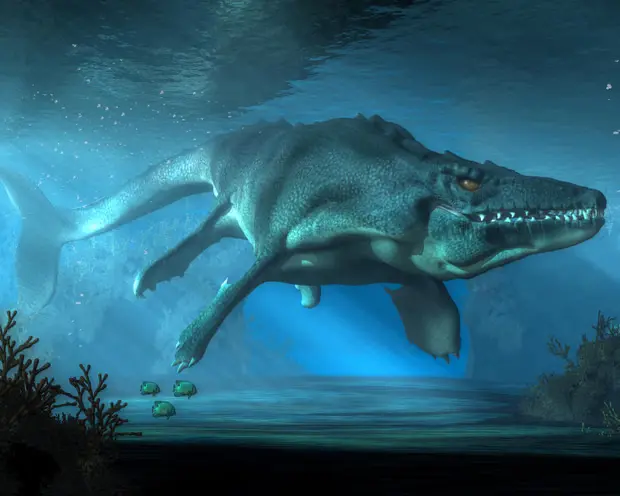
Their possible diet may have included bony fish, shelled sea creatures and perhaps even large marine reptiles such as mosasaurs or plesiosaurs. Those reptiles are often imagined as the top predators of ancient oceans, but this study suggests giant cephalopods may have competed with them — and possibly even preyed on them.
Scientists also noticed that the wear on the beaks was stronger on one side than the other. This could mean the animals showed a form of “handedness,” using certain arms or sides of the mouth more often for feeding, much like some modern octopuses show preferences for particular arms during different tasks.
The findings suggest these ancient octopus relatives were not simply oversized versions of modern species. They may have been intelligent, highly capable predators with powerful bodies, complex hunting behavior and an important place near the top of the Cretaceous marine food chain.