

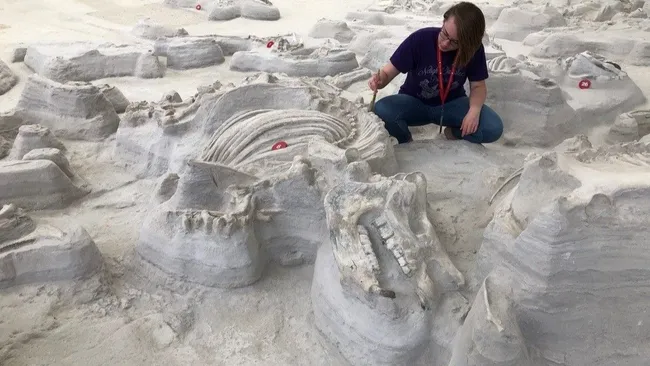
Researchers have found footprints of large, bone-crushing dogs in the 12 million-year-old Ashfall Fossil Beds in northeastern Nebraska, suggesting these large carnivores may have survived a cataclysmic Yellowstone eruption that covered parts of North America in ash.
Unique Rewritten Version
New evidence suggests that powerful, bone-crushing wild dogs roamed parts of North America shortly after a massive volcanic disaster linked to the Yellowstone region — about 12 million years ago.
Researchers studying the Ashfall Fossil Beds in Nebraska discovered fossilized dog tracks layered above the remains of dozens of prehistoric rhinos known as Teleoceras. This site is famous for preserving animals that died after choking on volcanic ash, earning it the nickname “Rhino Pompeii.”
Ashley Poust, a paleontology curator at the University of Nebraska State Museum, explained that the eruption responsible for the ash was enormous. It covered land more than 1,000 miles (1,600 kilometers) away, darkening skies and burying water and vegetation — a deadly scenario for many animals with sensitive lungs.
While past excavations had revealed huge numbers of herbivore fossils — ancient camels, rhinos, and horses — fossils of large predators were mysteriously missing. The newly identified footprints finally confirm that carnivores were present.
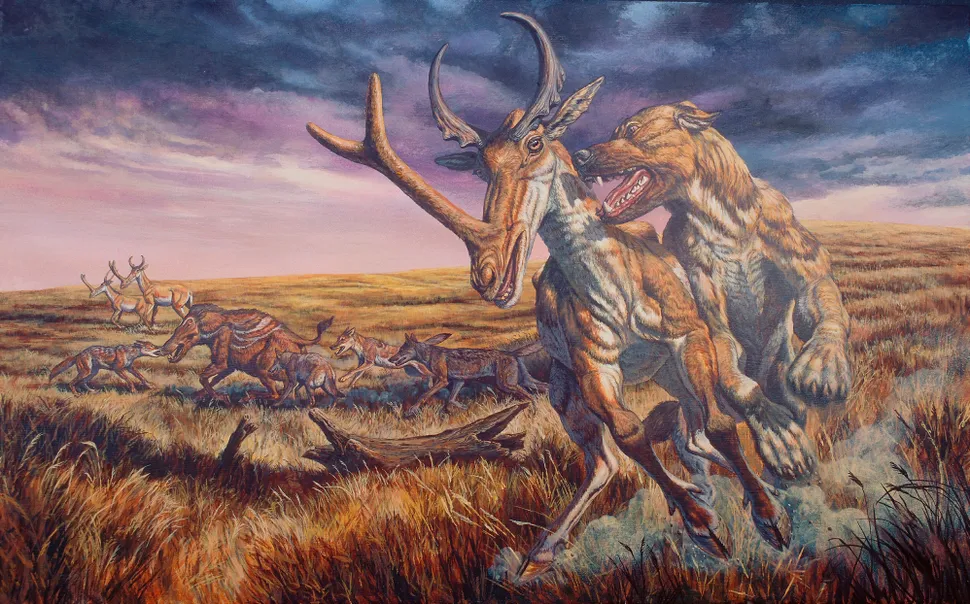
The prints measure around 3 inches across, matching the size and shape expected from now-extinct dogs like Aelurodon taxoides and Epicyon saevus. These species were capable of cracking bones to reach the nutritious marrow, similar to modern hyenas.
Because the tracks lie above the layer containing dead rhinos, scientists believe these canids survived the ashfall event that killed many grazing animals. This is surprising — major ecosystem collapses usually strike hardest at the top predators.
Poust notes that understanding how these hunters endured could reveal a lot about how food webs recover after a catastrophe.
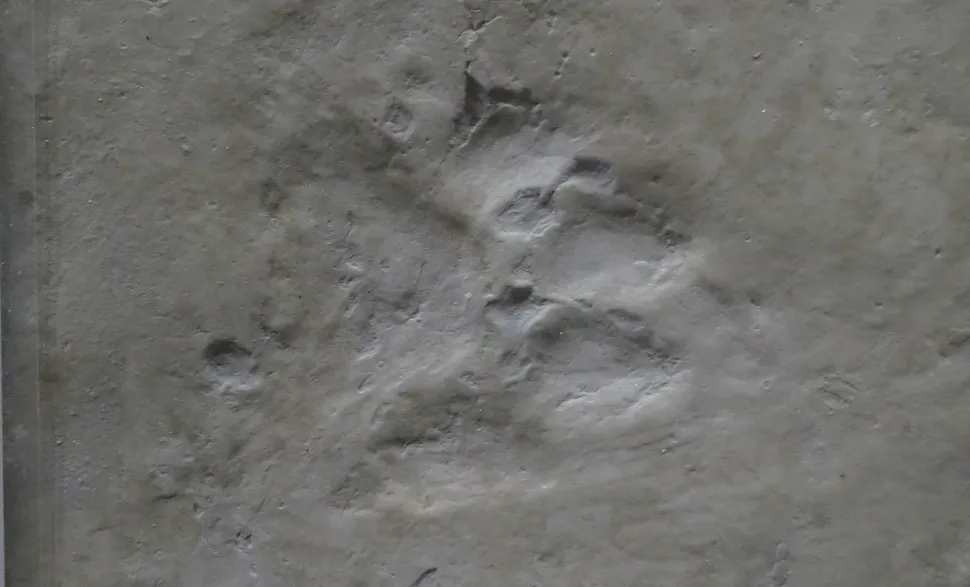
Early results were shared at a 2025 paleontology meeting in England. Although formal publication is still underway, visitors to Ashfall Fossil Beds State Historical Park can actually see the tracks, and the research team has scanned them publicly to preserve their shape.
Millions of years ago, northeastern Nebraska resembled a grassy savanna, with a watering hole used by turtles, flocks of birds, three-toed horses, camels, and squat rhinos. The scattered directions of the tracks suggest repeated visits from the ancient dogs as they patrolled the ash-covered landscape.
How did these carnivores find enough food? One strong possibility: they scavenged the many animals already buried under ash, using them as a long-term food supply. Researchers are still investigating whether the dogs stayed until the environment recovered — or eventually moved on in search of better hunting grounds.